Football Shirt Sponsors: A Buyer’s Guide to Logos and Eras
2026-10-01
Football shirt sponsors can become as memorable as a collar, colour pattern or club badge. For a buyer, however, the logo across the front is more than a nostalgic detail. It can help narrow down an era, separate two visually similar listings and identify which photographs deserve a closer look.
A sponsor mark cannot prove that a shirt is authentic, officially licensed or made in the season named in a product title. It is one piece of a wider listing check. This guide explains how to read sponsor placement without turning one visible logo into a claim the evidence cannot support.
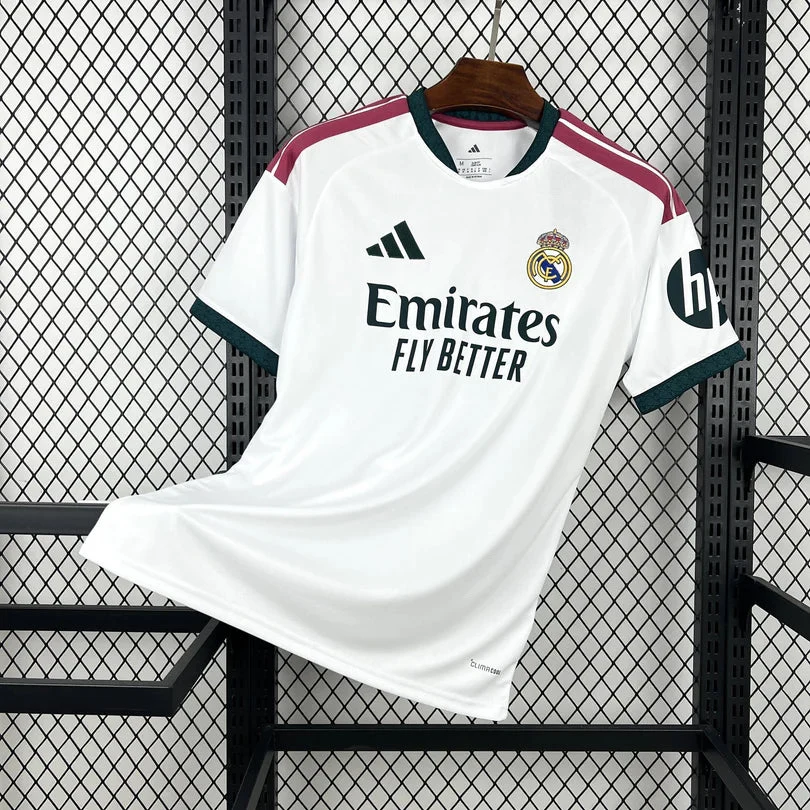
A product photograph can show where visible marks appear. Open the exact Real Madrid 2026 home shirt listing to review its current images and options; the picture alone does not establish provenance or licensing.
First, separate the marks on a football shirt
Several different marks may share the same front panel. The club crest identifies the team. The manufacturer or supplier mark identifies the sportswear brand shown on the garment. A front-of-shirt sponsor is a separate commercial mark, while sleeves or other areas may carry additional partner marks. Competition badges and commemorative details have different roles again.
Do not call every printed element a sponsor. When comparing two pages, name the feature precisely: club crest, manufacturer mark, front sponsor, sleeve mark, competition badge, name set or number. This makes it easier to spot a genuine difference between listings instead of treating every variation as an error.
Why sponsor logos help identify an era
Shirt sponsorship became part of British football design during the 1970s. Historical Football Kits describes the resistance from football and broadcasting authorities before sponsor names became established. Academic research on the replica-kit era also treats sponsorship as one of the commercial functions that changed shirt design from the mid-1970s onward.
Club histories provide more specific reference points. Liverpool FC's sponsor history, for example, records the club's Hitachi agreement in 1979 and later front-of-shirt partners. Those changes help supporters associate particular designs with periods of the club's history.
This does not mean a logo identifies an exact product by itself. A club may retain a partner across several seasons, while collar, panel, sleeve or colour details change. Use the sponsor as a starting filter, then compare the full design and listing title.
A five-step sponsor check before buying
Read the complete product title. Record the team, stated season or year, home/away/third role and sleeve description.
Inspect every available photograph. Check the position, scale and spacing of the crest, manufacturer mark and sponsor rather than looking only at the central logo.
Compare the exact version. Use a reference for the same team, season, colourway and role. A home shirt from another year is not a reliable match.
Check the listing text. Confirm which garment and options are being offered. Do not assume a pictured name, number, patch or sponsor variation is automatically included.
Pause when details conflict. If the title points to one season but several design details point elsewhere, ask for clarification before ordering.
What sponsor details can and cannot tell you
Detail
Useful for
Not sufficient for
Next check
Front sponsor name
Narrowing the likely era or group of seasons
Proving the exact season or origin
Collar, panels, colours and product title
Logo position and scale
Comparing an exact photographed version
Establishing licensing on its own
Labels, listing claims and seller evidence
Sleeve partner mark
Spotting a visible version difference
Assuming the same mark appears on every size or listing
Current photographs and included options
No visible front sponsor
Flagging a sponsorless design or a listing that needs explanation
Concluding that the page is wrong
Exact team, competition, season and product version
Famous historic sponsor
Connecting a design with club memory
Proving the garment was manufactured in that period
Production evidence and condition details
Sponsor mark versus authenticity evidence
A familiar logo can be copied, and an unfamiliar variation may still have a reasonable explanation. Treat sponsor application as one observation within a larger evidence set. The seller's wording, product or style code, labels, construction, exact design and provenance should tell a consistent story.
Our football shirt evidence checklist explains that no single badge, code or print can settle the question. If origin is essential to the purchase, request the relevant evidence rather than relying on the sponsor's familiarity.
How sponsors change a retro-shirt comparison
For collectors and casual buyers, a sponsor can become part of the visual identity of an era. It may be the detail that separates a restrained design from a graphic one or recalls a period associated with a particular team. That makes sponsor history useful when comparing retro-inspired listings, but nostalgia should not replace a product-page check.
Start with the best retro football shirts comparison if you want several national-team designs, then use a club-specific guide such as the Liverpool retro shirt guide when club eras are more important. Read every listing independently because the year in a title describes the design reference; it does not by itself prove manufacturing age.
Sponsored and sponsorless designs: which should you choose?
There is no universal better choice. A sponsored shirt may capture the club look you remember, while a sponsorless front can put more emphasis on colour, pattern and crest. Make the decision using the exact listing in front of you.
Choose by memory when a particular logo is central to the era you want.
Choose by design when balance, colour and pattern matter more than historical association.
Choose by evidence when the exact season or provenance is important; verify more than the front print.
Choose by use when you plan to wear, store or display the shirt. Review measurements and care information on the exact page.
If display is the goal, compare the methods in our football shirt display ideas guide. A sponsor print may affect how you position the garment, but any mounting or storage method should still follow the shirt's own care information.
Build a useful listing record
Save a short record before you buy: full product title, URL, date checked, visible sponsor, home/away/third role, sleeve type and the options shown. Keep screenshots only for your own comparison because pages and availability can change. This record helps you explain why you chose one listing and prevents two similar search results from becoming mixed together.
For current designs, browse the new-season football shirts collection and open the individual product page before deciding. The collection helps discovery; the product page is where the exact title, photographs and current options must be checked.
Summary
Football shirt sponsors are useful visual clues, especially when comparing eras and closely related listings. Separate the sponsor from the crest, manufacturer mark and competition details; compare the exact team, season and version; and treat every logo as supporting evidence rather than proof. The strongest buying decision comes from a consistent product title, photographs, design details and seller information, followed by a final review of the exact product page.
 USD
USD
 ANG(ƒ)
 LKR(₨)
 EGP(EGP)
 BZD(BZ$)
 CRC(¢)
 MAD(DH.)
 OMR(RO.)
 KES(KSh)
 GHS(₵)
 UGX(USh)
 RSD(Din.)
 RON(lei)
 PGK(K)
 CDF(CDF)
 UYU($U)
 KZT(〒)
 PKR(Rs)
 MNT(₮)
 ARS(ARS$)
 COP(COP)
 MVR(Rf)
 IQD(د.ع)
 BDT(Tk)
 ZMW(ZK)
 NAD(N$)
 JMD(J$)
 AOA(Kz)
 MMK(K.)
 PEN(S/.)
 MOP(MOP$)
 BND(B$)
 LAK(₭)
 VND(₫)
 NGN(₦)
 KHR(៛)
 TWD(NT$)
 CNY(¥)
 SAR(S.R.)
 BHD(BD.)
 QAR(QR.)
 KWD(K.D.)
 UAH(₴)
 IDR(Rp)
 MYR(RM)
 AED(AED)
 JPY(円)
 INR(Rs)
 TRY(₺)
 CLP(CLP)
 KRW(₩)
 ZAR(R)
 SEK(Kr)
 ILS(₪)
 HKD(HK$)
 THB(฿)
 PLN(zł)
 NZD(NZ$)
 NOK(Kr)
 MXN(MXN$)
 HUF(Ft)
 CZK(Kč)
 SGD(S$)
 PHP(₱)
 DKK(kr.)
 CHF(CHF)
 BRL(R$)
 RUB(₽)
 CAD(CA$)
 AUD(AUD)
 GBP(£)
 EUR(€)
 Barcelona
 Real Madrid
 Manchester United
 Inter Miami
 Manchester City
 Fc Bayern
 Ac Milan
 Chelsea
 Juventus
 Arsenal
 PSG
PSG Liverpool
 Inter Milan
 Santos FC
 Roma
Roma Portugal
 Al Nassr
 Atletico Madrid
 Everton
 Everton
 Germany
 Ajax
Ajax Mexico
 Napoli
 Columbia
 Sporting lisbon
 France
 Tottenham
 Morocco
 Real Betis
 Brazil
 USA
USA ltalia
 Argentina
 England
 Borussia Dortmund
 Spain
Spain Japan
Japan Netherlands
 Adidas
 Nike
Nike Puma
Puma NB
NB Kappa
Kappa