








































































 Barcelona
 Real Madrid
 Manchester United
 Inter Miami
 Manchester City
 Fc Bayern
 Ac Milan
 Chelsea
 Juventus
 Arsenal
 PSG
PSG Liverpool
 Inter Milan
 Santos FC
 Roma
Roma Portugal
 Al Nassr
 Atletico Madrid
 Everton
 Everton
 Germany
 Ajax
Ajax Mexico
 Napoli
 Columbia
 Sporting lisbon
 France
 Tottenham
 Morocco
 Real Betis
 Brazil
 USA
USA ltalia
 Argentina
 England
 Borussia Dortmund
 Spain
Spain Japan
Japan Netherlands
 Adidas
 Nike
Nike Puma
Puma NB
NB Kappa
KappaA football shirt can be a match-day layer, a reminder of a favourite season or the centrepiece of a growing collection. The right display method depends on what matters most: seeing the whole design, changing shirts often, protecting an older piece or fitting several shirts into a small room. These football shirt display ideas compare six practical options so you can choose a setup that suits the shirt, the space and the amount of handling you expect.
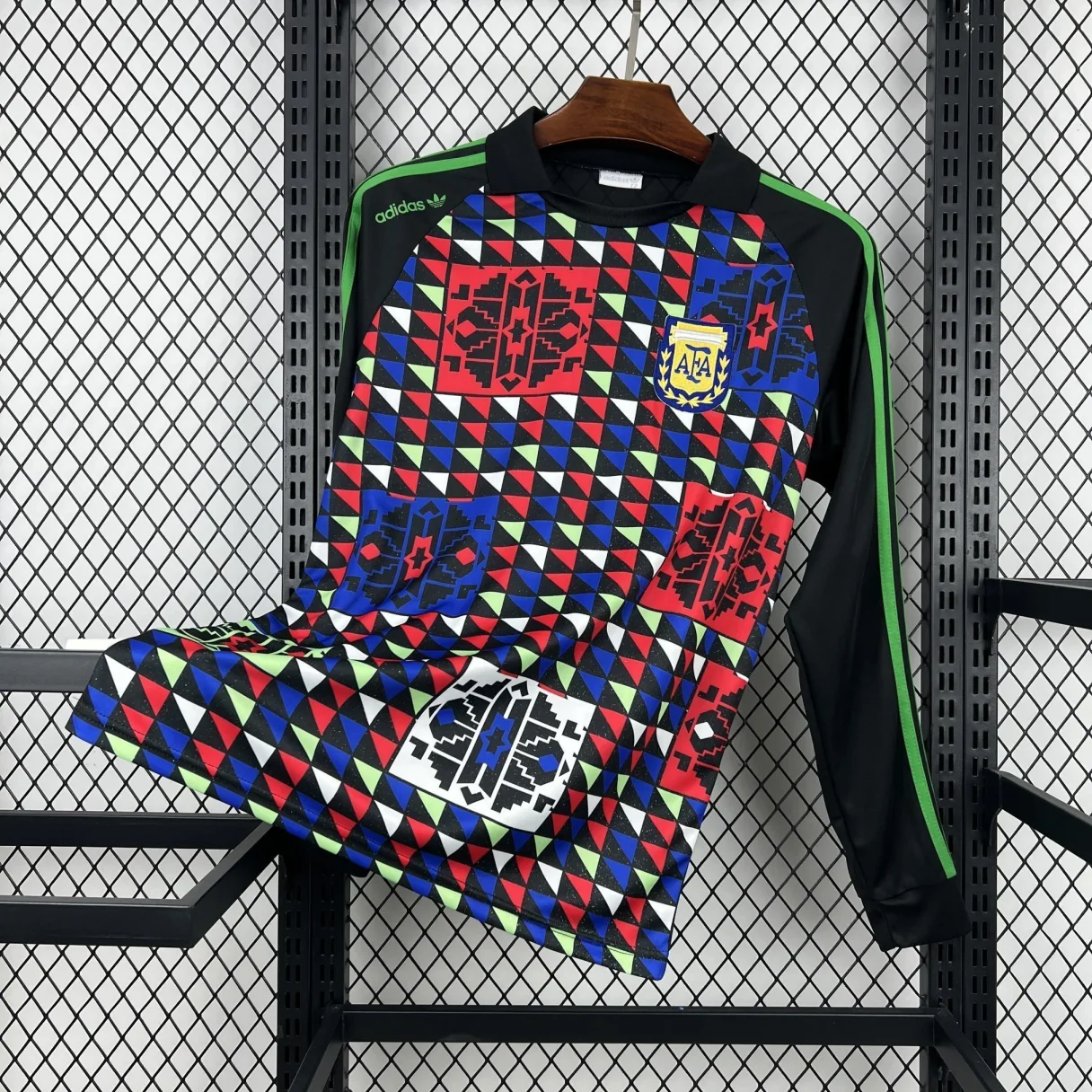
Choose the display around the shirt
Start by deciding whether the shirt is mainly for wearing, collecting or decoration. A shirt that comes down every weekend needs easy access. An older shirt that you rarely handle needs better support and less exposure. A group of modern shirts may look better as a rotating rail, while one graphic goalkeeper design can carry a whole wall on its own.
Condition matters too. Do not display a damp or soiled shirt. Look for loose printing, weak shoulder seams, damaged badges or areas that feel stretched. If the garment is fragile or personally valuable, a professional textile conservator or experienced framer can advise on a reversible support method.
Six football shirt display ideas compared
| Display method | Best for | Access | Protection | Main trade-off |
|---|---|---|---|---|
| Deep frame or shadow box | One important shirt | Low | High when correctly mounted | Costs more and takes planning |
| Padded hanger | A wearable rotation | High | Moderate | Shoulders need support |
| Open wall rail | Several regularly changed shirts | High | Low to moderate | More dust and light exposure |
| Fabric-covered display board | A flat graphic layout | Low | Moderate to high | Mounting must distribute weight |
| Shelf or cubby rotation | Small rooms and larger collections | Medium | Moderate | Only part of each folded shirt is visible |
| Torso form or mannequin | Showing the shape and fit | Medium | Moderate | Uses floor or shelf space |
1. Use a deep frame for one centrepiece
A deep frame or shadow box gives one shirt a clear visual boundary and can reduce handling, dust and accidental contact. It suits a signed shirt, an older piece or a design you want to keep on view for a long period. The shirt may be shown front-first, back-first or with part of each side visible, depending on whether the badge, pattern, name or number tells the stronger story.
Do not let glazing press against the fabric or printing. Use spacers and a stable support, and avoid tape, staples or nails directly through the shirt. A padded, fabric-covered board can spread the load more evenly than a few tight fixing points. Our separate football shirt framing guide covers planning, layout and the questions to ask a framer.
2. Put wearable shirts on padded hangers
If you still wear the shirts, padded hangers make the display easy to change. Give each garment enough space so badges and prints do not rub against neighbouring pieces. A broad, rounded hanger supports the shoulder area better than a narrow wire hanger. Close fastenings gently, keep the garment balanced and check the shoulders periodically for distortion.
This method works well inside a wardrobe with the doors open for viewing, or on a short wall-mounted rail. It is less suitable for a weak, very heavy or damaged shirt because gravity keeps acting on the shoulders. When in doubt, store the shirt flat and choose a different display piece.
3. Build a rotating wall rail
A rail turns a collection into a changeable gallery. Select three to five shirts around one theme—club colours, national teams, goalkeeper designs or a run of seasons—then rotate the group rather than covering every wall. The result feels deliberate, and rotation reduces the time any one textile spends exposed to light.
Place the rail away from cooking areas, damp walls and direct sun. Leave breathing space around each shirt and use matching hangers for a cleaner visual rhythm. A rail is especially useful when you want to compare new releases from the new-season football shirt collection before deciding which ones deserve a longer-term display.
4. Mount a shirt flat on a covered board
A fabric-covered board can show a shirt almost as clearly as a frame while giving you more freedom over the surrounding layout. It works for a dedicated display cabinet, a deep open shelf or a temporary photography setup. The support should be larger than the garment and lightly padded so the fabric is not forced over a hard edge.
Avoid adhesive strips on the shirt. If a textile must be attached to a support, the Canadian Conservation Institute describes evenly distributed, reversible support as the safer principle for flat textile display. For a valuable garment, have a conservator or specialist framer do the mounting rather than improvising stitches or fasteners.
5. Use shelves for a compact, changing collection
Open cubbies or glass-fronted shelves are useful when wall area is limited. Fold each shirt so the badge, colour block or a recognisable section faces outward. Add a simple label with the team and season if it helps visitors understand the collection. Rotate the featured fold occasionally so one crease does not carry the pressure indefinitely.
Keep clean hands when rearranging the shelf and avoid overpacking. The shirts should lift out without pulling against the stack. For repeatable folds and storage precautions, use the football shirt folding guide.
6. Show the silhouette on a torso form
A torso form shows how a shirt is shaped rather than treating it as a flat graphic. It can work well for photography, a dressing area or a single seasonal feature. Choose a form that does not stretch the shirt, cover rough contact points and avoid forcing a small neck opening over a wide stand.
This option takes more space but makes it easy to compare sleeve length, collar shape and overall proportions. It also gives context when you are deciding between designs in the best retro football shirts comparison.
Light, dust and moisture checks
Textiles can be affected by light, dust, moisture, heat and physical stress. Do not place a shirt in direct sunlight, directly above a radiator or against a damp wall. Strong daylight may fade colour over time, and a bright spotlight can add heat. A frame or closed cabinet can reduce dust, but it does not remove the need to inspect the display.
Check every few months for fading, condensation, new creases, stretched shoulders, loose printing or insects. If one shirt is always on show, consider rotating it with another. Display decisions are reversible: the best setup is one you can adjust when the shirt or the room changes.
A simple layout plan
- Pick one story. Choose a team, era, colour or competition rather than mixing every theme.
- Measure first. Mark the full shirt dimensions, not only the frame or hanger.
- Protect the fabric. Remove direct sun, damp surfaces, sharp fixings and concentrated pressure.
- Leave visual space. A small group with consistent spacing is easier to read than a crowded wall.
- Plan rotation. Decide where the off-display shirts will be stored before mounting the first one.
Conclusion
The strongest football shirt display ideas balance visibility, access and care. Choose a deep frame for one centrepiece, padded hangers or a rail for wearable shirts, a covered board for a flat graphic display, shelves for a compact rotation, or a torso form when shape matters. Whatever method you use, avoid direct sun, damp areas and fasteners that pierce or stick to the fabric. A focused, changeable display will usually tell the story of a collection more clearly than trying to show every shirt at once.