How to Frame a Football Shirt Without Hiding the Details
2026-09-28
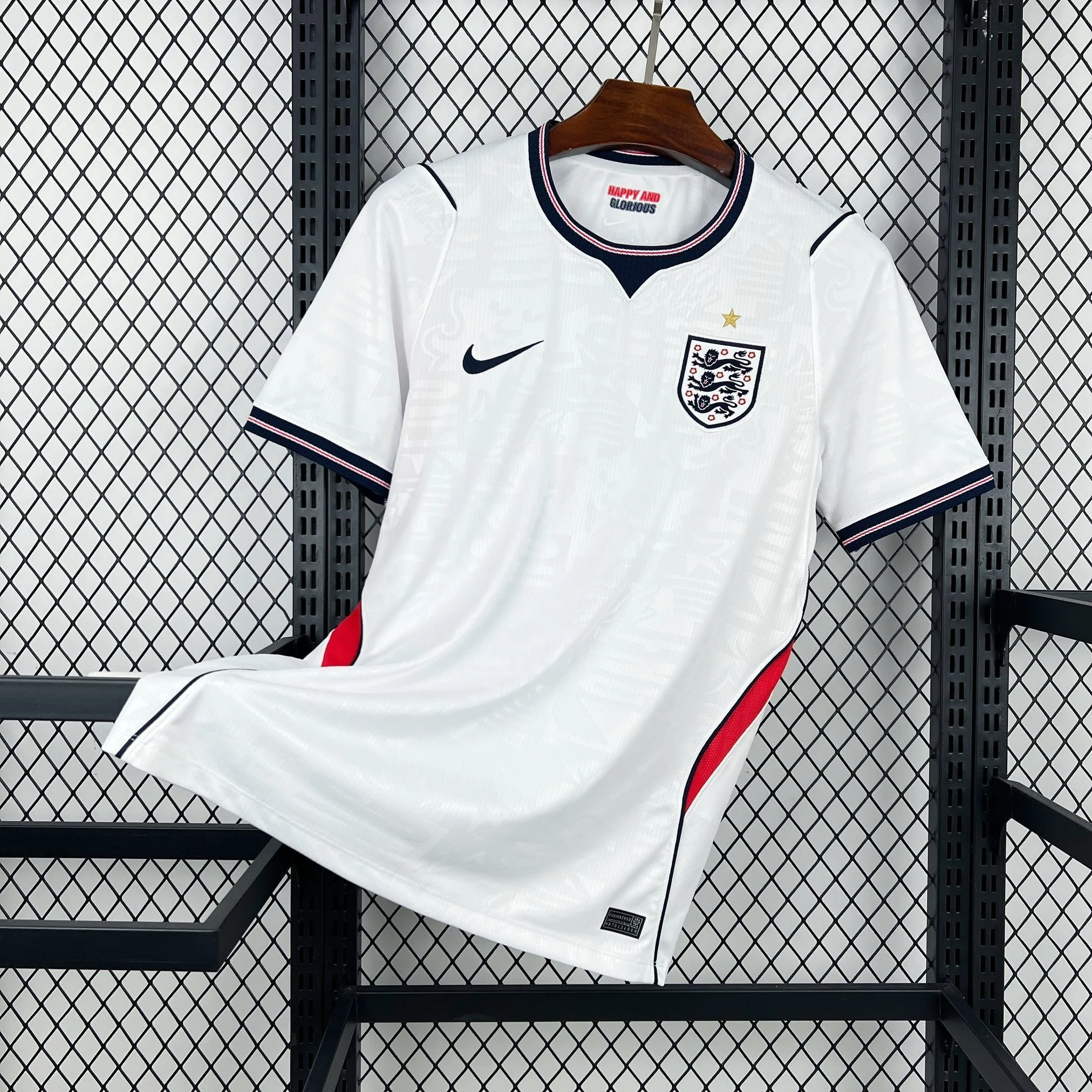
White England 2026 home football shirt used to plan a framed display layout
Knowing how to frame a football shirt begins with one principle: the display should support the garment without making irreversible changes. A shirt is three-dimensional, flexible and often printed. Treating it like a flat poster can create pressure, hard creases or stretched shoulders.
If the shirt is valuable, signed, fragile or historically important, use a professional conservator or experienced memorabilia framer. The practical steps below are for planning a careful display and for asking better questions before any work begins.
Decide what the frame should show
Choose the front or back before measuring anything. The front may show the team colours and crest area; the back may matter more when a name and number are present. Photograph both sides first. Use the product page as a reference for the shirt’s normal proportions—for example, the England 2026 home listing shows the white body, dark trim and red side accents that a front-facing layout would preserve.
Use depth, not pressure
A shirt needs a shadow-box style frame with enough depth to prevent the glazing from pressing directly onto the fabric or raised details. Standard picture-frame depth may be unsuitable. Ask whether the support board, backing and mount materials are designed for long-term textile contact. Avoid ordinary adhesive tape, permanent glue and exposed metal fasteners.
Plan a reversible mount
A reversible approach can be removed later with minimal effect on the garment. Professional framers commonly use a shaped support and hidden stitching through robust seam areas. The aim is to distribute the shirt’s weight rather than pull from one shoulder or a few points. Do not pierce printed graphics merely to make the layout lie flat.
Front display versus back display
Display choice
Best when
Main compromise
Front visible
Colours and front design are the priority
Name and number remain hidden
Back visible
Personalisation is the main story
Crest and front design are hidden
Folded sleeves
Frame width must be reduced
Sleeve details may disappear
Full-width sleeves
Complete shape matters
Requires a larger frame
Professional mount
Long-term reversibility is important
Usually costs more than DIY
Light, heat and moisture
Place the finished display away from strong direct sunlight, radiators and damp walls. UV-filtering glazing can reduce exposure but does not make sunlight harmless. Ensure the shirt is clean and completely dry before framing. Follow the garment care label; our printed football shirt care checklist covers the separate washing decision.
Questions to ask a professional framer
Ask how the shirt will be supported, whether the method is reversible, what touches the fabric, how much internal depth the frame provides and what glazing is proposed. Request a layout preview showing whether collars, sleeve trim, badges, names or numbers will be obscured. “How much to frame a football shirt” cannot have one honest universal answer because size, depth, glazing, mounting and local labour all change the cost.
A safe planning checklist
Photograph both sides and record the current condition.
Decide which features must stay visible.
Measure the shirt while it lies naturally, without pulling it wider.
Choose a deep frame and textile-safe support materials.
Prefer reversible support over glue or permanent alteration.
Keep glazing away from the shirt surface.
Display away from direct sun, heat and moisture.
Recheck the shirt periodically for movement or condensation.
Conclusion
The best football shirt display is not simply the tightest or flattest. It preserves the shape, keeps important details visible and allows the garment to be removed later. Compare designs in the new-season collection, but choose the frame only after measuring the exact shirt you intend to display.

 USD
USD
 ANG(ƒ)
 LKR(₨)
 EGP(EGP)
 BZD(BZ$)
 CRC(¢)
 MAD(DH.)
 OMR(RO.)
 KES(KSh)
 GHS(₵)
 UGX(USh)
 RSD(Din.)
 RON(lei)
 PGK(K)
 CDF(CDF)
 UYU($U)
 KZT(〒)
 PKR(Rs)
 MNT(₮)
 ARS(ARS$)
 COP(COP)
 MVR(Rf)
 IQD(د.ع)
 BDT(Tk)
 ZMW(ZK)
 NAD(N$)
 JMD(J$)
 AOA(Kz)
 MMK(K.)
 PEN(S/.)
 MOP(MOP$)
 BND(B$)
 LAK(₭)
 VND(₫)
 NGN(₦)
 KHR(៛)
 TWD(NT$)
 CNY(¥)
 SAR(S.R.)
 BHD(BD.)
 QAR(QR.)
 KWD(K.D.)
 UAH(₴)
 IDR(Rp)
 MYR(RM)
 AED(AED)
 JPY(円)
 INR(Rs)
 TRY(₺)
 CLP(CLP)
 KRW(₩)
 ZAR(R)
 SEK(Kr)
 ILS(₪)
 HKD(HK$)
 THB(฿)
 PLN(zł)
 NZD(NZ$)
 NOK(Kr)
 MXN(MXN$)
 HUF(Ft)
 CZK(Kč)
 SGD(S$)
 PHP(₱)
 DKK(kr.)
 CHF(CHF)
 BRL(R$)
 RUB(₽)
 CAD(CA$)
 AUD(AUD)
 GBP(£)
 EUR(€)
 Barcelona
 Real Madrid
 Manchester United
 Inter Miami
 Manchester City
 Fc Bayern
 Ac Milan
 Chelsea
 Juventus
 Arsenal
 PSG
PSG Liverpool
 Inter Milan
 Santos FC
 Roma
Roma Portugal
 Al Nassr
 Atletico Madrid
 Everton
 Everton
 Germany
 Ajax
Ajax Mexico
 Napoli
 Columbia
 Sporting lisbon
 France
 Tottenham
 Morocco
 Real Betis
 Brazil
 USA
USA ltalia
 Argentina
 England
 Borussia Dortmund
 Spain
Spain Japan
Japan Netherlands
 Adidas
 Nike
Nike Puma
Puma NB
NB Kappa
Kappa