A retro football shirt is a shirt that brings back, or takes inspiration from, a football design associated with an earlier era. The important word is design. A shirt referencing 1998/99 is not necessarily a garment manufactured in 1998/99, and the label retro does not establish that it was worn by a player.
That distinction matters when two listings show similar colours but offer very different things. One buyer may want an older design to wear now; another may want an original garment from a particular season. Before comparing prices, establish whether you are comparing the same kind of item. This guide separates the design reference, the physical garment's age and the evidence behind the seller's description.
Retro describes a look; age needs its own evidence
Retail language is not perfectly consistent. In its retro football collection, adidas describes the category in terms of remakes and designs inspired by earlier kits. That is a useful example of how a manufacturer uses the term. It is not a rule that verifies every shirt advertised as retro by every seller.
Separate three questions as you browse:
- Which earlier team, season or design does the listing reference?
- When was this particular garment produced, if that fact is known?
- What evidence supports any claim about origin, licensing or match use?
A title may answer the first question while leaving the other two unresolved. Keep those blanks visible rather than filling them with assumptions. A new-looking garment is not proof of recent manufacture; a faded print is not proof of a period original.
Retro, vintage original and reissue: a practical comparison
These are shopping distinctions, not authentication findings. A label on a search result cannot establish a category on its own. In particular, second-hand describes a previous ownership situation; it does not tell you whether the design is old, whether the garment is original to that period or whether it is officially licensed.
When you see the phrase retro vintage football shirts, read beyond the combined keywords. Ask whether vintage is being used to describe style or physical age. That one clarification can prevent a style purchase from being mistaken for a historical collectible.
A documented reissue shows why the dates differ
In a 2025 announcement, adidas and Arsenal described a bring-back of their 1992-1994 home jersey. The original design period and the later release are two separate dates. The announcement is an example of a named manufacturer and club documenting a specific reissue.
It does not establish anything about a different Arsenal shirt offered by another seller. Nor does it make every red shirt with white sleeves part of that release. Match the exact product, design and release information before applying a source to a listing. A historical photograph can help you compare appearance, but it cannot prove the provenance of the physical shirt in front of you.
Reading a real retro listing at FootballTHJORE
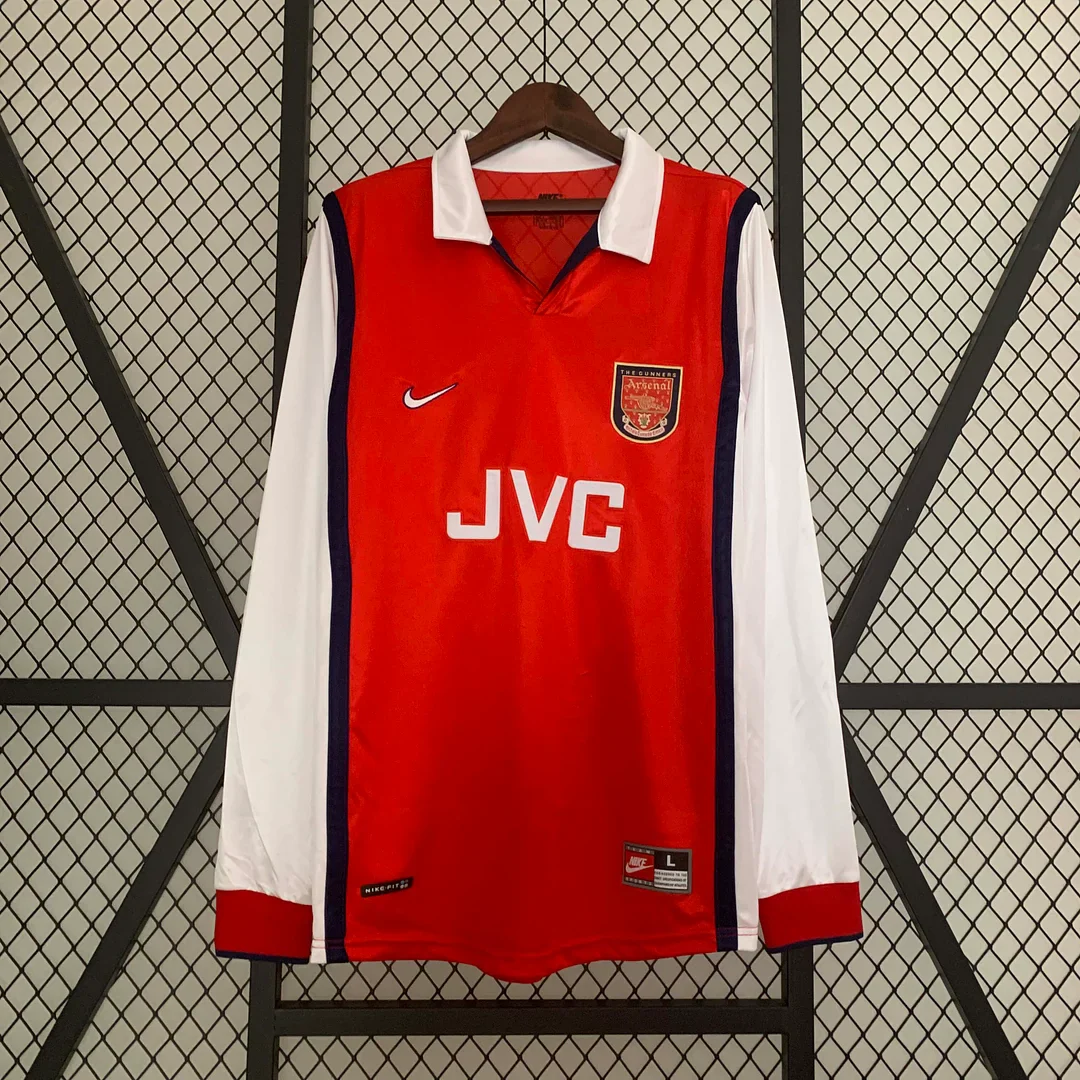
The Arsenal 1998/99 retro home long-sleeve shirt listing provides an example of a design-led description. Its photographs show a red body, white long sleeves, a fold-over collar and a JVC front graphic. The inspected page lists S, M, L, XL and XXL and says that the item is the shirt without shorts or socks.
Those are useful facts for comparing what is offered. They do not establish the year this particular garment was made, official licensing, player use or an authentication result. The 1998/99 reference identifies the design description on the listing; it should not be turned into a claim that this is an original shirt surviving from that season.
This is also a different design reference from the 1992-1994 manufacturer announcement above. We include both to demonstrate how to read evidence, not to imply that the store listing is the documented adidas bring-back. If manufacture date or official origin is essential to your purchase, request supporting information before ordering.
Choose the item for the reason you want it
For a wearable older-style design, start with the visible features you prefer: collar, sleeve length, front graphic and colour. Then check the exact garment measurements, selected size and included items. A famous season does not determine fit. Do not use a manufacturer chart for a different product as if it measured this one.
For a collectible, decide what evidence you require before considering a price. Period production, condition, original printing and documented match use are separate claims. A product photograph or a familiar sponsor graphic is not a substitute for evidence about the specific item. Avoid paying for a provenance claim that the listing never actually makes.
For a gift, ask whether the recipient wants the visual design or a documented historical object. Both can matter to a supporter, but they lead to different checks. Confirming that expectation is more reliable than assuming that anything described as classic will satisfy a collector.
Once the category is clear, use our retro shirt design comparison to narrow a style choice, or the Arsenal era guide for team-specific designs. Those pages compare listings; this page explains how to interpret the terminology before making that comparison. Browse the Arsenal football shirt collection once you have established which type of item you want.
Does retro mean officially licensed?
No automatic conclusion follows from that word. If you are asking whether retro football shirts are legit, first define the claim you need verified: a real seller, a licensed release, a period original or documented match use. They are different questions. Our football shirt authenticity-check guide covers the separate evidence checks. This article does not authenticate any item or certify a retailer's entire range.
Summary
What is a retro football shirt? It is a shirt connected by design to an earlier football era. The design year, production date and provenance are separate facts. Establish which kind of item the seller is offering, verify any claim that matters to you, then compare the actual photographs, measurements and contents. Buy for the design or the documented history you want, without treating one as proof of the other.
Sources and research scope
Reviewed on 19 October 2026 using the linked adidas collection description, its dated Arsenal announcement and the current THJORE product listing. This is documentary research and listing analysis, not hands-on testing or an authentication service. FootballTHJORE sells the linked shirt. The manufacturer sources explain terminology and a separate reissue; they do not verify the store's item or establish an endorsement.

 USD
 ANG(ƒ)
 LKR(₨)
 EGP(EGP)
 BZD(BZ$)
 CRC(¢)
 MAD(DH.)
 OMR(RO.)
 KES(KSh)
 GHS(₵)
 UGX(USh)
 RSD(RSD)
 RON(lei)
 PGK(K)
 CDF(CDF)
 UYU($U)
 KZT(〒)
 PKR(Rs)
 MNT(₮)
 ARS(ARS$)
 COP(COP)
 MVR(Rf)
 IQD(د.ع)
 BDT(Tk)
 ZMW(ZK)
 NAD(N$)
 JMD(J$)
 AOA(Kz)
 MMK(K.)
 PEN(S/.)
 MOP(MOP$)
 BND(B$)
 LAK(₭)
 VND(₫)
 NGN(₦)
 KHR(៛)
 TWD(NT$)
 CNY(¥)
 SAR(S.R.)
 BHD(BD.)
 QAR(QR.)
 KWD(K.D.)
 UAH(₴)
 IDR(Rp)
 MYR(RM)
 AED(AED)
 JPY(円)
 INR(Rs)
 TRY(₺)
 CLP(CLP)
 KRW(₩)
 ZAR(R)
 SEK(Kr)
 ILS(₪)
 HKD(HK$)
 THB(฿)
 PLN(zł)
 NZD(NZ$)
 NOK(Kr)
 MXN(MXN$)
 HUF(Ft)
 CZK(Kč)
 SGD(S$)
 PHP(₱)
 DKK(kr.)
 CHF(CHF)
 BRL(R$)
 RUB(₽)
 CAD(CA$)
 AUD(A$)
 GBP(£)
 EUR(€)
 Barcelona
 Real Madrid
 Manchester United
 Inter Miami
 Manchester City
 Fc Bayern
 Ac Milan
 Chelsea
 Juventus
 Arsenal
 PSG
 Liverpool
 Inter Milan
 Santos FC
 Roma
 Portugal
 Al Nassr
 Atletico Madrid
 Everton
 Everton
 Germany
 Ajax
 Mexico
 Napoli
 Columbia
 Sporting lisbon
 France
 Tottenham
 Morocco
 Real Betis
 Brazil
 USA
 ltalia
 Argentina
 England
 Borussia Dortmund
 Spain
 Japan
 Netherlands
 Adidas
 Nike
 Puma
 NB
 Kappa