Chelsea Football Shirt Guide 2026: Compare Home, Away and 25/26 Options
2026-09-21
Primary keyword: chelsea football shirt Secondary keywords: chelsea football shirts; retro chelsea football shirts; chelsea football club shirt; vintage chelsea football shirts; chelsea 2026 jersey; chelsea jersey 2026; chelsea 26/27 home kit; chelsea 26/27 away kit; chelsea football away kit Research note: Keyword choices and the commercial comparison angle are based on Semrush UK and US Keyword Overview data recorded on 22 September 2026. Product descriptions and links were checked against the live FootballTHJORE catalogue on the same date.
Chelsea shirt shoppers usually arrive with one practical question: which listing best fits the season, colour, sleeve preference and size they have in mind? A search for a Chelsea football shirt can lead to a current home kit, a contrasting away kit, a long-sleeve option, a previous-season design or a retro-style listing. Those labels are useful only when they are matched with the exact product page, because a broad collection can contain several seasons at once.
This guide turns that choice into a clear comparison. It starts with the Chelsea collection, then checks the live 26/27 home and away listings, the separately titled 2026 shirt pages, long-sleeve products and 25/26 alternatives. The aim is not to declare a single “best” shirt. It is to help you identify the right page, read the title accurately, confirm the available size options and make a decision without assuming a feature that the listing does not state.
The guide is written for UK searches for a Chelsea football shirt, while using the US phrase soccer jersey only where it helps American readers. The collection and product pages remain the source of truth for current options. Prices, variants and availability can change, so use the live page at the time of ordering rather than relying on a value mentioned in an older screenshot or article.
What the Semrush research says about this topic
Semrush’s UK Keyword Overview made `chelsea football shirt` the clearest opportunity for a comparison-led article: it showed 1,300 monthly searches, 34% KD, Information + Business intent, a $0.43 CPC and 1.00 competition on 22 September 2026. The related terms broaden the decision set. `retro chelsea football shirts` showed 880 searches at 22% KD, while `vintage chelsea football shirts` showed 480 at 28% KD. The question `where can i buy a chelsea football shirt` showed 20 searches, which supports a practical buying and verification section.
The US query `chelsea 2026 jersey` was smaller at 30 searches and its intent and KD fields were unavailable. The related `chelsea jersey 2026` term showed 50 searches and 15% KD. That is enough to support natural US wording in a few passages, but it is not a reason to force soccer terminology into every paragraph. The page should satisfy the UK-led football-shirt intent first and give US readers a clear route to the same live listings.
The data also separates this guide from the main category page. The `/collections/chelsea` page is the broad shopping destination, while this article explains how to compare seasons and styles before clicking through. Exact product titles such as Chelsea 26/27 Home Kit and Chelsea 26/27 Away Kit belong on their product pages. The article links to them with descriptive anchors and avoids trying to replace those pages for every transactional variation.
Start with the Chelsea collection
Browse the Chelsea soccer jerseys and football shirts collection before comparing individual listings. Its live title is “Chelsea Soccer Jerseys 2026 | Chelsea Football Shirts | THJORE,” and the collection description tells shoppers to compare available home, away and retro listings, sizes and options on each product page. That wording matters: it signals that the collection is an index, not a substitute for checking the details of one item.
The collection content currently points readers towards the Chelsea 26/27 Home Kit, Chelsea 26/27 Away Kit and 2026/2027 Chelsea Home Long Sleeve. It also notes that 25/26 and older designs are present. Use the product title to anchor the season you want. If you are looking for a new-season piece, start with “26/27” or “2026/2027” in the title. If you want a previous design or a retro-inspired option, keep the older season visible in your shortlist so it cannot be confused with the current option.
A useful collection workflow is simple. First, decide whether the shirt is for a current-season wardrobe, a previous-season preference, a long-sleeve requirement or a gift. Second, open the matching product listing. Third, read its title, gallery, selected size range and options. Finally, return to the collection only if you need to compare another season or style. This keeps the broad page useful while preventing a vague “Chelsea shirt” search from turning into the wrong purchase.
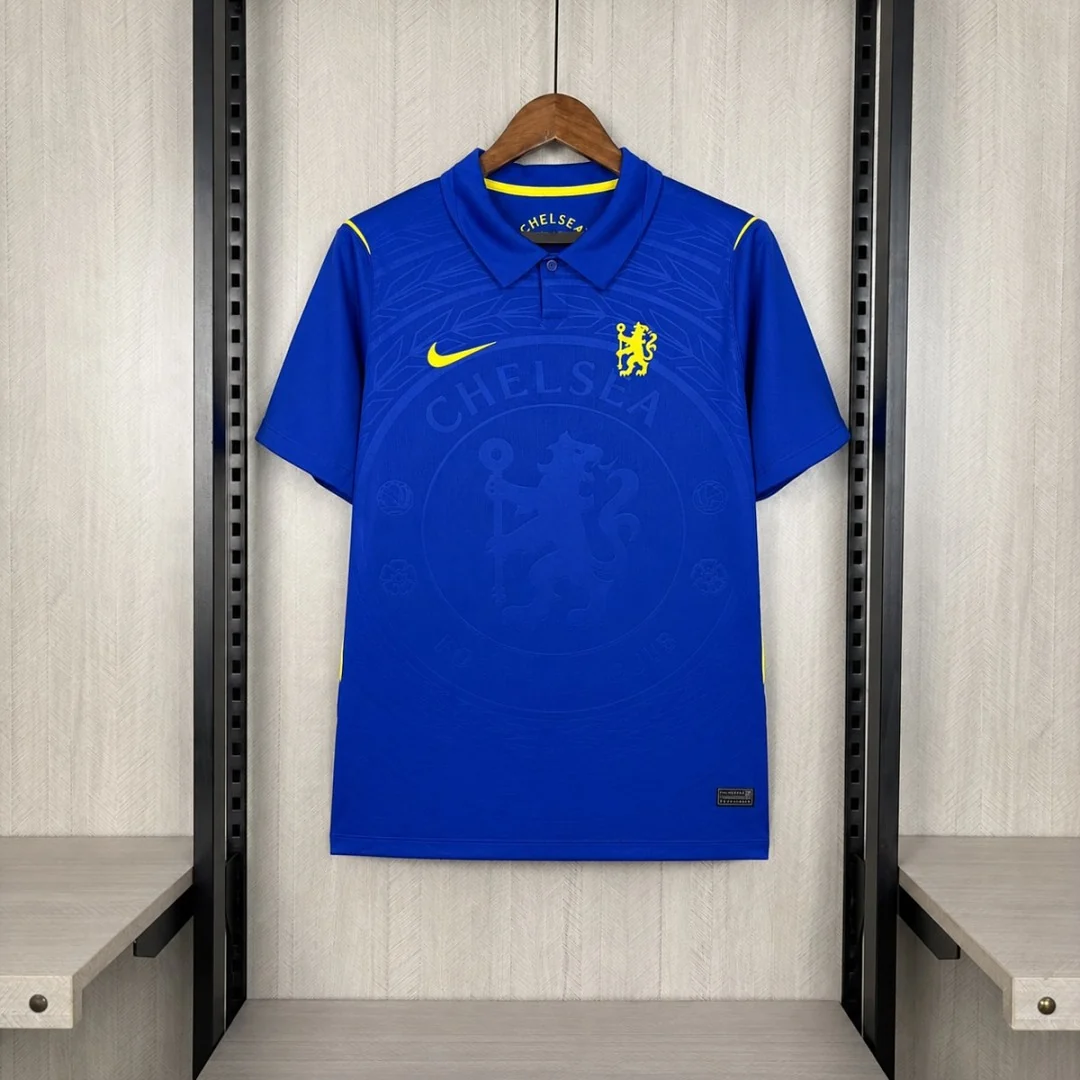
Chelsea 26/27 home kit product image
Chelsea 26/27 Home Kit: the home-first comparison point
The live Chelsea 26/27 Home Kit page is the most direct starting point for a shopper who wants the home design from the 26/27 season. Its verified page title describes a blue football shirt and soccer jersey. The product meta description adds three concrete details: it is a blue collared shirt, it has yellow-coloured details and a tonal front design, and the listing displays sizes S–2XL and options.
Those details are more useful than a generic colour label. “Blue” explains the dominant look, the collar gives a visible construction cue and the yellow-coloured details help distinguish it from a plain blue training top. The tonal front design is a page-level description; it should be treated as a visual comparison point rather than a promise about fabric, performance or technical construction. The page does not provide a basis for claiming official status, a player version, a fan version or a particular textile technology, so this guide makes none of those claims.
The S–2XL range is a starting signal, not a substitute for checking the size selector. Read the actual options on the product page and compare its measurements with a shirt you already own. The same letter can fit differently across a collection, especially when one listing is a short-sleeve shirt and another is long sleeve. If the listing exposes customisation or other options, confirm them in the interface before adding the item to the basket; this article does not assume that every Chelsea product offers the same choices.
The home page is the right destination for readers who value the familiar home colour and a current-season title. Link to it with specific anchor text, such as “Chelsea 26/27 Home Kit,” rather than an ambiguous phrase like “this shirt.” A clear anchor helps a reader understand the click before leaving the guide and helps the product page retain ownership of its exact home-kit search intent.
Chelsea 26/27 Away Kit: a darker alternative
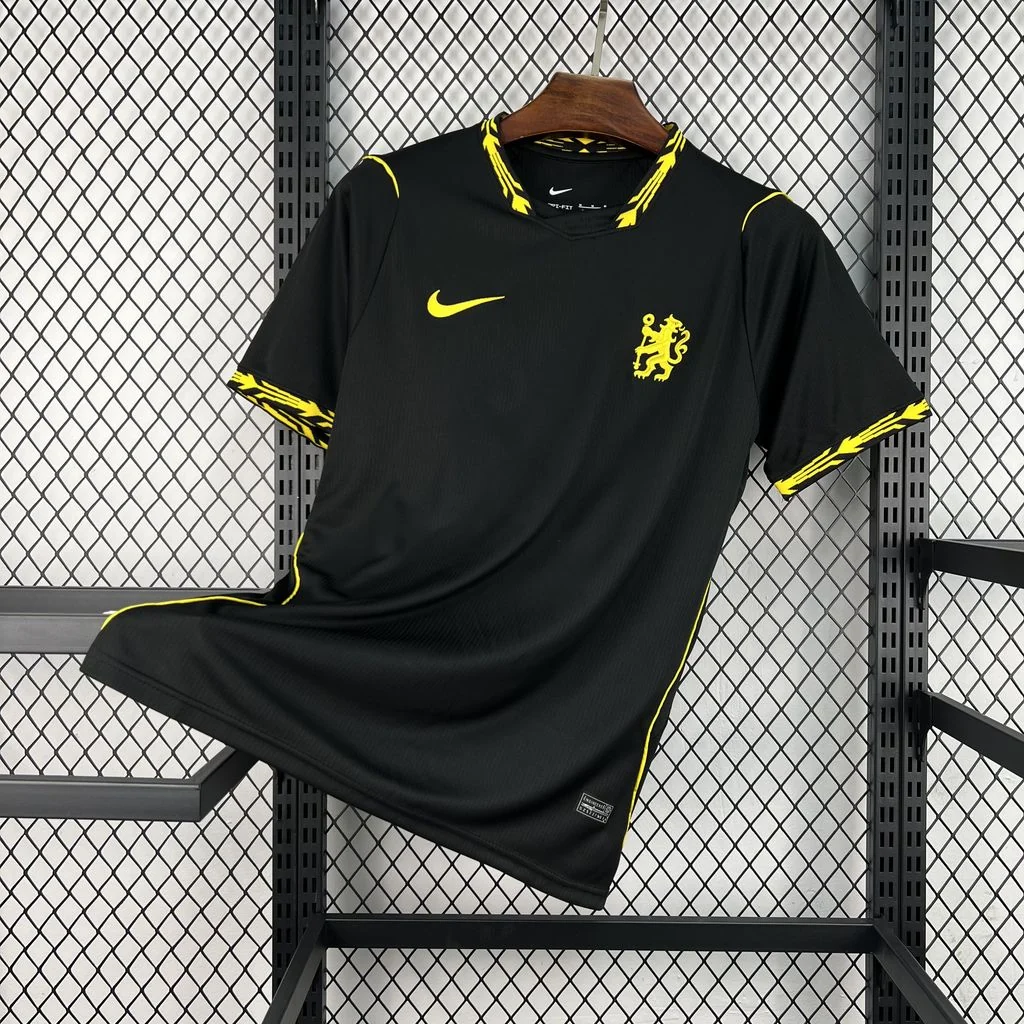
The live Chelsea 26/27 Away Kit page serves a different selection need. Its verified title identifies it as the dark football shirt and soccer jersey, and its meta description describes a dark design with bright yellow-coloured details. It also states that sizes S–2XL and options are shown on the listing.
The contrast with the home page is easy to explain without inventing a performance story. The home page is described as blue with a collar and yellow-coloured details. The away page is described as dark with bright yellow-coloured details. The decision is therefore visual and contextual: choose the home listing when you prefer the blue home look, or compare the away listing when a darker base and brighter contrast match your wardrobe. Neither description proves anything about match use, fabric weight, moisture control or official licensing, so those assumptions should stay out of the buying decision.
Use the away page’s title to verify the 26/27 season. The collection also contains a separate 25/26 Chelsea Away Kit, and the two should not be treated as interchangeable. A shopper searching for a Chelsea football away kit may be comparing current and previous seasons without realising it. Reading the year in the product title before selecting a size is the fastest way to avoid that mismatch.
The page also lists S–2XL in its meta description, but the visible selector is the authority for the options that can be chosen now. If a size is unavailable or a variant changes, the product page can change independently of this article. For that reason, the guide recommends checking the live listing at the moment of purchase instead of treating the guide’s wording as an inventory guarantee.
Chelsea 26/27 away kit product image
Home versus away: a quick 26/27 comparison
Checkpoint
Chelsea 26/27 Home Kit
Chelsea 26/27 Away Kit
Live page title
Chelsea 26/27 Home Kit \
Blue Football Shirt & Soccer Jersey
Page-described base
Blue
Dark
Page-described details
Yellow-coloured details; tonal front design
Bright yellow-coloured details
Sleeve/option evidence
Product meta states sizes S–2XL and options
Product meta states sizes S–2XL and options
Best starting point
A shopper prioritising the home colour
A shopper wanting a darker contrast
Verify before ordering
Current size selector, live options and product title
Current size selector, live options and product title
The table is intentionally narrow. It compares only details stated on the live pages, rather than filling gaps with assumptions. If two products appear similar in a collection grid, the exact title and product description should win. If a visual difference matters to you, open the gallery at full size. If a fit difference matters, read the size information on both pages instead of transferring the home page’s range to the away page.
The separately titled 2026 Home Shirt and Away Shirt pages
The collection search also exposes Chelsea 2026 Home Shirt and Chelsea 2026 Away Shirt pages. Their titles and H1s use “2026” rather than “26/27.” That distinction may look small, but it is valuable for searchers who have a year-specific query or who are comparing listings from different naming conventions.
The two pages should be opened and read as separate products. A title that says 2026 does not automatically prove it is the same item as a title that says 26/27. Compare the main image, the wording in the description, the available sizes and any options shown in the selector. If the visual or option set is not clear, keep both pages in your shortlist and ask which year label is more important to your purchase rather than guessing.
For US readers, the “jersey” wording in the 26/27 page metadata gives a natural bridge to a search for a Chelsea 2026 jersey. UK readers can stay with “football shirt” while using the same product links. The language changes, but the verification process does not: check the exact title, the season label, the image and the available options on the page that will actually receive the order.
Do not use a 2026 page as proof of 26/27 details unless the page itself says so. Conversely, do not rewrite the 26/27 product title as “2026” in anchor text if the exact seasonal distinction is important. Honest anchors preserve clarity for readers and reduce the chance that two closely related products compete for the same click.
Long-sleeve choices for cooler conditions and different preferences
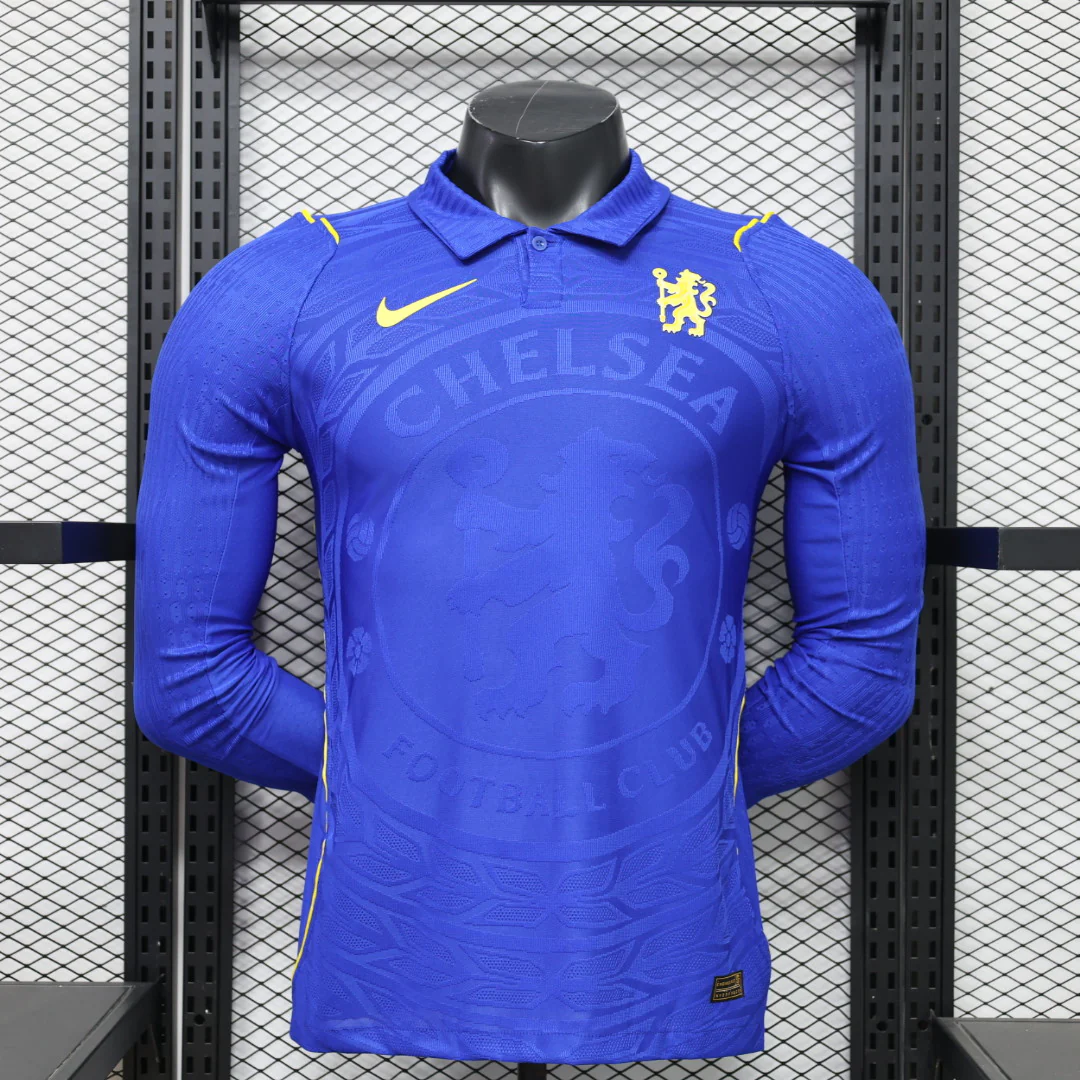
Some shoppers are not choosing between home and away at all; they are choosing sleeve length. The live 2026/2027 Chelsea Home Long Sleeve page is a separate listing with its own title and options. The collection copy names it alongside the 26/27 home and away products, so it is a legitimate comparison point for readers who want long sleeves.
The page title is the fact to rely on: 2026/2027 Chelsea Home Long Sleeve. It does not provide a basis for claiming a particular fabric, thermal property or weather rating. Long sleeve is a construction label, not proof that the garment is warmer or technically different in every way. If sleeve length is important, inspect the photographs and the exact options, then compare measurements with a long-sleeve shirt you already own.
There is also a 2025/2026 Chelsea Away Kit Long Sleeve page. Its title makes the previous-season distinction explicit. It may suit a shopper who prefers that season or wants the away colour in a long-sleeve format. It should not be presented as the same product as the 2026/2027 home long sleeve. Keep the season and side (home or away) in the comparison notes.
A useful shortlist records four labels: season, side, sleeve and size. For example, “2026/2027, home, long sleeve, check selector” is more actionable than “Chelsea long sleeve.” This small habit helps when several browser tabs are open and when a collection page displays products with similar thumbnails.
2026/2027 Chelsea home long-sleeve product image
25/26 options: when an older season is the right choice
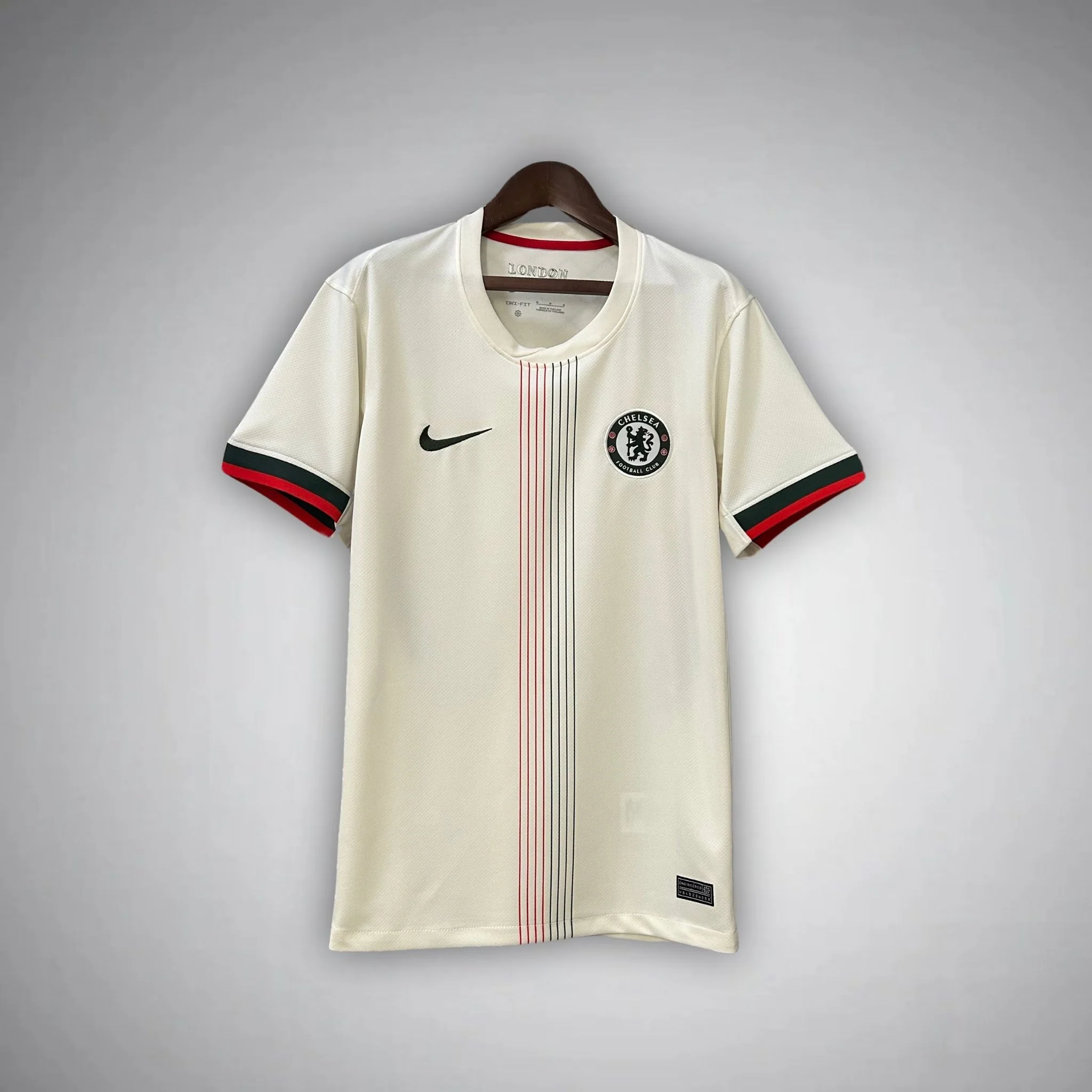
The Chelsea catalogue includes previous-season pages such as 25/26 Chelsea Home Premium Kit and 25/26 Chelsea Away Kit. The title is the primary evidence that these are 25/26 listings. A previous season can be the right choice when a shopper prefers its colour arrangement, wants a specific year for a collection, or is comparing older and current designs.
The decision should be made from the actual listing rather than the assumption that newer is always better. Open the 25/26 page, compare its images with the 26/27 page, and note the available options. The word “Premium” appears in the home listing title, but it should not be expanded into an unverified claim about authenticity, player status, fabric or construction. Product names are labels; they are not permission to add specifications that the page does not state.
Previous-season pages also show why a year must remain in an anchor. “25/26 Chelsea Away Kit” tells the reader exactly what the link leads to. “Chelsea away shirt” could send a reader to a different season and blur the product-page intent. Use the full seasonal phrase when pointing from this guide to an older page.
For a gift, the season can be part of the meaning. A supporter may want the shirt associated with a particular campaign or a design that is no longer the current home look. Ask which year they have in mind, then verify the product title and size options. If the year is unimportant, compare the home and away pages by colour and available options first, then let the live catalogue determine what can be selected.
25/26 Chelsea away kit product image
Retro and vintage searches: keep the label honest
Semrush showed meaningful UK demand for `retro chelsea football shirts` and `vintage chelsea football shirts`. Those terms signal a historical or style-led interest, but they do not tell us which decade or product is wanted. The collection includes older and retro listings, so use the Chelsea collection as the starting index and read each product title carefully.
A retro label should remain tied to the product page that uses it. Do not call a current 26/27 shirt vintage simply because it has a classic colour. Do not claim a design reproduces a particular match, player or era unless the listing explicitly says so. If a page uses “retro” or another historical label, repeat that wording accurately and direct the reader to the page for its photos and options.
When comparing a retro page with a new-season page, use neutral checkpoints: the title’s season or era, the home/away designation, the sleeve presentation, the image, the available sizes and the options. This gives the searcher an evidence-based way to choose without inventing provenance. It also keeps the article useful for someone searching “vintage Chelsea football shirts” who may be browsing for a look rather than a current-season item.
A retro purchase often depends on the reason for buying. A collector may care about a specific year; a gift buyer may care about the colour; a casual wearer may simply prefer a classic-looking shirt. Put that preference first, then use the live title and image to confirm the product. The safest wording is always the wording the page itself supports.
How to choose the right season
Season labels solve the most common Chelsea-shirt confusion. The 26/27 home and away pages are current-season-labelled products. The 2026 pages use a year label. The long-sleeve page says 2026/2027, while the older alternatives say 25/26 or 2025/2026. Keep those labels in your notes exactly as displayed.
If your search begins with “2026,” start with the pages titled Chelsea 2026 Home Shirt or Chelsea 2026 Away Shirt, then compare them with the 26/27 pages only after checking the wording. If your search begins with “new season” or “26/27,” start with the 26/27 pages. If it begins with “25/26,” do not let a collection card for a new-season page replace the older listing in your shortlist.
A simple three-question test helps:
Which year or season do I want? Write 2026, 26/27, 25/26 or a historical label.
Which side or format? Choose home, away, long sleeve, shorts or a retro listing.
Which page states those labels together? Open that exact product page and verify its options.
The third question is the one people skip. A search result can combine words from a title and a snippet, while the live page may have a different option set. Use the product page as the final reference and leave the collection when you need exact information.
How to choose home, away or a darker look
Home and away are visual choices as well as page labels. The verified 26/27 home description is blue with yellow-coloured details and a tonal front design. The verified 26/27 away description is dark with bright yellow-coloured details. That is enough information to begin a colour comparison. It is not enough to infer a technical difference, a match-use rule or a fabric specification.
Think about how the shirt will be worn. If you already own a dark wardrobe, the blue home option may add contrast. If you often wear blue, the darker away option may offer a different look. If the shirt is a gift, check whether the recipient asked for the familiar home colour or mentioned a specific away design. These are personal decisions; the catalogue facts simply make them easier to evaluate.
Use the gallery to confirm what the written description communicates. An image can reveal the relationship between the base colour and the details, but it cannot prove sizing or stock. Use the selector for those. The guide’s comparison table is a starting summary, not a substitute for the product page.
When linking internally, keep the distinction visible: “Chelsea 26/27 Home Kit” and “Chelsea 26/27 Away Kit.” Avoid one generic link labelled “Chelsea kit” when two different destinations are being discussed. Clear anchors improve usability and protect the page roles in the site’s topic cluster.
Fit, measurements and the S–2XL range
The 26/27 home and away product meta descriptions state sizes S–2XL. Treat that as a useful range indicator, while recognising that the live selector controls what can be chosen at the moment you order. A letter alone cannot tell you how a shirt will fit. Compare the listing’s measurements with a shirt you already wear and use the same unit throughout.
Lay the reference shirt flat and note the dimensions you can reproduce consistently. For example, record chest width across the garment and body length from a fixed point. Compare those measurements with the product page’s size information if it is displayed. Do not assume that an adult home shirt, a long-sleeve shirt and an older-season shirt share one cut. Their titles distinguish them as different listings, and their selectors may present different options.
If you are between sizes, use the product page’s own information and consider how you want the shirt to sit. A close everyday fit and a looser layer are different goals. This guide cannot select a size for you without your measurements, and it should not invent a fit description that the page does not provide. When the listing does not show enough information, keep the purchase decision conditional and contact the store through its normal support route if you need clarification.
For a gift, ask for a measurement rather than guessing from age or height. The collection contains products with different years and sleeve formats, so “medium” is not a complete instruction. Record the chosen season, side, sleeve and measurements together. That makes it easier to return to the same product page if you pause before ordering.
Options and personalisation: verify instead of assuming
Product pages may show options beneath the main title. An option could relate to size, a variant or another selection exposed by the listing. The presence of an option on one Chelsea page does not prove that every page offers it. Read the interface for the exact product you plan to buy.
The site may also expose personalisation controls on selected products, but this guide does not promise names, numbers or a particular service. If the page visibly offers a custom field, read its instructions and price treatment before proceeding. If it does not, do not add a customisation promise to your decision. This avoids a mismatch between an article and the product a shopper receives.
The same principle applies to sets and separate pieces. A product title that says kit may describe a listing in the catalogue, while another title says shirt or long sleeve. Check the actual title, images and selectors. Never assume that a shirt page includes shorts or that a shorts page includes a top. The internal links in this guide point to exact pages so readers can verify the scope.
Price checks and changing catalogue information
Prices and availability are live catalogue information. They may change after this article is published, and a selected option can change what the page displays. Use the product page for the current amount and confirm the total in the normal checkout flow. This guide deliberately avoids turning a time-bound amount into a permanent promise.
A useful comparison records the page title and the date you checked it, then returns to the page before ordering. If two listings look similar, do not choose only because one number appears lower in a search snippet. Confirm that the season, home/away side, sleeve and options match what you intended. A lower visible amount for a different season is not the same purchase.
The collection page is a navigation aid; the product page is the transactional reference. That division keeps information current and stops the article from becoming a stale price list. It also gives the product page a clear route to the basket without changing any existing product URL or checkout behaviour.
A practical comparison worksheet
Copy these fields into a note for each candidate:
Exact title: copy the page H1, including 2026, 26/27 or 25/26.
Page type: home, away, long sleeve, retro or another label shown on the page.
Dominant description: use the wording supplied by the page, such as blue, dark or yellow-coloured details.
Size evidence: note the visible range and any measurement chart.
Options: record only options the page exposes.
Image check: compare the gallery with the title and description.
Current price: read it on the live page immediately before ordering.
Destination: save the exact product URL, not a generic collection URL.
For a 26/27 comparison, the worksheet might contain the home and away pages side by side. For a retro search, add the collection’s older listing and preserve its era label. For a gift, add the recipient’s measurements and preferred colour before making the final choice. This process is deliberately simple: it turns search intent into a repeatable check rather than a guess.
Chelsea football shirts for UK and US shoppers
UK searchers naturally use “football shirt,” “football shirts” and “football kit.” US searchers may type “soccer jersey” or “Chelsea 2026 jersey.” These expressions can lead to the same catalogue pages, but the language should follow the reader. This article uses the UK primary phrase because Semrush showed the strongest measurable demand there, while adding the US variant only where it clarifies a page title or search path.
The product metadata itself uses both styles on the 26/27 pages: “Blue Football Shirt & Soccer Jersey” and “Dark Football Shirt & Soccer Jersey.” That makes a natural bridge possible. A UK reader can click the football-shirt anchor; a US reader can recognise the jersey wording in the page title. There is no need to repeat both phrases in every heading.
If you are shopping from either market, the verification steps remain the same. Read the season, home/away label, sleeve format, size range and live options. The market-specific term changes the search wording, not the product facts. Keep the exact destination and use the collection only when you need to compare another Chelsea listing.
When to link to a blog, collection or product
This page sits in the middle of a topic cluster. It should help a reader move from a comparison question to the correct catalogue destination. Use the new-season football kits guide when the reader is comparing release-season labels across clubs. Use the best soccer jerseys 2026 guide when the question is broader than Chelsea. Then return to the Chelsea collection for the current list.
Within this guide, exact product anchors carry the purchase decision: the 26/27 home, 26/27 away, 2026 home, 2026 away, long sleeve and 25/26 pages. The collection anchor carries the broad browse intent. This is a useful order because a reader who already knows the desired season should not have to search the collection again, while a reader who is undecided can compare the catalogue before choosing.
Do not use a blog link to hide the product title. The anchor should describe the destination, and the surrounding sentence should explain why the reader might click it. This keeps the path readable for people and search engines without assigning the same exact phrase to every page.
A decision tree for a Chelsea shirt purchase
If you want the current home look: open the Chelsea 26/27 Home Kit page and check the blue, collar, yellow-coloured details, tonal design description and S–2XL options.
If you want a darker contrast: open the Chelsea 26/27 Away Kit page and check the dark base, bright yellow-coloured details and current options.
If your search says 2026: compare the separately titled Chelsea 2026 Home Shirt or Chelsea 2026 Away Shirt pages with the 26/27 pages. Keep the year label that matches your brief.
If you need long sleeves: compare the 2026/2027 Chelsea Home Long Sleeve and the 2025/2026 Chelsea Away Kit Long Sleeve by title, season and selector.
If you want an older season: open the 25/26 Home Premium Kit or 25/26 Away Kit and keep “25/26” in your notes and anchor.
If you want retro or vintage: start at the Chelsea collection, identify the listing whose title uses the relevant historical label, and verify its exact images and options. Do not infer an era from colour alone.
This tree avoids a single generic recommendation. It lets the shopper’s intent determine the destination and leaves the live page responsible for current options.
Comparing the available page types
The word “shirt” describes a broad need, while the catalogue titles add the distinctions that make a purchase concrete. The 26/27 home page is a blue collared listing with yellow-coloured details and a tonal front description. The 26/27 away page is dark with bright yellow-coloured details. The 2026 home and away pages use a shorter year label, so they should be checked separately. The long-sleeve pages add sleeve information and their own seasons. The 25/26 pages preserve a previous-season choice.
That makes page type more useful than a generic popularity claim. A shopper deciding on colour should compare home and away. A shopper deciding on year should compare 2026 and 26/27 titles. A shopper deciding on sleeve length should compare the long-sleeve pages with the short-sleeve options visible in the catalogue. A shopper browsing history should start with the collection and only then open the pages whose titles support the desired era.
Dark base, bright yellow-coloured details, season label
Search explicitly says 2026
Chelsea 2026 Home Shirt or Away Shirt
Whether the title and images match the intended year
Long sleeves
2026/2027 Home Long Sleeve or 2025/2026 Away Long Sleeve
Sleeve label, season, measurements and live options
Previous season
25/26 Home Premium Kit or Away Kit
Exact 25/26 title, images and selector
Retro or vintage interest
Chelsea collection
Product title’s historical label and exact page facts
The table is a navigation aid, not a ranking. It does not claim that one product is more authentic, better made or more popular than another. Those facts were not established by the verified public pages and are not needed to answer the searcher’s comparison question.
Buying for a match, a trip or everyday wear
The same product can serve different occasions, but the occasion should not lead us to invent a technical specification. For a match-day outfit, a reader may prefer the recognisable home colour or a darker away contrast. For travel, a reader may want a long sleeve or a design that works with existing clothes. For everyday wear, a reader may care most about the colour, season and size. The catalogue pages let each reader make that choice without the guide promising performance or weather protection.
Write the occasion next to the product title in your shortlist. “26/27 home for match day” and “2025/2026 away long sleeve for a cooler trip” retain more useful information than “Chelsea shirt.” Then check the live page for the size and options. If an option matters, do not infer it from another listing. If the page does not state a feature, leave it as an open question rather than turning a guess into product copy.
This approach is especially useful for gifts. Ask whether the recipient wants the current season or a remembered season. Ask whether they prefer home, away or long sleeve. If they have a favourite colour, compare that with the page’s image and description. Confirm the measurements from a shirt they already own. The final choice will be personal, while the verification method remains objective.
What not to assume from a product name
Catalogue names are valuable but limited. “Kit” does not automatically establish which pieces are included. “Premium” does not prove authenticity, player status or a special fabric. “Soccer jersey” in a title does not establish a US-only version. A season label does not prove a release date beyond the wording the page displays. A “retro” term does not establish historical provenance unless the page says what it represents.
Use the title to find the right page, then use the page content to check what is actually offered. This protects the shopper from a mismatch and keeps the article accurate when the catalogue changes. It also helps search engines understand the difference between a guide and a product page: the guide explains how to evaluate labels, while the product page owns the details of its own listing.
If a reader asks about licensing, material, player/fan version, stock, delivery or reviews, the answer should come from the current product page or store policy. This article does not invent those details. A clear “check the live listing” is more useful than a confident statement that the source pages do not support.
FAQ: common Chelsea football shirt questions
Where can I buy a Chelsea football shirt?
Start with the live Chelsea collection, then open the product page that matches your season, home/away side and sleeve preference. The collection is useful for browsing; the product page is where you verify the title, images, size options and other live selectors. If you already know you want 26/27, go directly to the home or away page and compare the details there.
What is the difference between the Chelsea 26/27 home and away listings?
The verified page descriptions identify the home listing as a blue collared shirt with yellow-coloured details and a tonal front design. The away listing is described as a dark design with bright yellow-coloured details. Both pages state S–2XL and options in their meta descriptions. Check the live gallery and selector for the current product you intend to order; the article does not infer fabric, official status or performance differences.
Is a 2026 Chelsea jersey the same as a 26/27 shirt?
Not automatically. The catalogue has pages titled Chelsea 2026 Home Shirt and Chelsea 2026 Away Shirt as well as pages titled Chelsea 26/27 Home Kit and Chelsea 26/27 Away Kit. Compare the exact title, image, description and options on the pages. Keep the label that matches the season wording you want rather than treating the terms as interchangeable.
Are there long-sleeve Chelsea options?
Yes, the collection and product catalogue expose a 2026/2027 Chelsea Home Long Sleeve page and a 2025/2026 Chelsea Away Kit Long Sleeve page. They are separate listings with different season and side labels. Check the live size selector, image and title on the relevant page before ordering, and do not assume that every shirt in the collection uses the same fit or options.
How should I compare retro Chelsea football shirts with a new-season shirt?
Keep the historical label visible and compare the exact page title, season or era, images, sleeve presentation, sizes and options. The collection includes older designs, but the word “retro” should be tied to the listing that uses it. Do not call a current 26/27 product vintage or claim a particular historical reproduction unless the product page states it.
Should I choose a home shirt or an away shirt as a gift?
Ask the recipient which season and colour they prefer before choosing. The 26/27 home page is described as blue with yellow-coloured details, while the 26/27 away page is described as dark with bright yellow-coloured details. If the preference is unknown, give both product links and let the recipient compare the live images and options. Confirm measurements rather than guessing from a general size label.
How do I avoid ordering the wrong Chelsea season?
Copy the complete H1 into your notes before you add the product to the basket. Include 2026, 26/27, 25/26 or the historical wording exactly as shown. Then check that the image and selector belong to the same page. Do not rely only on a search snippet, because a collection contains multiple seasons and a snippet can omit the year that separates them.
Summary: make the title do the work
A Chelsea football shirt search becomes manageable when the product title does the sorting. Start at the collection if you are browsing, then move to the exact page for the season and format you want. For 26/27, compare the blue collared home listing with the dark away listing. For a year-specific search, check the separate 2026 home and away pages before assuming they are identical to the 26/27 pages. For long sleeves, preserve the 2026/2027 or 2025/2026 label. For retro or vintage research, keep the historical wording tied to the product that actually uses it.
Use the live selector for sizes and options, compare measurements with a shirt you already own and confirm the current price immediately before ordering. Treat the collection as the browse layer, the guide as the comparison layer and the product page as the transaction layer. That structure gives UK football-shirt searches and US soccer-jersey searches a clear route to the same verified catalogue without guessing about authenticity, fabric, stock, delivery or reviews.
The best choice is the one whose season, home/away side, sleeve format, colour description and available options match your reason for buying. Save that exact URL, recheck it at checkout and let the live page—not an old snippet or a generic label—make the final decision.

 USD
USD
 ANG(ƒ)
 LKR(₨)
 EGP(EGP)
 BZD(BZ$)
 CRC(¢)
 MAD(DH.)
 OMR(RO.)
 KES(KSh)
 GHS(₵)
 UGX(USh)
 RSD(Din.)
 RON(lei)
 PGK(K)
 CDF(CDF)
 UYU($U)
 KZT(〒)
 PKR(Rs)
 MNT(₮)
 ARS(ARS$)
 COP(COP)
 MVR(Rf)
 IQD(د.ع)
 BDT(Tk)
 ZMW(ZK)
 NAD(N$)
 JMD(J$)
 AOA(Kz)
 MMK(K.)
 PEN(S/.)
 MOP(MOP$)
 BND(B$)
 LAK(₭)
 VND(₫)
 NGN(₦)
 KHR(៛)
 TWD(NT$)
 CNY(¥)
 SAR(S.R.)
 BHD(BD.)
 QAR(QR.)
 KWD(K.D.)
 UAH(₴)
 IDR(Rp)
 MYR(RM)
 AED(AED)
 JPY(円)
 INR(Rs)
 TRY(₺)
 CLP(CLP)
 KRW(₩)
 ZAR(R)
 SEK(Kr)
 ILS(₪)
 HKD(HK$)
 THB(฿)
 PLN(zł)
 NZD(NZ$)
 NOK(Kr)
 MXN(MXN$)
 HUF(Ft)
 CZK(Kč)
 SGD(S$)
 PHP(₱)
 DKK(kr.)
 CHF(CHF)
 BRL(R$)
 RUB(₽)
 CAD(CA$)
 AUD(AUD)
 GBP(£)
 EUR(€)
 Barcelona
 Real Madrid
 Manchester United
 Inter Miami
 Manchester City
 Fc Bayern
 Ac Milan
 Chelsea
 Juventus
 Arsenal
 PSG
PSG Liverpool
 Inter Milan
 Santos FC
 Roma
Roma Portugal
 Al Nassr
 Atletico Madrid
 Everton
 Everton
 Germany
 Ajax
Ajax Mexico
 Napoli
 Columbia
 Sporting lisbon
 France
 Tottenham
 Morocco
 Real Betis
 Brazil
 USA
USA ltalia
 Argentina
 England
 Borussia Dortmund
 Spain
Spain Japan
Japan Netherlands
 Adidas
 Nike
Nike Puma
Puma NB
NB Kappa
Kappa