New Season Football Kits: How to Compare 2026/27 Shirts Before You Buy
2026-09-21
Searching for new season football kits usually means more than looking for a team name and clicking the first result. A new listing may be labelled 2026, 26/27, 2026/2027, home, away, third, long sleeve, kids size or a special edition. The words on the page affect what you think you are buying, while the product page contains the details that decide whether the shirt is right for your collection, match-day outfit or gift. This guide explains a careful way to compare the current listings in the THJORE new-season collection. It is written for UK shoppers who search for football kits and football shirts, while also explaining the soccer jersey wording used by US shoppers.
The guide does not describe a shirt as official, authentic or player-issued unless the individual listing clearly says so. It also does not assume that two shirts with similar colours have the same cut, included items or personalisation options. Instead, it uses the product names, season labels, home/away/third wording, sizes and options that are visible on the relevant pages. The collection is a starting point; the final check should always happen on the product page that you intend to order.
Semrush shows a real UK search opportunity for new season football kits: 90 monthly searches, KD 26%, an information intent classification and a $0.38 CPC in the 21 September 2026 report. The keyword strategy also showed a mixed intent pattern with information leading and a substantial transactional share. That combination explains the structure of this article: answer the research questions first, then make it easy to move from a comparison to a relevant collection or product page.
What shoppers mean by “new season”
The phrase “new season” is a useful shopping shortcut, but it is not one universal product specification. On the current collection, one listing is named Real Madrid 2026 Home Shirt, while another is Barcelona 26/27 Home Kit. There are also names such as 2026/2027 Real Madrid away jersey and 2026/2027 Barcelona Mamba Edition Away Jersey. These labels tell you how the shop has named each listing. They do not remove the need to read the page for its exact title, size range, included pieces and available options.
A season label can describe a calendar year, a two-year season, or the way a product was uploaded. That is why a sensible comparison starts with the exact wording rather than treating every “2026” item as identical. If you are buying a shirt for a particular fixture, a birthday, a collection gap or a planned trip, write down the team, the season label and the shirt type before you compare prices or images.
The new-season collection is broad. It includes current-looking club listings for Real Madrid, Barcelona, PSG, Borussia Dortmund, Sporting Lisbon, Inter Milan, Arsenal, Benfica, Juventus, Manchester City, Bayern Munich, Liverpool and Manchester United, among others. A broad collection helps you discover options, but a team collection is usually the better destination when you already know the club. Use the new-season collection for exploration and the relevant team or product page for the final decision.
Football kits, football shirts and soccer jerseys
UK searches commonly use football kit and football shirt. A “shirt” normally points to the top itself, while “kit” can be used more broadly for a shirt or a set. The exact contents still depend on the listing, so do not assume that the word kit guarantees shorts or socks. On a product page, read the title, gallery, variant controls and description together.
US shoppers often say soccer jersey or soccer shirt. The product-selection process is the same: confirm the team, season, home or away designation, size and any visible custom option. The US Semrush check for new season soccer jerseys returned 20 searches with KD and intent unavailable, so the main article uses the stronger UK term naturally and only uses the US variant where it helps a reader understand the vocabulary.
Using both sets of words does not mean repeating them in every paragraph. Natural language is clearer: use “football shirt” when explaining the UK search, “soccer jersey” when explaining the US wording, and the exact product name when linking to a listing. This protects readability and makes the page more useful to a buyer than a block of repeated synonyms.
A five-minute product-page check
Before comparing two new season football kits, open both product pages in separate tabs and make the same checks in the same order. First, confirm the team and the season wording. Second, identify the shirt type: home, away, third, goalkeeper, long sleeve or a named edition. Third, read the available size information rather than choosing a size from memory. Fourth, inspect the options for name, number or other personalisation only if the page visibly offers them. Finally, check the price and the page’s purchase controls. These steps sound simple, but they prevent most mistakes caused by a thumbnail or a shortened search snippet.
For example, the current collection includes a Real Madrid 2026 Home Shirt and a Real Madrid 26/27 Away Kit. They should be treated as separate listings even though they share a club name. The collection also includes Barcelona 26/27 Home, Away and Third Kit listings, as well as Barcelona 2026 Home, Away and Third Shirt listings. The names are useful comparison signals, but the live product page is the authority for what is available on that particular listing.
Do not use reviews, visible sales counters or a stock number as a substitute for product information. Those signals can change, and they do not tell you whether a size or option matches your need. Use the product facts first, then make a personal decision based on the style and intended use.
Home, away and third: what the label tells you
A home shirt is usually the first item shoppers look for when they want a recognisable club design. An away shirt is often chosen because it looks different from the home design or fills a missing place in a collection. A third shirt can be the most distinctive option, but its purpose varies by club and season. Those are useful buying categories even when you do not know the design details yet.
The collection makes these categories easy to compare. Real Madrid appears with Home, Away and Third labels, and Barcelona appears with Home, Away and Third labels in both 26/27 and 2026 naming patterns. Arsenal has 2026 Home, Away and Third Away listings. AC Milan has 2026 Home, Away and Third Away listings. This gives a buyer a practical comparison set without requiring a claim about which shirt is “best”. The best choice depends on whether you want the most familiar club option, a different colour direction, a complete season group or a gift recipient’s preferred shirt type.
When a title contains “Third Away”, preserve that wording when you describe the link. Do not silently shorten it to “third shirt” if the distinction matters to the shopper. Accurate anchor text reduces confusion and helps the visitor land on the exact listing they intended to see.
Comparison table: reading the current collection
Listing group
Visible examples
Useful comparison question
Real Madrid
2026 Home Shirt; 26/27 Home, Away and Third Kit; 2026/2027 Away Jersey
Do you want one 2026 label or a 26/27 set?
Barcelona
26/27 Home, Away and Third Kit; 2026 Home, Away and Third Shirt; Mamba Edition Away Jersey
Is the named edition the intended product, or is a standard home/away listing better?
Arsenal
2026 Home, Away, Third Away and Champions Cup Print Home Shirt
Does the print or shirt type match the occasion?
PSG
2026 Paris Saint-Germain Home Shirt and 2 Stars Home Shirt
Which exact title and visual listing did you mean?
Liverpool
2026 Home Shirt and 2026 L/S Home Shirt
Would the long-sleeve label suit your intended use?
AC Milan
2026 Home, Away, Third Away and x Slam Jam Third Away Shirt
Are you comparing a regular listing with a named collaboration listing?
Tottenham
2026 Home Shirt and Goalkeeper Pink Shirt
Are you looking for a player outfield shirt or a goalkeeper-labelled product?
This table is a reading aid, not a quality ranking. It deliberately uses the names visible in the collection instead of guessing about fabric, fit, badge construction or official status. If a title catches your eye, follow it to the product page and check the complete listing. A comparison is useful only when the compared items are genuinely the items you can order.
Real Madrid and Barcelona: compare labels before designs
Real Madrid and Barcelona are useful examples because the collection presents more than one season and more than one shirt type for each club. For Real Madrid, the visible options include Real Madrid 2026 Home Shirt, Real Madrid 26/27 Home Kit, Real Madrid 26/27 Away Kit, Real Madrid 26/27 Third Kit, 2026/2027 Real Madrid away jersey and Real Madrid 2026 Third Away Shirt. For Barcelona, the options include Barcelona 26/27 Home Kit, Barcelona 26/27 Away Kit, Barcelona 26/27 Third Kit, 2026/2027 Barcelona Mamba Edition Away Jersey, Barcelona 2026 Home Shirt, Barcelona 2026 Away Shirt and Barcelona 2026 Third Away Shirt.
The first comparison question is therefore not “which club has the nicest shirt?” It is “which listing label matches what I am looking for?” If you want a current home shirt, filter your thinking to Home. If you want a season pair, compare the year notation. If you want a named edition, keep the full edition name in your notes and link to that specific product. This approach avoids a common mistake in broad new-season searches: choosing a visually similar result that belongs to another season or shirt category.
Both clubs also have dedicated collection destinations. A reader who has already decided on Barcelona should move from the broad new-season page to the Barcelona collection and then to the product listing. A reader comparing Real Madrid and Barcelona can keep the broad page open, but should open the exact product pages before deciding. The goal is a short path from discovery to a verifiable item, not a long chain of generic category pages.
Premier League choices in the new-season list
The collection includes current-labelled listings for Arsenal, Chelsea, Liverpool, Manchester City, Manchester United and Tottenham. Arsenal appears with Home, Away, Third Away and Champions Cup Print Home wording. Chelsea appears with Home and Away wording. Liverpool appears with a standard 2026 Home Shirt and a 2026 L/S Home Shirt. Manchester City has a 2026 Home Shirt, while Manchester United has 2026 Home and Away Shirt listings. Tottenham has a 2026 Home Shirt and a Goalkeeper Pink Shirt.
For a Premier League buyer, the useful comparison is between the exact shirt purpose and the intended wearer. A supporter looking for a familiar everyday club shirt may begin with a Home listing. Someone building a two-shirt group may compare Home and Away. A collector who wants a distinct label may investigate the Third Away or named-print option. A person buying a gift should confirm the recipient’s club and the exact shirt type instead of relying on a colour description.
Team collections are available for several of these clubs. Use the Liverpool, Arsenal, Manchester United, Manchester City, Chelsea or Tottenham collection when you want to browse the club’s wider catalogue. Use the new-season collection when the season label is the starting point. This internal-link structure is intentional: it lets the article answer a comparison question while leaving the commercial team query to the relevant collection.
European club options beyond the Premier League
The current page also brings together PSG, Borussia Dortmund, Sporting Lisbon, Inter Milan, Benfica, Juventus, Bayern Munich, AC Milan and Galatasaray listings. Examples visible in the collection include PSG 2026 Paris Saint-Germain Home Shirt, PSG 2026 Paris Saint-Germain 2 Stars Home Shirt, Dortmund 2026 Home Shirt, Sporting Lisbon 2026 Pink Shirt, Inter Milan 2026 Home Shirt, Benfica 2026 Home Shirt, Juventus 2026 Home Shirt, Bayern Munich 2026 Home Shirt, AC Milan 2026 Home/Away/Third options and Galatasaray 2026 Home and Away Shirt.
These names illustrate why exact labels matter. “PSG 2026 Paris Saint-Germain 2 Stars Home Shirt” is not the same search or product description as “PSG 2026 Paris Saint-Germain Home Shirt”. “AC Milan 2026 x Slam Jam Third Away Shirt” is a named listing that should not be reduced to a generic third shirt link. “Tottenham 2026 Goalkeeper Pink Shirt” should not be described as a standard outfield home shirt. Clear wording protects the buyer and keeps internal links useful.
When the collection gives you a club name but not enough detail for a decision, open the club collection and compare the product names there. The article’s role is to teach the process; the destination pages contain the changing catalogue.
How to compare a home shirt with an away shirt
Start with purpose. A home shirt may be the obvious club identity choice, while an away shirt may be attractive because it adds variety. Do not assume one is more comfortable, more valuable or more authentic. Unless the product page states a construction detail, the article should not invent one. Compare the labels, available sizes, visible options, price and image set that are actually shown.
Next, compare the season notation. A 2026 shirt and a 26/27 kit may sit next to each other in a broad collection, but they are still different listings. Record the complete name and check the URL before you add an item to a shortlist. If you are matching a friend’s shirt or replacing a previous item, the year and home/away label are more reliable than a general phrase such as “the new one”.
Finally, compare what you need to do after selecting the shirt. If you want a name or number, look for a visible personalisation option on the product page. If you need a particular size, use the listing’s size information and the site’s measurement guidance. If the product page does not answer a critical question, do not fill the gap with an assumption; choose a different verified listing or postpone the order until the detail is clear.
How to compare a third shirt or named edition
Third shirts and named editions are often discovered through broad searches because the buyer knows a club but not the exact product name. In the current collection, the names “Third Kit”, “Third Away Shirt”, “Champions Cup Print Home Shirt”, “Mamba Edition Away Jersey” and “x Slam Jam Third Away Shirt” all signal that the listing is more specific than a standard home or away label.
Use the full name as a checklist. Is the team correct? Is the season correct? Does the home/away/third wording match the item you meant? Is the edition name visible on the product page? Does the gallery show the same item as the title? These checks are especially valuable when a search result, a category card and a product page use slightly different abbreviations.
A named edition may be a good choice for a collector or a gift, but the article cannot promise rarity, official status or a particular fabric unless the listing confirms it. The practical recommendation is simple: preserve the exact product title in your comparison notes, then use the product page’s available options and purchase controls as the final source of truth.
Season labels: 2026, 26/27 and 2026/2027
One of the visible questions in the Semrush report is “when do new season football kits come out”. The search demand is real, but a single date cannot answer every shopper’s situation. A club may use a calendar-year label, a two-year season label, or a product name that combines both. A shop may also add a product at a different point from the club’s announcement cycle. For that reason, use the product’s current title and page details rather than promising a universal release date.
For a planned purchase, decide which label matters. If you want a 2026 shirt, search and filter for 2026. If you want the 26/27 season, keep “26/27” in your shortlist. If the recipient follows a particular launch or event, verify the team, season and home/away category together. These small notes prevent the most common error in a broad new season search: selecting a product because its colour looks right while its season does not.
The collection title currently says “New Season Football Kits | 2026/27 Soccer Jerseys”. That title helps visitors understand the collection’s purpose, but it does not make every product 2026/27. Read the individual listing. Search snippets, category labels and collection headings are discovery aids; the product page is where you confirm the item you will buy.
Size and fit: use the information on the listing
Size is one of the most important decisions in a new season football kit purchase, yet it is also one of the easiest areas to guess incorrectly. A familiar high-street size does not guarantee the same measurements across every listing. Start with the product page’s size selector and measurement information. The Real Madrid 2026 Home Shirt page, for example, exposes its own size guidance in the product metadata, and the Barcelona 26/27 Home Kit page does the same. Those page-specific details are more useful than a general assumption about every shirt in the collection.
Measure a shirt you already own if you are buying for yourself. Lay it flat, use the measurement method shown by the product page if one is supplied, and compare the result with the available chart. If you are buying a gift, ask for a measurement discreetly or choose a product only after you can confirm the recipient’s usual fit preference. A size label alone cannot tell you whether someone prefers a closer or looser fit.
For children’s sizes, check that the product title explicitly says kids size or youth size. The new-season collection contains many adult-labelled products and some separate kids-size listings elsewhere on the site. Do not infer an adult or children’s cut from a model photograph. If a product page does not give the age range or size range you need, use the site’s size guide or select a listing with clearer information.
Long-sleeve wording also deserves attention. The collection includes Liverpool 2026 L/S Home Shirt, where “L/S” is part of the product name. That is a useful signal for someone specifically looking for long sleeves, but it should not be generalized to all Liverpool or all current-season listings. Read the title and the options for the exact product.
Before ordering, make a small record: product name, size selected, season label, home/away/third category and any personalisation text. This record is helpful when you compare several tabs and reduces the chance of checking out with the wrong variant.
Personalisation and name-and-number choices
Some shoppers use a new season football kit as a starting point for a personal shirt. The right approach is to treat personalisation as a product-page option, not as an automatic feature of every listing. Look for a visible name, number or customisation control. If it is available, enter the details carefully and review the preview or summary before continuing. If it is not visible, do not assume that the option can be added later.
The existing THJORE personalisation guide explains how to check names, numbers and listing details. Use it as a supporting article, then return to the exact new-season product page. This creates a useful path from information to product without claiming that every shirt has the same service or badge option.
Personalisation also makes the season label more important. A name-and-number decision is easier to check when the team, shirt category and year are already correct. Save the product URL with your notes, especially if you are buying more than one item or comparing a home and away version.
What the images can and cannot tell you
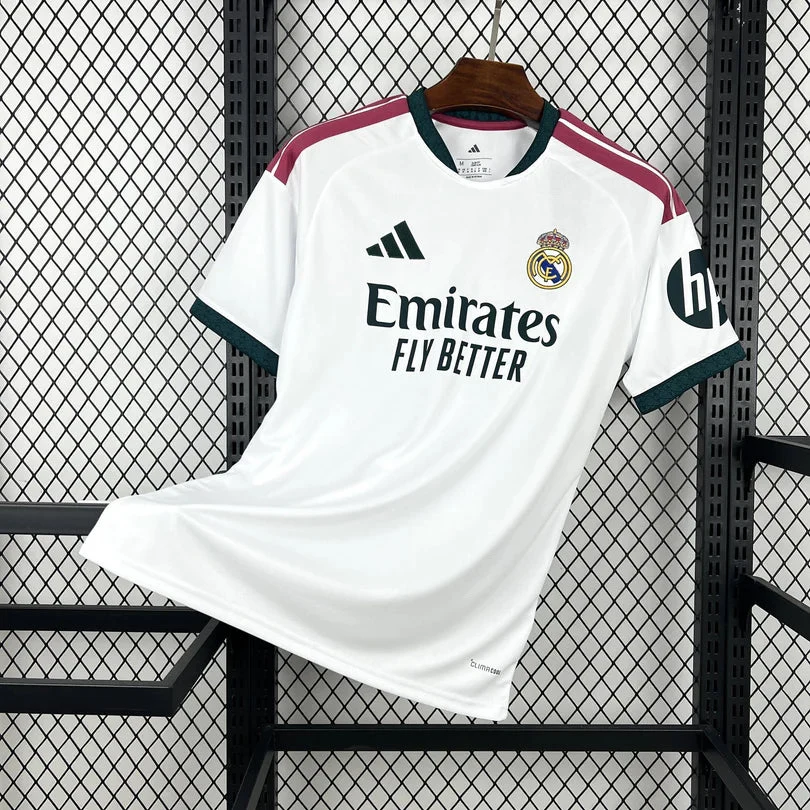
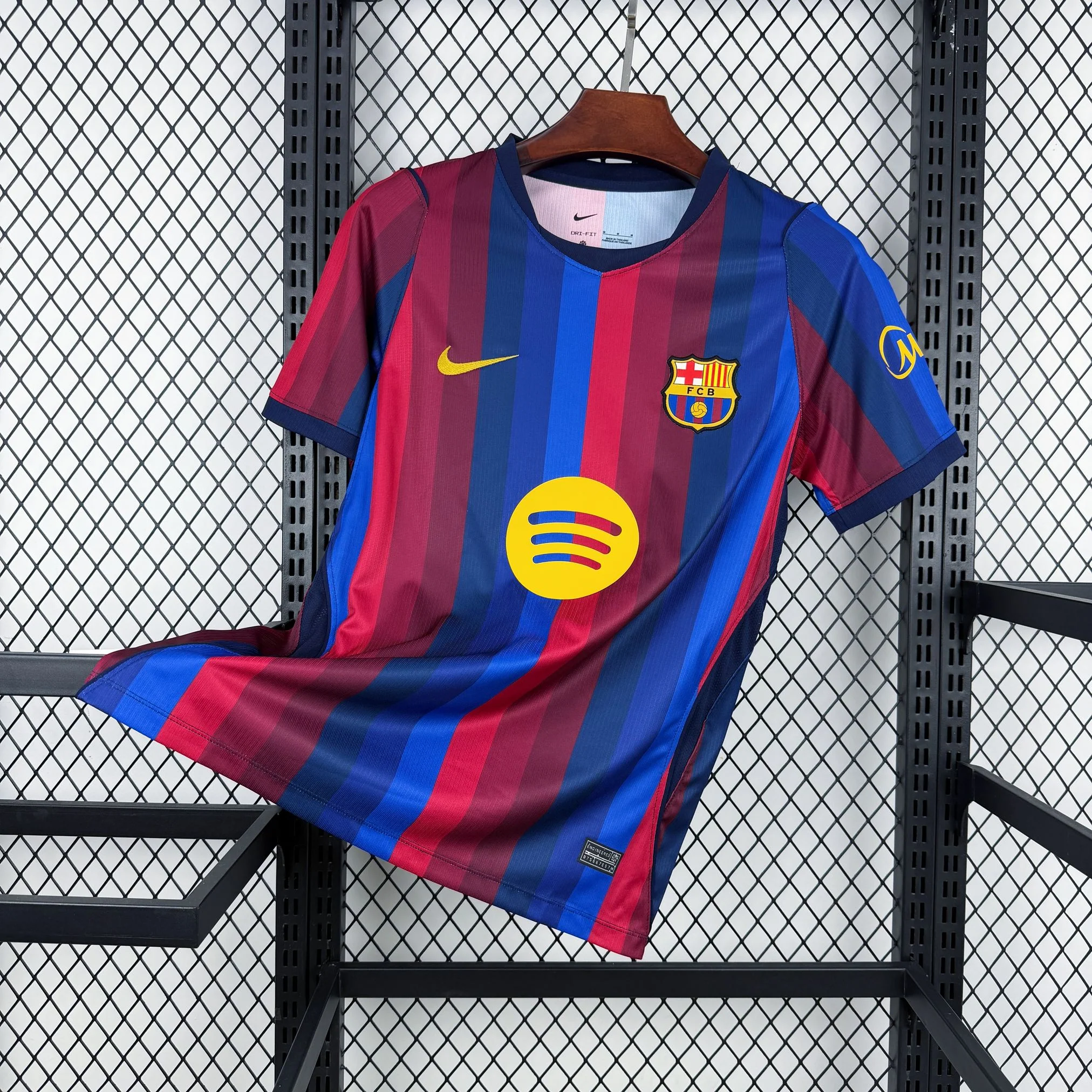
Images are useful for confirming that the card and product page refer to the same named item, but they are not a substitute for text. Look at the gallery alongside the title and variant selectors. If a product has more than one image, compare the front, back and detail views that are actually supplied. Do not infer a fabric finish, a performance technology or a guarantee of colour accuracy from a screen image.
Real Madrid 2026 Home Shirt: use the product image together with the title, size information and options on the listing.Barcelona 26/27 Home Kit: compare the exact season label and product-page details before ordering.
These images are linked to the public product pages checked for this guide. If an image, title or option changes, the product page remains the current source. The purpose of including images here is to help a shopper recognise the comparison context, not to promise a particular experience or make an unverified claim about the item.
Comparing price without making a false promise
Price is an important part of the buying decision, but it needs context. The current New Season editor showed many visible listings at 49.90 USD, including several Real Madrid, Barcelona and club-shirt entries, while product pages can differ. A category-level price observation is not a promise that every item costs the same or that the price will remain unchanged.
Compare the price on the exact product page you intend to buy. Check whether you are looking at a shirt, a kit, a long-sleeve listing or a named edition. Check the selected size and any optional personalisation before you compare totals. If two items appear to share a price, that does not mean they share the same sizes, options or product contents.
A careful article should also avoid promising free delivery, a delivery date, a discount or a return outcome unless the live store policy clearly states it. Keep the decision focused on the facts a shopper can verify: product title, displayed price, available selections and the purchase flow.
A practical shortlist method
Write the target down. Record the team, season label, shirt type and intended wearer.
Start with the collection. Use the New Season collection to discover options, then move to the relevant team collection if you already know the club.
Open exact product pages. Keep the complete product name and URL for every item you compare.
Check the category. Confirm home, away, third, goalkeeper, long sleeve or named edition wording.
Check size information. Use the product’s own measurements and options; do not generalise from another shirt.
Check personalisation. Use only controls that are visibly offered on the listing.
Compare the final facts. Review price, selected variant, image set and purchase controls together.
Remove uncertainty. If a key detail is missing, choose a clearer listing or postpone the decision rather than guessing.
This method works for a casual purchase and for a larger comparison. It also creates a clean internal-link journey: article to collection, collection to team page, team page to product. Each step answers a different question, so the pages support one another rather than competing for the same search intent.
Choosing a shirt for different buying situations
For a match-day outfit
Begin with the club and the shirt type you actually want to wear. A home shirt is usually the simplest starting point because the label is easy to recognise, but an away or third option may be a better fit for your wardrobe. Compare the product’s available size information and keep the whole title when you save the link. If the page offers a long-sleeve option, treat it as a separate product decision rather than assuming that every shirt has the same sleeve length.
For a gift
Ask yourself which detail the recipient will recognise first: club, season, home/away category or a named edition. If you cannot ask, a clearly named home shirt may be easier to verify than an item with a complex edition label. Confirm the size range before you order and avoid promising a personalisation service unless the chosen listing visibly provides it. A gift decision is more reliable when the product name and URL are saved for reference.
For a collection
Collectors may care about completing a club group, a season group or a set of home, away and third listings. Make a simple spreadsheet or note with the exact product names. The collection currently contains several clubs with multiple categories, including Real Madrid, Barcelona, Arsenal, AC Milan and Liverpool. Mark which items you already own, which label is missing and which product page confirms the missing item. This prevents buying a similar shirt twice.
For a first football shirt
If this is your first purchase, do not begin with a complicated comparison of every club. Choose a team, decide whether you want a home or away shirt, review the size guidance and check the page’s options. The product page for Real Madrid 2026 Home Shirt and the product page for Barcelona 26/27 Home Kit both show why the final step should happen on the exact listing. A clear, verified choice is more useful than a large shortlist full of assumptions.
Examples of verified product links include the Real Madrid 2026 Home Shirt and Barcelona 26/27 Home Kit. These links use descriptive anchor text so that the visitor knows what will open. The personalisation guide and the football shirt size guide answer supporting questions without taking the place of the product page.
For a broader shopping journey, a reader can move from this guide to the collection, then to a PSG 2026 Home Shirt or another exact listing. The link order reflects intent: research first, commercial collection second, product details third.
Questions shoppers ask about new season football kits
When do new season football kits come out?
There is no single date that applies to every club, product or shop listing. Semrush’s UK report shows this as a real question with 20 searches, but the report does not provide a universal release date. Use the current product title and page details to confirm whether a listing is labelled 2026, 26/27 or 2026/2027. If timing matters for a gift or event, check the exact page rather than relying on a general calendar.
What is the difference between a football shirt and a football kit?
People use the terms in different ways. A football shirt normally means the top, while kit can be broader. A product title is the safest guide to what you are viewing. Do not assume that a word such as kit includes shorts or socks unless the listing says so. Open the product page, read the title and description, and check the images and options before ordering.
Should I choose a home, away or third shirt?
Choose the category that matches your purpose. Home is a familiar club choice, away adds a different option, and third can suit a collector or someone who prefers a less conventional listing. The current collection has all three categories for some clubs, but the best choice depends on the exact season, size and product page. There is no universal ranking that makes one category right for every shopper.
How do I choose the right size?
Use the size information on the exact product page and compare it with a shirt you already own if possible. A size label may not tell you the measurements or fit preference. For children’s or youth items, choose a listing that explicitly identifies the intended size group. If the page does not answer your question, consult the site’s size guide or choose a clearer listing rather than guessing.
Can I add a name and number to every new season shirt?
No assumption should be made for every listing. Look for a visible personalisation control on the product page. If the option is present, review the entered details before continuing. If it is absent, do not promise that it can be added later. The personalisation guide explains how to inspect names, numbers and listing details, while the product page remains the final authority.
Is a 2026 shirt the same as a 26/27 shirt?
Not necessarily. Both labels appear in the current collection, and they identify separate listings. A 2026 item may use a calendar-year name, while 26/27 describes a two-year season. Keep the exact label in your shortlist and follow it to the product page. That small step prevents a season mismatch when you are replacing an older shirt or building a matching group.
How can I compare two similar-looking listings?
Compare the full titles, URLs, season labels, home/away/third category, size options, personalisation controls and displayed price. Use the images to confirm that the card and product page match, but do not infer fabric, authenticity or delivery promises from a photograph. If the difference is still unclear, choose the listing with the more complete information or contact the store through its normal support route.
Summary: a safer way to shop the new season
Searching for new season football kits is the beginning of a buying decision, not the final step. The current THJORE collection brings together a wide range of 2026, 26/27 and 2026/2027-labelled listings, including home, away, third, long-sleeve and named-edition products. That breadth is useful, but it means the exact product page matters.
Use the collection to discover choices, keep UK and US terminology natural, and then confirm the team, season, shirt category, size, options and price on the product page. Compare like with like, preserve the full product name in your notes, and link to a team collection or product when you are ready to narrow the choice. If a detail is not verified, leave it open rather than inventing an answer.
The result is a more reliable path from an informational search to a relevant purchase: research the new season, compare the labels, verify the listing and then choose the shirt that genuinely matches your needs.
 USD
USD
 ANG(ƒ)
 LKR(₨)
 EGP(EGP)
 BZD(BZ$)
 CRC(¢)
 MAD(DH.)
 OMR(RO.)
 KES(KSh)
 GHS(₵)
 UGX(USh)
 RSD(Din.)
 RON(lei)
 PGK(K)
 CDF(CDF)
 UYU($U)
 KZT(〒)
 PKR(Rs)
 MNT(₮)
 ARS(ARS$)
 COP(COP)
 MVR(Rf)
 IQD(د.ع)
 BDT(Tk)
 ZMW(ZK)
 NAD(N$)
 JMD(J$)
 AOA(Kz)
 MMK(K.)
 PEN(S/.)
 MOP(MOP$)
 BND(B$)
 LAK(₭)
 VND(₫)
 NGN(₦)
 KHR(៛)
 TWD(NT$)
 CNY(¥)
 SAR(S.R.)
 BHD(BD.)
 QAR(QR.)
 KWD(K.D.)
 UAH(₴)
 IDR(Rp)
 MYR(RM)
 AED(AED)
 JPY(円)
 INR(Rs)
 TRY(₺)
 CLP(CLP)
 KRW(₩)
 ZAR(R)
 SEK(Kr)
 ILS(₪)
 HKD(HK$)
 THB(฿)
 PLN(zł)
 NZD(NZ$)
 NOK(Kr)
 MXN(MXN$)
 HUF(Ft)
 CZK(Kč)
 SGD(S$)
 PHP(₱)
 DKK(kr.)
 CHF(CHF)
 BRL(R$)
 RUB(₽)
 CAD(CA$)
 AUD(AUD)
 GBP(£)
 EUR(€)
 Barcelona
 Real Madrid
 Manchester United
 Inter Miami
 Manchester City
 Fc Bayern
 Ac Milan
 Chelsea
 Juventus
 Arsenal
 PSG
PSG Liverpool
 Inter Milan
 Santos FC
 Roma
Roma Portugal
 Al Nassr
 Atletico Madrid
 Everton
 Everton
 Germany
 Ajax
Ajax Mexico
 Napoli
 Columbia
 Sporting lisbon
 France
 Tottenham
 Morocco
 Real Betis
 Brazil
 USA
USA ltalia
 Argentina
 England
 Borussia Dortmund
 Spain
Spain Japan
Japan Netherlands
 Adidas
 Nike
Nike Puma
Puma NB
NB Kappa
Kappa