Best Soccer Jerseys 2026: How to Compare Club Shirts Before You Buy
2026-09-21
Searching for the best soccer jerseys 2026 is a useful starting point, but it is not a ranking that can be answered by a single colour, club or photograph. A good choice depends on what you want to buy, which season label you need, whether you prefer a home, away or third shirt, and what the exact product page says about sizes and available options. This guide turns that broad commercial search into a repeatable comparison process. It is written for US shoppers who say soccer jersey and soccer jerseys, while keeping the UK terms football shirt and football kit natural for readers who use them.
Semrush's US report for best soccer jerseys 2026 showed 70 monthly searches, KD 25% and Business intent, with CPC of $0.55. The UK supporting report for best football kits 2026 showed 70 searches; KD and intent were not readable there, with CPC $0.59. Those figures support a comparison article, but they do not identify one universally best shirt. The practical answer has to come from current, verifiable listing information.
The current THJORE New Season collection contains a wide range of 2026, 26/27 and 2026/2027-labelled listings. It includes club shirts for Real Madrid, Barcelona, PSG, Borussia Dortmund, Arsenal, Liverpool, Manchester United, Manchester City, Bayern Munich, Inter Milan and other teams. The collection is useful for discovery. The exact product page remains the authority for the title, season wording, size range, visible choices and displayed price.
What does “best soccer jerseys 2026” actually mean?
The word best can describe different decisions. One shopper may want the most recognisable home shirt for a club they follow. Another may want an away shirt because it looks different from last year's design. A collector may be trying to complete a home, away and third group. Someone buying a gift may care most about a clear size range and an easy-to-understand product title. A comparison that ignores those differences gives a confident answer without solving the buyer's real problem.
For that reason, this guide uses best as a comparison framework rather than a claim that one listing wins for everybody. Each candidate should be judged against the same questions: Does the team match the intended recipient? Does the season label match the purchase goal? Is the shirt category clear? Does the page expose the size or option information you need? Can you move from the collection card to the exact listing without losing the context?
There is another reason to be careful. Product names in a new-season collection can use a calendar year, a two-year season or a year range. A listing called Real Madrid 2026 Home Shirt and another called Real Madrid 26/27 Away Kit should be treated as separate choices even though both include the club name. A 2026/2027 Barcelona away jersey can also sit beside a Barcelona 26/27 home or third listing. The label is a useful signal, not a substitute for reading the page.
The comparison method used in this guide
A useful best-of guide needs a consistent method. Start with the searcher's actual goal, then compare like with like. If you want a home shirt, do not compare it with a long-sleeve away listing and conclude that one club is better. If you are buying for a child, do not use an adult size range as evidence that the product will fit. If you need a particular season, do not silently replace a 26/27 product with a 2026 product because the image looks similar.
1. Define the buying brief
Write down the team, season label, shirt category and intended wearer before you open many tabs. “Barcelona home shirt for an adult in a two-year season” is a clearer brief than “best Barcelona jersey”. If the shirt is a gift, note the recipient's preferred club and whether a name or number is actually required. If this is a collection purchase, note the items already owned so that a similar-looking listing does not become an accidental duplicate.
This step also makes internal links more useful. The New Season Football Kits collection is the right place to browse when the team is still open. Once you know the club, a team collection such as the Real Madrid collection, the FC Barcelona collection or the Arsenal collection provides a narrower path. From there, the product page gives the final facts. The pages answer different questions and should not compete for exactly the same search intent.
2. Confirm the exact product name
Keep the complete title when you shortlist an item. “Real Madrid 2026 Home Shirt” is more useful than a note that says “white Real Madrid jersey”. “Barcelona 26/27 Home Kit” preserves the season label that distinguishes it from other Barcelona listings. If a title includes Third Away, long sleeve or a named edition, keep that wording. Shortening a precise label can make it harder to find the intended product again.
The title is also a guard against image-led assumptions. A photograph can show a colour or pattern, but it does not by itself tell you whether the page is for a home, away or third product, or whether an item is sold as a shirt or a broader kit. Read the title, page description, gallery and option controls together.
3. Compare the same evidence for every candidate
Use one checklist for every product. Record the team, season, category, visible size range, personalisation controls, displayed price and product URL. If one field is unavailable, write that down instead of filling it with a guess. This makes the comparison honest and helps you decide whether a listing is clear enough to buy.
A best-of article should not invent a score for material, comfort, authenticity, stock or delivery when the page does not verify those facts. Those claims can change and may require information that is not available in the public listing. The strongest evidence for this guide is the information a shopper can inspect on the live collection and product pages.
Home, away and third shirts: compare the category first
Home shirts are often the easiest place to start because the category is familiar. A buyer who wants a recognisable match-day top may prefer the home listing for that reason. Away shirts can be better for someone who wants a different colour direction or an additional item from the same season. Third shirts may appeal to collectors and shoppers who prefer a less conventional design. None of those categories is automatically the best; the right one depends on the purpose.
The current New Season collection gives several useful comparison groups. Real Madrid appears with Home, Away and Third labels across its current listings. Barcelona appears with 26/27 Home, Away and Third Kit labels as well as 2026 Home, Away and Third Shirt labels. Arsenal has 2026 Home, Away and Third Away listings. These examples show why the season and category words matter when two product cards look related.
When a listing says kit, do not assume that it includes shorts or socks. People use kit in different ways, and the product title and description are the reliable place to check what the listing represents. A football shirt normally points to the top, while soccer jersey is the US phrase many shoppers use for the same kind of top. The exact contents still depend on the page.
Season labels and the 2026 comparison
Season labels deserve their own check because “2026” and “26/27” are not interchangeable shorthand. A calendar-year label may describe how the seller named the product. A 26/27 label describes a two-year season. A 2026/2027 title uses a year range. If a buyer is replacing a shirt for a particular season, the label should be recorded exactly rather than normalised to a phrase that feels simpler.
Real Madrid provides a practical example. The collection includes a Real Madrid 2026 Home Shirt, a Real Madrid 26/27 Away Kit and a 2026/2027 Real Madrid away jersey. They may be relevant to the same fan, but they are separate listings. Compare the title and page controls of the exact item before deciding which is the better match.
Barcelona provides another example. The collection includes Barcelona 26/27 Home Kit, Barcelona 26/27 Away Kit and Barcelona 26/27 Third Kit, alongside 2026 Home, Away and Third Shirt listings and a 2026/2027 Barcelona Mamba Edition Away Jersey. A buyer who wants the new two-year season should keep the 26/27 wording in the shortlist. A buyer who wants a calendar-year listing should check the 2026 title instead.
Season accuracy is especially important for gifts and collections. The recipient may have asked for a specific campaign, or a collector may already own two items from one label. The best soccer jersey is the one that satisfies the brief, not the one with the most persuasive thumbnail.
Size and fit: what a comparison can and cannot tell you
Size information should be checked on the exact product page. Two shirts in the same collection can expose different ranges or option controls. The public Real Madrid 2026 Home Shirt page and Barcelona 26/27 Home Kit page each expose page-specific size guidance, which is why a buyer should follow the product link rather than rely on a general assumption about every listing.
Use a shirt you already own as a reference when the page provides measurements, and compare like with like. A label such as S, M or L is not a universal measurement. A youth or kids listing should explicitly identify the intended size group; do not infer it from a model photo or a club name. If the listing does not answer a key fit question, keep that uncertainty visible and consult the site's size guide before ordering.
For US shoppers, soccer jersey often carries the same fit questions as football shirt in the UK. The language changes, but the process does not: verify the exact page, compare the visible measurements or size options and do not assume that a different product has the same cut. The related Football Shirt Size Guide can help with measuring, while the product page remains the final source for available choices.
Personalisation and options
Personalisation can change the buying decision, but it should never be assumed. Look for an explicit name, number or other option control on the product page. If a control is present, review the entered details before continuing. If it is absent, do not promise that a name or number can be added later. The personalisation guide explains how to inspect listing controls without claiming that every product supports the service.
Keep personalisation separate from the ranking question. A shirt may be the best match for a collector because of its season label, while another may be more suitable as a gift because the live page visibly offers the option the buyer needs. The comparison should state the evidence that led to the recommendation instead of turning an unverified feature into a general claim.
Three current product examples
The following examples are comparison anchors, not a universal ranking. Each is a real listing observed in the New Season collection and linked to a public product page. Check the live page again before ordering because titles, options and prices can change.
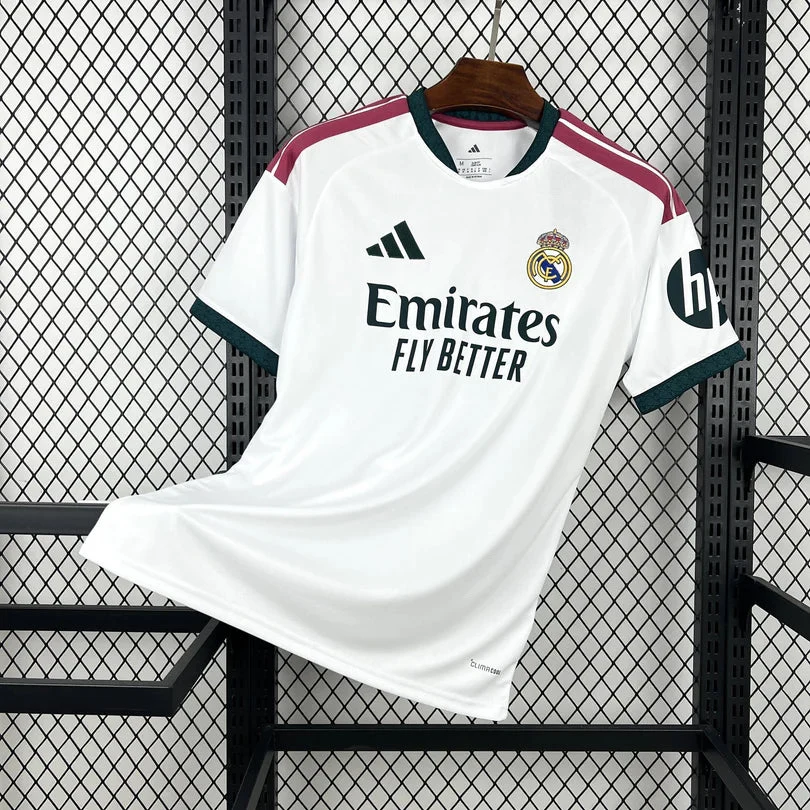
Real Madrid 2026 Home Shirt: verify the current title, sizes and options on the product page.
Real Madrid 2026 Home Shirt
This listing suits a brief that starts with Real Madrid, a 2026 label and a home category. It is a straightforward candidate when the buyer wants a familiar club option and wants the exact calendar-year wording preserved. The useful evidence is the product title, the page-specific size information and the visible purchase controls. The image helps the shopper recognise the item, but it does not prove a fabric specification, licensing status or delivery outcome.
Compare it with the Real Madrid 26/27 Away Kit only after deciding whether the home/away category and season label match the intended purchase. A buyer who wants a home shirt should not let an away design win simply because the colour looks more distinctive. A collector who already owns the home item may reasonably choose the away listing instead. The “best” result changes with the buying brief.
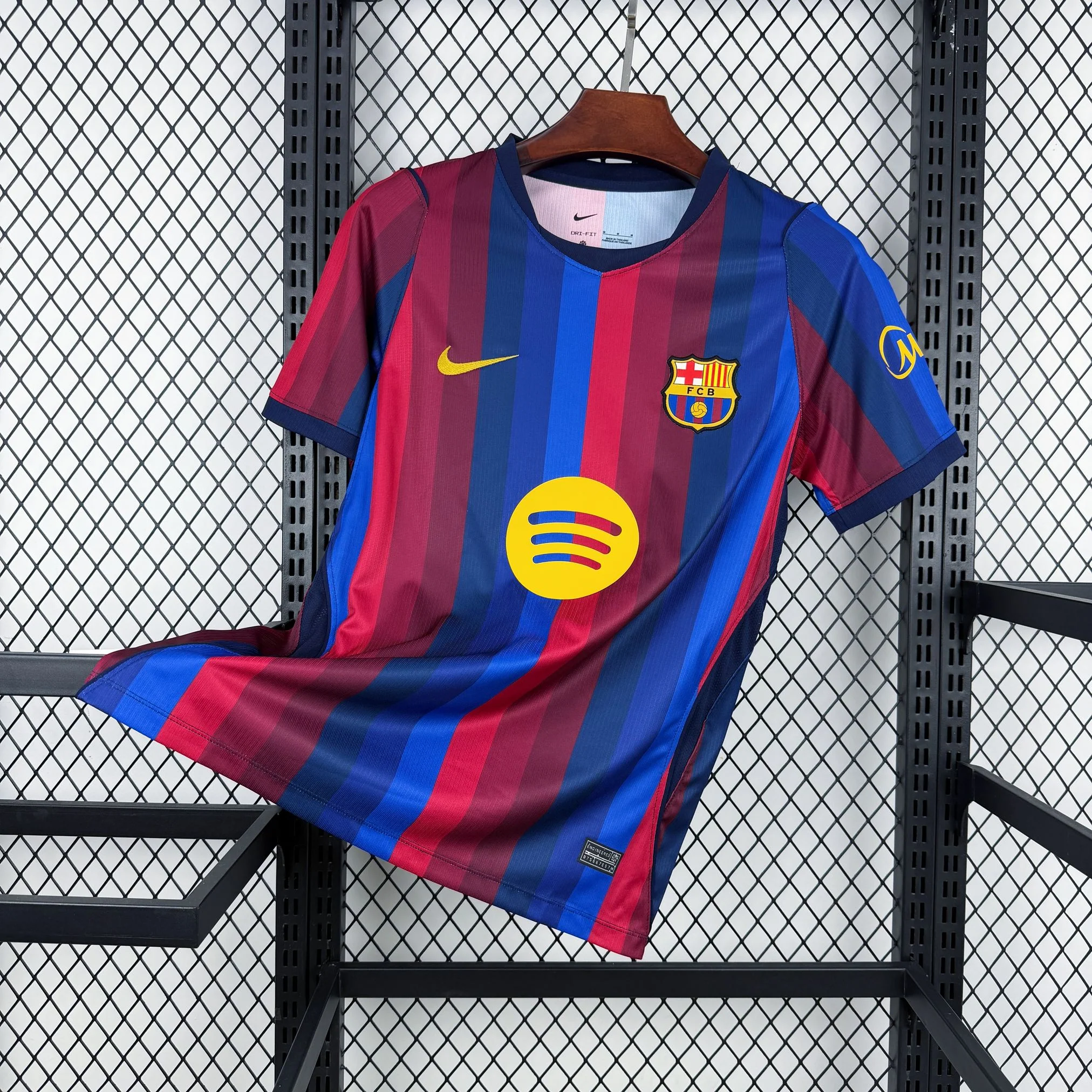
Barcelona 26/27 Home Kit
The Barcelona 26/27 Home Kit is a useful anchor for a buyer who wants a two-year season label and a home category. The collection also shows Barcelona 26/27 Away and Third Kit listings, so the comparison can stay within one season while the shirt type changes. That is more useful than comparing a home 26/27 item with a vaguely labelled older product.
Barcelona 26/27 Home Kit: use the product page to confirm the exact season and available options.
The page should be checked for its displayed sizes and options, then compared with the exact requirement. A buyer seeking a named edition should open that named edition rather than treat the home kit as a substitute. The article links to the product page so the decision can move from comparison to verification without losing the context.
PSG 2026 Paris Saint-Germain Home Shirt
The PSG 2026 Home Shirt gives the comparison a different club and a calendar-year label. It can be relevant to a buyer who values the PSG team more than a home-versus-away distinction, or who wants to compare a Paris club listing with the Real Madrid and Barcelona examples. The useful question is whether the exact title, season and available options match the purpose. Do not infer player version, authenticity or material from the team name or image.
Use the PSG product page as the final reference for the current title, size information and controls. If the listing does not display a detail you need, mark it Unknown and keep comparing. A transparent Unknown is more useful than a made-up advantage.
Comparison table: choose by buying goal
Buying goal
Useful starting point
What to verify next
Recognisable club home shirt
Real Madrid 2026 Home Shirt or Barcelona 26/27 Home Kit
Exact season label, size range, options and price on the product page
Different look from a home shirt
Relevant away or third listing in the same club group
Home/away/third wording and whether the season matches the brief
Two-year season collection
Barcelona 26/27 Home, Away or Third Kit
Full 26/27 title and available size or personalisation controls
Calendar-year listing
Real Madrid 2026 Home Shirt or PSG 2026 Home Shirt
Exact 2026 product title and page-specific options
Gift purchase
The team and category the recipient actually requested
Size information, option availability and a stable saved URL
The table is deliberately based on observable listing context rather than a star rating. A star rating would imply that the guide had verified comfort, durability or customer experience across products. Those claims are not available from the comparison evidence used here.
US and UK wording without keyword stuffing
US shoppers commonly search for soccer jersey and soccer jerseys. UK shoppers more often use football shirt, football shirts, football kit and football kits. Semrush's US report gives the primary keyword its Business classification, while the UK supporting report for best football kits 2026 did not expose a readable intent label. The article uses each market's natural expression where it helps the reader and keeps the main phrase in the title, introduction and relevant sections.
There is no advantage in placing both variants in every heading. Repeating soccer jersey and football shirt mechanically would make the comparison harder to read. Use the term that matches the sentence, preserve exact product names in anchor text and let the collection and product links handle the commercial next step.
How to choose for common situations
Match-day outfit
Start with the club you actually support and decide whether home, away or third fits the occasion. A home shirt may be the simplest choice for a recognisable look, while an away or third shirt may suit a different colour preference. Check the season label if the event or conversation is tied to 2026 or 26/27. Then confirm the size and options on the exact product page.
Birthday or holiday gift
A gift needs a clear brief. If you can ask, confirm the club, season and preferred category. If you cannot ask, a clearly named home shirt may be easier to verify than a complex named edition. Record the product URL and size information, and avoid promising personalisation unless the chosen page visibly offers it. Do not promise a delivery date or return result unless the store policy provides it.
Collection building
Collectors should keep a simple note of owned and missing labels. Record home, away and third separately, and preserve the exact season wording. A 2026 Home Shirt and a 26/27 Home Kit should not be merged into one line. The New Season collection is useful for discovery, while a team collection and exact product page make the final check easier.
First soccer jersey purchase
A first purchase does not need the biggest shortlist. Pick a team, decide on the category, read the size information and check the available options. The best choice is the product that answers those questions clearly. If a page leaves an important detail Unknown, open another listing or use the size guide rather than filling the gap with an assumption.
A ten-point pre-order checklist
Write the team and intended wearer.
Record the exact season label: 2026, 26/27 or 2026/2027.
Confirm home, away, third or another category.
Keep the complete product title and URL.
Read the product-specific size information.
Check visible personalisation or other option controls.
Compare the displayed price on the exact page.
Use images to recognise the item, not to infer unverified specifications.
Follow the store's real policy pages for delivery and returns.
Only then move from the collection to the product purchase flow.
This checklist is intentionally practical. It gives the buyer a way to reduce mistakes without claiming that one design is objectively superior. It also creates a useful path for search: an informational comparison can lead to the New Season collection, then to a team collection, then to a product page that contains the final details.
Questions shoppers ask
What is the best soccer jersey for 2026?
There is no single best shirt for every buyer. Choose the listing whose team, season label, category, size and visible options match your brief. For a Real Madrid 2026 home request, the Real Madrid 2026 Home Shirt is the relevant starting point. For a Barcelona two-year season request, the Barcelona 26/27 Home Kit is a clearer match. The product page should decide the final purchase.
Are best selling soccer jerseys 2026 the same as the best jerseys?
Not necessarily. Semrush shows best selling soccer jerseys 2026 as a related US variation with 40 searches, but a public sales ranking is not part of the verified product evidence used here. A popular item may still be the wrong season, category or size for a particular shopper. Treat popularity language as a search phrase, not as proof of sales volume.
Should I buy a home or away soccer jersey?
Choose home when you want the familiar club category, and choose away when a different design or a missing collection item matters more. Check the exact season and product title before ordering. The best category is the one that matches the purpose, not a universal rule.
Does “kit” include shorts and socks?
Do not assume it does. Sellers and shoppers use kit in different ways. Read the product title, description, gallery and options to confirm what the listing represents. If the page does not say that extra pieces are included, leave that point Unknown rather than making a promise.
Can I personalise any 2026 soccer jersey?
No. Look for a visible personalisation control on the exact product page. If it is present, check the entered name or number before continuing. If it is absent, do not promise that the option can be added later.
How do I compare two shirts with similar photos?
Compare their full titles, URLs, season labels, category words, sizes, visible options and displayed prices. Use the images to confirm that you are looking at the intended listing, but do not infer fabric, authenticity or delivery from a photograph. Choose the page with the clearer verified information if the difference remains uncertain.
Summary: a better way to find the best soccer jerseys 2026
The best soccer jerseys 2026 search is a commercial comparison question, and the useful answer is a method that respects the buyer's brief. Start with the team, season and shirt category. Use the New Season collection to discover current listings, then follow descriptive internal links to the relevant team and product pages. Compare the exact title, size information, visible options and displayed price. Keep Unknown fields visible and avoid claims that the pages do not verify.
Real Madrid 2026 Home Shirt, Barcelona 26/27 Home Kit and PSG 2026 Home Shirt show how the same method works across different clubs and labels. One may be the best fit for a home-shirt request, another for a two-year-season collection and another for a PSG-focused buyer. The right outcome comes from matching evidence to purpose.
For US shoppers, soccer jersey is the natural phrase. For UK shoppers, football shirt and football kit are the natural alternatives. The terminology can change by market, but the buying discipline stays the same: compare like with like, verify the exact page and then choose the listing that genuinely fits the need.
How to compare a short list without losing the details
Once you have three or four candidates, make the comparison visible. Create a small note with one line per product and columns for team, season label, category, page URL, size information, visible options and displayed price. Keep the wording from the live page instead of rewriting it into a shorter nickname. This prevents a common mistake in which two similar products are treated as one because the team name is the same.
Read the pages in the same order every time. Start with the title, then the season and category words, then the size area, then any personalisation controls and finally the price and purchase controls. If the layout makes one field difficult to find, record that as a usability issue for your own decision rather than assuming the field is identical to another listing. A comparison is only fair when each candidate is checked against the same standard.
Images are useful for recognition. They can help you notice whether you opened the home or away card you intended, and they can make a gift shortlist easier to discuss. Images are not proof of fabric, authenticity, included items or delivery speed. Keep those claims out of the comparison unless the product page explicitly supplies them.
The same rule applies to labels such as “new”, “special” or “edition”. They may be useful descriptors in a product title, but they do not answer every practical question. A named edition should still be checked for size and options. A product described as a kit should still be checked for what the listing actually contains. Clear evidence beats an attractive adjective.
When two listings share a club and season
Club and season are not enough to identify the right product when a collection has home, away and third listings. Use the category as a required field. If the buyer wants a home shirt, a third listing is not an interchangeable substitute. If the buyer is completing a season set, the difference may be exactly the reason to choose the away or third page.
Barcelona is a good example because the collection includes multiple categories under 26/27 and 2026 labels. A shortlist that says only “Barcelona 2026” is incomplete. Preserve Home, Away, Third or the full edition wording so that the next click opens the correct page.
When the season wording is the main difference
Sometimes two products look close but use different season labels. A buyer replacing a shirt for a specific campaign should treat the label as a decision field. Keep 2026, 26/27 and 2026/2027 separate in your notes. If the purpose is simply to find a current-looking shirt, say that openly and compare the page details rather than pretending the labels are identical.
This approach also prevents accidental keyword cannibalisation in the site content. A collection can cover broad discovery, while a comparison article explains how to interpret season labels and a product page answers the exact listing question. Each page has a distinct job in the shopper journey.
When the size range is different
A product with a clearer size range may be the best practical match even if another shirt has a more appealing image. The choice should follow the intended wearer. For adult purchases, compare the published size guidance with a shirt already owned. For youth or kids products, look for an explicit size group and use the listing's own information. Do not borrow measurements from a different club or season.
If a page has no readable measurement information, do not convert the uncertainty into a recommendation. Use the related size guide, contact the store through its normal support route or select a clearer product. A comparison article should help a buyer notice missing information before checkout.
Evidence, uncertainty and responsible recommendations
Commercial searchers deserve a direct path to a product, but direct does not mean overconfident. This guide names products that are currently visible in the verified collection and public pages. It does not claim that they are officially licensed, authentic, player-issued, made from a particular technical fabric or available in every size at all times. Those details are not part of the evidence used for the comparison.
It also avoids a sales ranking. Semrush supplies search demand for the query and its related variations, not a verified list of the most purchased shirts. The phrase best selling soccer jerseys 2026 is useful as a secondary keyword because it appears in the report, but it is not proof of a store sales order. Keeping that distinction clear protects the reader and the content from an unsupported claim.
Prices need the same care. A price seen in a collection card can change, and products within one collection can have different options. Compare the amount shown on the exact product page you plan to use, with the selected variant and any visible option included in the check. Do not turn a category-level observation into a promise that every jersey costs the same.
Delivery and returns should be read in the site's current policy pages. A comparison guide can direct a reader to verify those policies, but it should not invent a delivery window or guarantee a return outcome. This is especially important for gifts, when the date and the recipient's preferred size may make the purchase more sensitive.
Decision examples for different budgets and priorities
A buyer who wants the simplest recognisable option may shortlist one home product from a favourite club, check the size and stop there. A buyer who wants variety may compare the home and away listing within the same season. A collector may build a three-item group and verify each category. A gift buyer may prioritise the clearest title and size information. These are different priorities, so a single “best” badge would hide useful distinctions.
For a US shopper who searches best soccer jerseys 2026, the sensible next step is to narrow the broad query with a team or category. Search for the club you support, open the current collection and use the full listing title to select the product. For a UK shopper using best football kits 2026, the same process applies, with football shirt and football kit used naturally in the explanation.
If the shopper is comparing Real Madrid, Barcelona and PSG, the three verified product pages in this guide provide a clean starting set. The comparison should then follow the individual brief: Real Madrid 2026 Home Shirt for a calendar-year home request, Barcelona 26/27 Home Kit for a two-year-season home request, and PSG 2026 Paris Saint-Germain Home Shirt for a PSG-focused request. The evidence, not a generic ranking, decides which page is most relevant.
If the shopper is uncertain about the team, begin with the New Season collection. Use the collection filters and visible titles to identify a shortlist, then move to a team collection when one exists. This keeps the commercial journey short without making the blog compete with the collection for every transactional phrase.
What to do when a product page changes
Online product pages can change their title, images, size controls or options. Recheck the exact page before ordering, especially when the purchase is for a gift or a collection gap. If a link now points to a different season or the page no longer exposes a key field, treat the new page as the current source and update the comparison note.
That does not mean rewriting every paragraph whenever a card image changes. Keep the article's method stable and update only verified facts that materially affect the decision. A stable comparison framework is more useful than a page that makes a new unverified claim each time a product thumbnail changes.
The same principle applies to internal links. A descriptive anchor such as Real Madrid 2026 Home Shirt tells the reader what will open. If the destination's title changes, check the anchor and the product page together. Avoid generic anchors such as Click Here because they hide the next step from both readers and search engines.
Final buying worksheet
Before you order, fill in these fields for the exact product: team; season label; home, away or third category; intended wearer; size information; visible personalisation or options; displayed price; public URL; and any policy question that still needs checking. If every field is clear, the product is a strong candidate for your purpose. If one field is unknown, make a deliberate decision about whether to verify it, choose a different listing or postpone the purchase.
This worksheet is also useful after you arrive through an internal link. The blog answers how to compare, the collection helps you browse, and the product page supplies the final facts. Keeping those roles separate makes the journey easier to understand and reduces the chance that a broad comparison page and a transactional collection page compete for the same primary keyword.
 USD
USD
 ANG(ƒ)
 LKR(₨)
 EGP(EGP)
 BZD(BZ$)
 CRC(¢)
 MAD(DH.)
 OMR(RO.)
 KES(KSh)
 GHS(₵)
 UGX(USh)
 RSD(Din.)
 RON(lei)
 PGK(K)
 CDF(CDF)
 UYU($U)
 KZT(〒)
 PKR(Rs)
 MNT(₮)
 ARS(ARS$)
 COP(COP)
 MVR(Rf)
 IQD(د.ع)
 BDT(Tk)
 ZMW(ZK)
 NAD(N$)
 JMD(J$)
 AOA(Kz)
 MMK(K.)
 PEN(S/.)
 MOP(MOP$)
 BND(B$)
 LAK(₭)
 VND(₫)
 NGN(₦)
 KHR(៛)
 TWD(NT$)
 CNY(¥)
 SAR(S.R.)
 BHD(BD.)
 QAR(QR.)
 KWD(K.D.)
 UAH(₴)
 IDR(Rp)
 MYR(RM)
 AED(AED)
 JPY(円)
 INR(Rs)
 TRY(₺)
 CLP(CLP)
 KRW(₩)
 ZAR(R)
 SEK(Kr)
 ILS(₪)
 HKD(HK$)
 THB(฿)
 PLN(zł)
 NZD(NZ$)
 NOK(Kr)
 MXN(MXN$)
 HUF(Ft)
 CZK(Kč)
 SGD(S$)
 PHP(₱)
 DKK(kr.)
 CHF(CHF)
 BRL(R$)
 RUB(₽)
 CAD(CA$)
 AUD(AUD)
 GBP(£)
 EUR(€)
 Barcelona
 Real Madrid
 Manchester United
 Inter Miami
 Manchester City
 Fc Bayern
 Ac Milan
 Chelsea
 Juventus
 Arsenal
 PSG
PSG Liverpool
 Inter Milan
 Santos FC
 Roma
Roma Portugal
 Al Nassr
 Atletico Madrid
 Everton
 Everton
 Germany
 Ajax
Ajax Mexico
 Napoli
 Columbia
 Sporting lisbon
 France
 Tottenham
 Morocco
 Real Betis
 Brazil
 USA
USA ltalia
 Argentina
 England
 Borussia Dortmund
 Spain
Spain Japan
Japan Netherlands
 Adidas
 Nike
Nike Puma
Puma NB
NB Kappa
Kappa