You can start a football shirt collection with one shirt and a clear reason for keeping it. Before buying a second, decide what you want the collection to document: a club you follow, a period you remember, or designs you enjoy wearing. The useful first step is a short buying brief, not a large shopping basket.
This guide explains how to start a football shirt collection you can understand, afford and look after. It is an editorial planning guide based on published collecting resources and product listings, not a claim that we have personally authenticated or worn the shirts discussed.
Decide what your first collection will include
Give yourself a boundary that makes the next decision easier. For example, you might choose home shirts associated with your first five seasons following Arsenal. Another collector might choose one shirt from each country they have watched in person. Neither needs to become a complete catalogue of everything that team has released.
Write down what is outside your current plan as well. If you are collecting home designs, a training top can be attractive without filling a gap. You can change the plan later; the point is to notice when a purchase changes its scope.
Separate the design you want from the type of object you want. Enjoying a 2003/04 design is different from wanting a garment manufactured during 2003/04. A season in a product title describes an association with that design, but does not by itself establish the age of the individual shirt.
Compare three ways to begin
Starting approach
What makes a purchase relevant
Main check
Wearable favourites
You like the design and expect to wear it
Garment measurements and the stated product type
One club or era
The shirt fills a defined place in your list
Correct season, home/away role and sleeve style
Original-period collecting
The individual garment meets your historical criteria
Evidence of production era, condition and provenance
These approaches can coexist, but label them accurately in your records. A later recreation may suit a wearable design collection while failing the requirements of an original-period collection. A player-style product is also not evidence that a player wore that particular shirt. Keep those claims separate.
Our retro football shirt explanation covers the difference between design era and garment age. Resolve that distinction before comparing prices across listings.
Turn your idea into a first-purchase brief
Try completing this sentence before browsing: “I want a shirt connected with ___, to ___, and I will only consider it if ___.” The middle space might be wear, display or document a particular era. The last space should contain your genuine requirements rather than a vague wish for a bargain.
A workable example is: “I want an Arsenal home design connected with a season I remember, to wear on match days, and I will only consider it if the measurements suit a shirt I already own.” That brief leaves room to compare options without pretending that every option is historically identical.
A different buyer could write: “I want an original-period shirt from that season, to document the era, and I need evidence supporting the garment's age.” The same product photograph cannot answer both briefs. The second buyer needs information that appearance alone cannot provide.
A real listing: what it tells you and what it does not
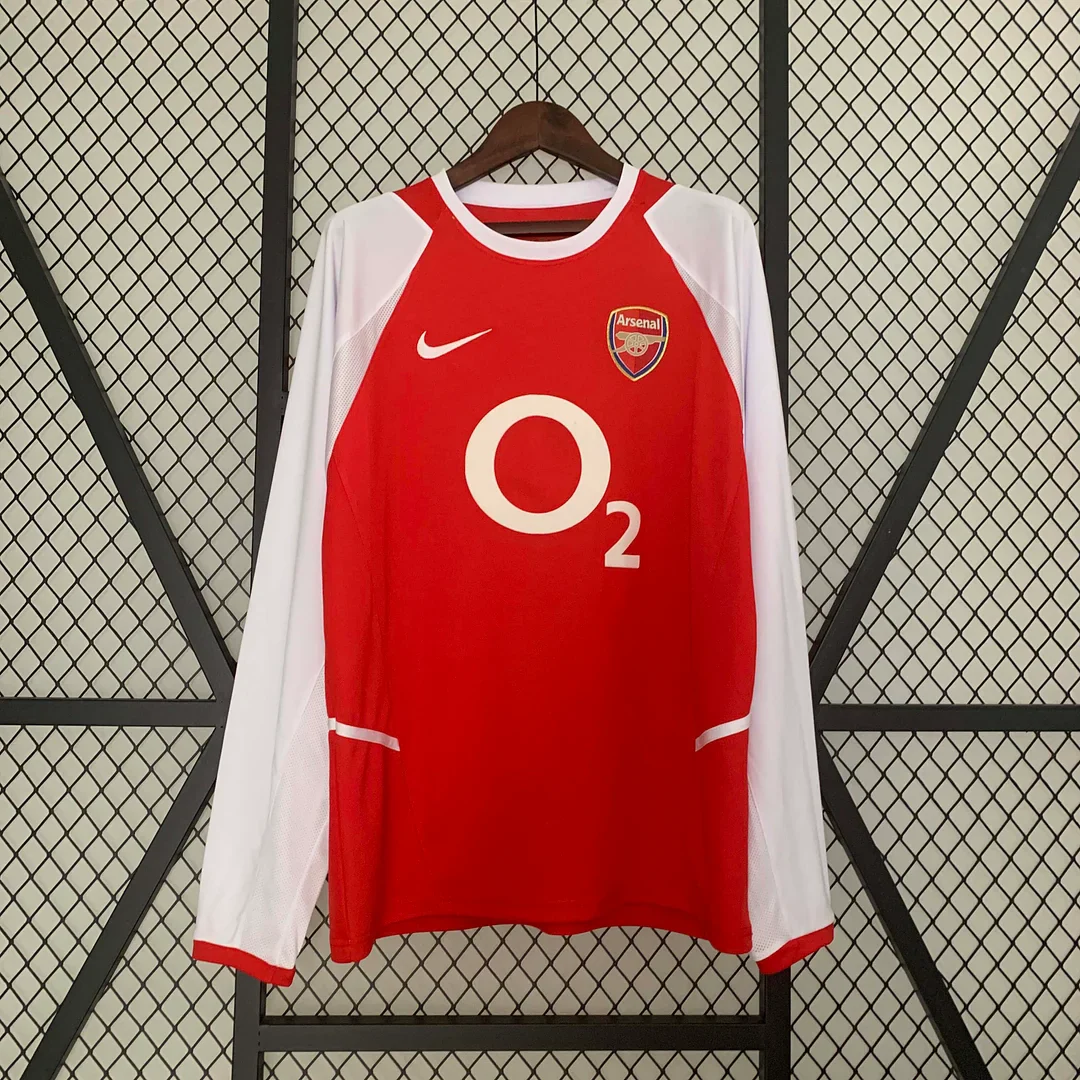
The store's 2003-2004 retro Arsenal home long-sleeve listing illustrates a design choice. This photograph does not establish original-period manufacture or match use.
The 2003-2004 retro Arsenal home long-sleeve product shows a red body and white long sleeves. Those visible features can help a buyer decide whether the design suits a wearable collection. They cannot establish licensing, manufacturing date or a player's connection to the individual garment.
Start with the Arsenal collection if that is your theme, then read each individual listing. A collection heading groups products; it does not certify every item's history. If your collection requires documented originals, ask for the relevant evidence before choosing rather than treating a retro title as proof.
Use a stop-or-go check before paying
Purpose: Can you say what this shirt adds? If the answer is only that it appeared in a feed, leave it on a shortlist.
Identity: Does the listing clearly identify the team, design season and shirt role you wanted?
Evidence: Are any important claims supported, or are you filling gaps with assumptions?
Fit: If you will wear it, do the relevant measurements work for you?
Cost: Is the complete purchase within the amount you chose before browsing?
Space: Do you have a suitable place to keep it without crowding or damp?
An unanswered question is a reason to pause, not a detail to score optimistically. Ask about the exact item and keep the response with its listing. If a requirement is non-negotiable and cannot be verified, choosing a different shirt is a successful decision.
For fit, use our football shirt measurement guide. Buying a smaller size because it is the only one available does not solve a wearable collection's needs. A display-only purchase has a different purpose, which should be deliberate.
Set a spending limit that includes the whole purchase
Decide how much you are comfortable spending over a period, not just per shirt. Several individually affordable purchases can still exceed that limit. Include any displayed delivery charge, optional printing and applicable destination charges when comparing options. Check the actual checkout information rather than assuming costs are the same between sellers.
For an illustrative planning exercise, a total allowance of 120 units of your currency could be divided into 90 for the garment and 30 held back for other costs. These are invented planning numbers, not a quoted store price or an estimate of shipping. If the real total exceeds the allowance, adjust the shortlist rather than inventing a cheaper checkout.
Do not rely on reselling a shirt to fund the next one. A collection can be worthwhile because you enjoy it; that does not make future resale proceeds predictable. Keep buying decisions within a budget that works without a promised return.
Keep a record from the first shirt
A small record is easier to maintain than reconstructing a purchase months later. Save the original description and your receipt, then add your own photographs when the shirt arrives. Record what the seller claimed separately from what you can verify.
Item identifier and where you keep it.
Team, design season, home/away/training role and sleeve length.
Seller, purchase date and total paid.
Stated version or production period, with supporting evidence if available.
Labelled size, useful measurements and visible condition.
Names, numbers, patches or repairs added later, with dates.
For the Arsenal example above, a careful note would say “listed as 2003-2004 retro home long sleeve; manufacturing period not established.” That is more useful than silently converting the title into “original 2003 shirt.” Accurate uncertainty is part of a good collection record.
Check arrivals before making alterations
Compare the received item with the saved listing while labels and packaging are still available. Photograph any discrepancy and consult the seller's current process before washing, printing or modifying it. This guide does not promise a particular retailer's return terms.
Give each purchase a location in your record. If you cannot find the shirt without unpacking every other item, your organisation needs attention before you add more. Decide which shirts are in regular use and which you intend to keep for display, then plan space accordingly. For cleaning or treatment, follow the individual garment's instructions rather than treating a collection plan as a care prescription.
Review your list after living with the first purchase. Did you enjoy wearing it, researching it or displaying it? That answer helps you choose the second shirt. You do not need to buy a fixed number to make the collection legitimate.
Summary
Start with a clear purpose, distinguish the design from the individual garment's history, and verify the details that matter to your plan. Set a total budget, make a record and leave room to change direction. A small collection with understandable choices is a stronger beginning than a cupboard full of purchases you cannot explain.
Research and disclosure
Prepared by FootballTHJORE, 31 October 2026. The purchase worksheet and examples are editorial planning suggestions, not personal collecting or authentication claims. For background on original-period versus later products, see Football Finery's vintage buying guidance. Product observations come from the linked store listing. FootballTHJORE sells linked products. Independent sources do not authenticate or endorse those products.

 USD
 ANG(ƒ)
 LKR(₨)
 EGP(EGP)
 BZD(BZ$)
 CRC(¢)
 MAD(DH.)
 OMR(RO.)
 KES(KSh)
 GHS(₵)
 UGX(USh)
 RSD(RSD)
 RON(lei)
 PGK(K)
 CDF(CDF)
 UYU($U)
 KZT(〒)
 PKR(Rs)
 MNT(₮)
 ARS(ARS$)
 COP(COP)
 MVR(Rf)
 IQD(د.ع)
 BDT(Tk)
 ZMW(ZK)
 NAD(N$)
 JMD(J$)
 AOA(Kz)
 MMK(K.)
 PEN(S/.)
 MOP(MOP$)
 BND(B$)
 LAK(₭)
 VND(₫)
 NGN(₦)
 KHR(៛)
 TWD(NT$)
 CNY(¥)
 SAR(S.R.)
 BHD(BD.)
 QAR(QR.)
 KWD(K.D.)
 UAH(₴)
 IDR(Rp)
 MYR(RM)
 AED(AED)
 JPY(円)
 INR(Rs)
 TRY(₺)
 CLP(CLP)
 KRW(₩)
 ZAR(R)
 SEK(Kr)
 ILS(₪)
 HKD(HK$)
 THB(฿)
 PLN(zł)
 NZD(NZ$)
 NOK(Kr)
 MXN(MXN$)
 HUF(Ft)
 CZK(Kč)
 SGD(S$)
 PHP(₱)
 DKK(kr.)
 CHF(CHF)
 BRL(R$)
 RUB(₽)
 CAD(CA$)
 AUD(A$)
 GBP(£)
 EUR(€)
 Barcelona
 Real Madrid
 Manchester United
 Inter Miami
 Manchester City
 Fc Bayern
 Ac Milan
 Chelsea
 Juventus
 Arsenal
 PSG
 Liverpool
 Inter Milan
 Santos FC
 Roma
 Portugal
 Al Nassr
 Atletico Madrid
 Everton
 Everton
 Germany
 Ajax
 Mexico
 Napoli
 Columbia
 Sporting lisbon
 France
 Tottenham
 Morocco
 Real Betis
 Brazil
 USA
 ltalia
 Argentina
 England
 Borussia Dortmund
 Spain
 Japan
 Netherlands
 Adidas
 Nike
 Puma
 NB
 Kappa