Knowing how to dry football boots is especially useful when a wet match ends with another session on the calendar. Start by getting the pair out of the kit bag, following its care instructions and allowing it to dry indoors with air circulating. Adding heat to meet a deadline is a different decision from helping moisture leave the boots.
The routine below is for rain-soaked or recently cleaned footwear. It compares air drying, absorbent paper and a fan, then explains what to check before the next game. If you are searching for how to dry soccer cleats, the same first step applies: identify your exact pair. A boot's brand name, colour or surface suffix does not tell you every part of its care instructions.
The first few minutes after a wet match
Take the boots out of the bag when you get home instead of leaving the closed bag until morning. Choose an indoor place where they can stand separately, with enough room around the openings for air circulation. Keep the drying area separate from a radiator, hair dryer or tumble dryer.
Deal with loose mud before setting up the drying routine. This is not a reason to soak the boots again or scrub a delicate upper aggressively. Our football-boot cleaning guide covers dirt removal and product-specific cleaning checks; this article focuses on what happens afterwards.
Read any instructions supplied with the pair. A care label can narrow the choices below, especially where an upper, finish or component needs a particular method. When instructions are missing, identify the unanswered point rather than treating a similar-looking boot as proof.
How to dry football boots: an indoor routine
1. Open what is designed to open
Loosen removable laces enough to open the footwear naturally. If the insoles are intended to come out, take them out and dry them separately. Leave bonded components in place. A laceless design needs its own approach to the opening; do not pull a collar into a different shape simply to imitate a laced shoe.
This separates access and airflow from cleaning. You do not need to wash an already clean pair again to begin drying it. Keep removed components with the correct boot so reassembly is straightforward.
2. Set up room-temperature air drying
adidas's football-boot care instructions specify indoor air drying before breathable-bag storage. Use that as the baseline rather than treating the nearest hot surface as a drying tool. Stand the boots where the openings remain accessible instead of placing them together inside another closed container.
You can organise the task around a simple check: boots out, openings accessible, any removable components separated, and no direct heat. That is more useful than repeatedly changing methods because the outer surface starts to look dry.
3. Use absorbent paper where the care guidance permits
Nike's soccer-cleat guidance describes newspaper during air drying to absorb moisture and help maintain shape. Place it lightly, rather than forcing a tightly packed bundle into the boot. If it becomes wet, replace it instead of leaving the same damp paper in place.
Paper is an optional part of the setup, not a reason to ignore the specific pair's instructions. Nike's broader shoe guidance also cautions about heavily inked areas leaving marks. Be deliberate about what touches the lining, particularly if its appearance matters to you.
4. Add unheated air circulation if appropriate
A fan can help organise airflow around an open pair. Put the boots on a stable surface near the airflow; keep them separate from the appliance itself. Use the fan as an air-circulation option, rather than combining it with a heater or resting wet footwear on electrical equipment.
The basis for this option is Nike's broader athletic-shoe drying article. It is not a boot-specific test or a guarantee that your pair will dry in a set number of hours. The stricter football-specific instructions and the exact pair's care information still take priority.
5. Check before reassembling and storing
Inspect the inside as well as the visible upper. Check the tongue or collar area, the footbed and any separated insole. An outer surface that looks dry is not enough information about a damp interior. Replace wet paper if you are using it and leave the boots open for further drying where necessary.
Reassemble the pair once the components are dry. Both manufacturers' football guidance makes complete drying part of the process before reuse or storage. This is a readiness check, not a stopwatch calculation.
Drying methods compared
Method
Useful role
Decision before using it
Indoor air drying
The baseline in adidas and Nike football-footwear guidance
Choose an open indoor area and follow the exact pair's care instructions
Lightly placed absorbent paper
A moisture-absorbing aid described in Nike's cleat guidance
Check lining/contact suitability, avoid excessive ink and change wet paper
Unheated fan airflow
An optional airflow setup from broader shoe guidance
Keep footwear separate from the appliance; do not treat it as a timed guarantee
Hair dryer, tumble dryer or direct sunlight
Not the football-specific drying route supported by these sources
The cited football-care instructions explicitly exclude these shortcuts
A closed kit bag
A transport container rather than an open drying setup
Take the wet pair out; store it after it is fully dry
The distinction is between a method's purpose and the result you have actually checked. Paper that has absorbed water needs attention. A running fan does not prove the inside is dry. Revisit the pair rather than assuming that setting up a method completes the task.
Can football boots dry overnight?
There is no reliable universal overnight promise in the football-specific sources used here. Start promptly, give the openings air, separate removable components when allowed and check the pair again before the next session. Those are actions you can control. The condition of the pair at the next check determines whether the job is finished.
If you are planning around an early game, make a backup decision before bedtime. A different dry pair may be an option if it fits and is suitable for the venue. Check those conditions independently; the fact that it is dry does not settle its surface compatibility or fit.
If the original pair is still wet in the morning, do not turn a missed deadline into a reason to use a prohibited heat source. The manufacturer's drying method does not change because kickoff is close. Buying another pair is also a separate choice, not a promise that a new order will arrive for that game.
What if you do not have newspaper?
Indoor air drying does not depend on owning newspaper. Keep the boot open as its design allows and give it air circulation. If the exact care guidance permits removing an insole, drying that component separately remains useful even without paper.
Do not assume every household filler is an equivalent substitute. This guide has not tested rice, powders, scented products or improvised chemical treatments inside football boots. When you lack an optional aid, stay with the supported baseline rather than introducing a different treatment with an unknown effect on the pair.
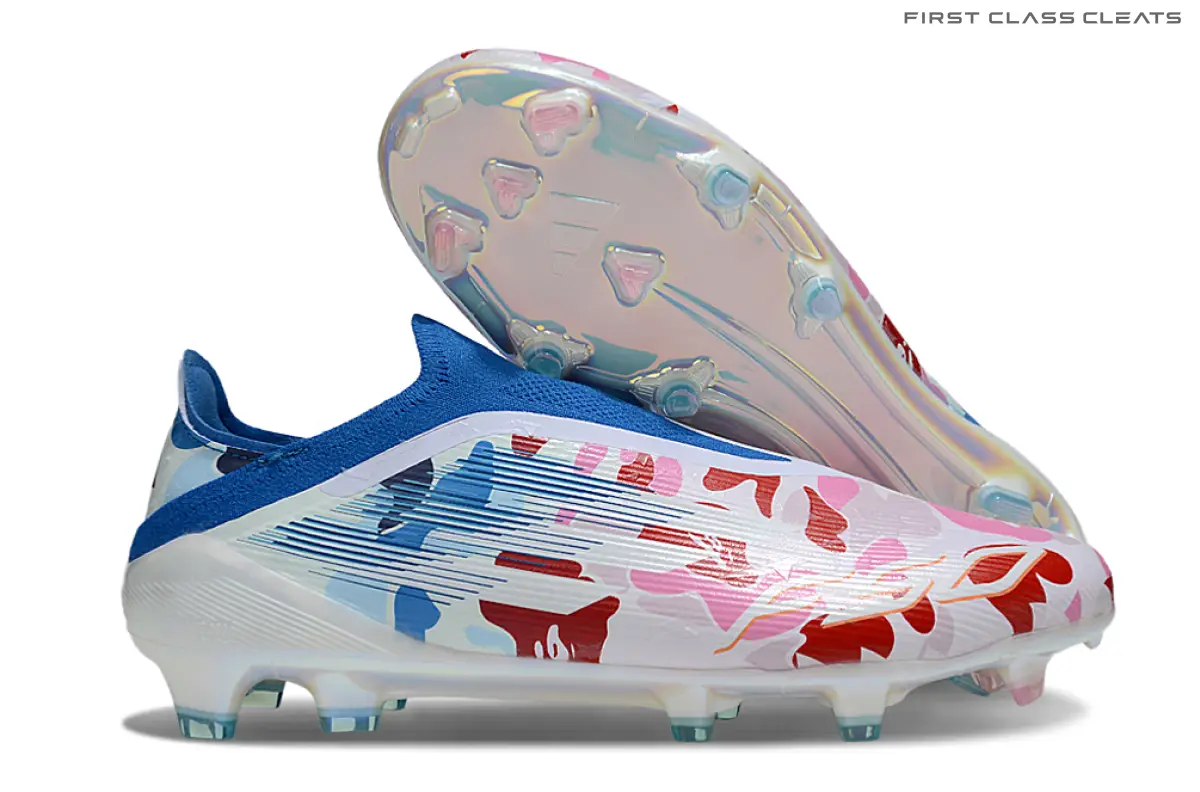
A laceless listing illustrates why identification matters
Photo from the store's laceless boot listing; it illustrates the listed design, not a drying experiment.
The F50 Elite Laceless FG X BAPE listing was checked for this guide on 17 October 2026. Its name describes a laceless item. That is a useful reminder that an instruction to loosen laces is not a universal physical step.
The listing name and photograph do not establish removable insoles, material composition or manufacturer authentication. Use the care information supplied with the actual pair. If you are considering another item, the football shoes collection lets you inspect its current description and options; choosing a suitable pair still requires its own checks.
A better routine before the next wet session
Make a drying place part of your normal return-home routine. Have somewhere to put the pair, keep any permitted absorbent paper accessible, and allow time to inspect the interior before packing again. A short routine is easier to repeat than an emergency search for a faster appliance.
Keep cleaning and drying decisions separate. Visible dirt may need the cleaning guide, a wet interior needs drying time, and a construction problem needs product-specific attention. Drying is not a repair for a separated sole or a damaged upper. Inspect the pair before deciding it is ready for the next pitch.
Summary
To dry football boots, begin with the exact pair's care instructions, take them out of the closed bag and use indoor air drying. Open the design naturally, separate removable components where allowed, and use absorbent paper or unheated airflow only within that guidance. Check the interior before reuse or storage. Plan for an overnight check rather than a guaranteed overnight result, and keep hair dryers, tumble dryers and direct sunlight out of the football-specific routine described here.
Research scope and commercial disclosure
Prepared for FootballTHJORE from the linked manufacturer articles and a public product-page check on 17 October 2026. adidas's source dates from July 2022; Nike's cleat article was updated on 28 May 2026, and its broader shoe-drying article on 18 November 2021. This is documented research, not a physical drying test. FootballTHJORE sells the linked retail item and benefits from sales; the manufacturer sources explain care methods and do not authenticate or endorse that listing.

 USD
 ANG(ƒ)
 LKR(₨)
 EGP(EGP)
 BZD(BZ$)
 CRC(¢)
 MAD(DH.)
 OMR(RO.)
 KES(KSh)
 GHS(₵)
 UGX(USh)
 RSD(RSD)
 RON(lei)
 PGK(K)
 CDF(CDF)
 UYU($U)
 KZT(〒)
 PKR(Rs)
 MNT(₮)
 ARS(ARS$)
 COP(COP)
 MVR(Rf)
 IQD(د.ع)
 BDT(Tk)
 ZMW(ZK)
 NAD(N$)
 JMD(J$)
 AOA(Kz)
 MMK(K.)
 PEN(S/.)
 MOP(MOP$)
 BND(B$)
 LAK(₭)
 VND(₫)
 NGN(₦)
 KHR(៛)
 TWD(NT$)
 CNY(¥)
 SAR(S.R.)
 BHD(BD.)
 QAR(QR.)
 KWD(K.D.)
 UAH(₴)
 IDR(Rp)
 MYR(RM)
 AED(AED)
 JPY(円)
 INR(Rs)
 TRY(₺)
 CLP(CLP)
 KRW(₩)
 ZAR(R)
 SEK(Kr)
 ILS(₪)
 HKD(HK$)
 THB(฿)
 PLN(zł)
 NZD(NZ$)
 NOK(Kr)
 MXN(MXN$)
 HUF(Ft)
 CZK(Kč)
 SGD(S$)
 PHP(₱)
 DKK(kr.)
 CHF(CHF)
 BRL(R$)
 RUB(₽)
 CAD(CA$)
 AUD(A$)
 GBP(£)
 EUR(€)
 Barcelona
 Real Madrid
 Manchester United
 Inter Miami
 Manchester City
 Fc Bayern
 Ac Milan
 Chelsea
 Juventus
 Arsenal
 PSG
 Liverpool
 Inter Milan
 Santos FC
 Roma
 Portugal
 Al Nassr
 Atletico Madrid
 Everton
 Everton
 Germany
 Ajax
 Mexico
 Napoli
 Columbia
 Sporting lisbon
 France
 Tottenham
 Morocco
 Real Betis
 Brazil
 USA
 ltalia
 Argentina
 England
 Borussia Dortmund
 Spain
 Japan
 Netherlands
 Adidas
 Nike
 Puma
 NB
 Kappa