How to Clean Football Boots: A Cautious Step-by-Step Guide
2026-10-02
Learning how to clean football boots starts with two checks: the boot’s own care guidance and the type of dirt you are removing. A routine that is suitable for loose surface dirt may be inappropriate for a printed upper, a textured finish or a boot whose page gives different instructions.
This guide gives a cautious cleaning sequence and uses five live FootballTHJORE boot listings as examples of why photographs and page wording matter. It does not claim a specific material, waterproofing level or manufacturer-approved method unless the product page states it.
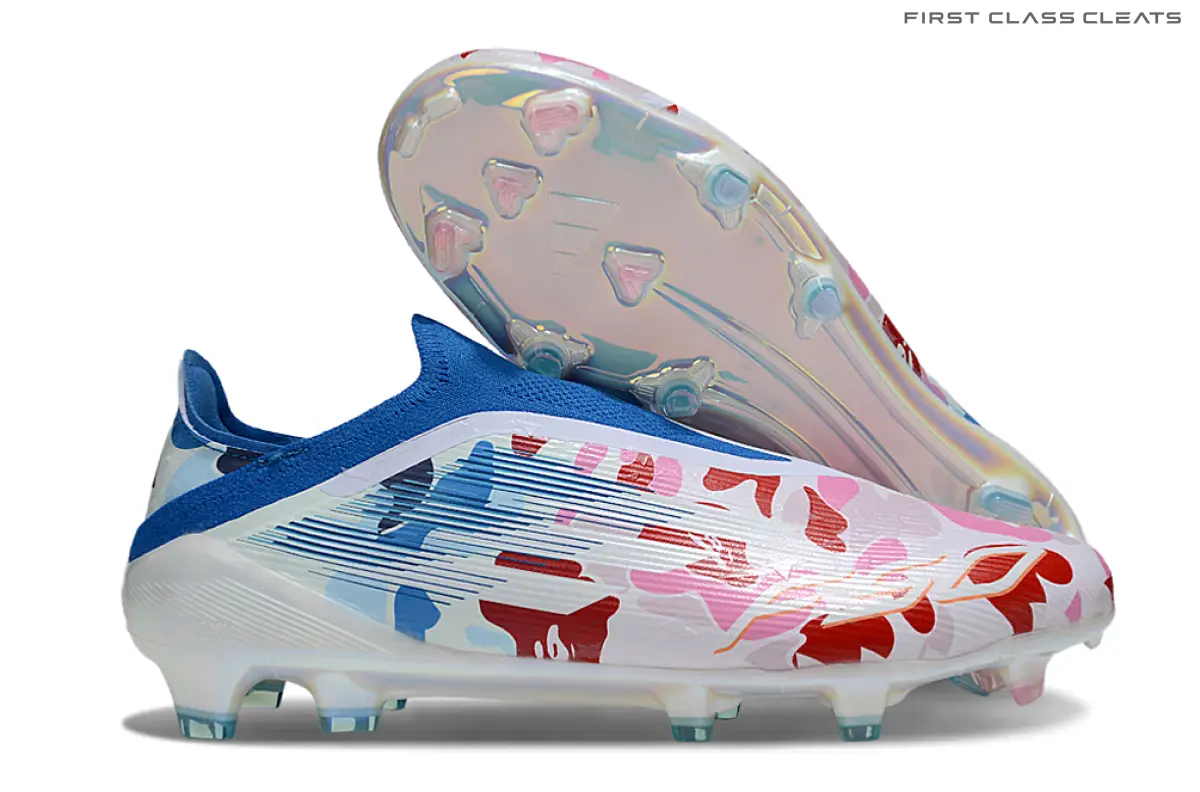
The image comes from the F50 Elite Laceless FG X BAPE listing. Check the live page and any care information supplied with the boots before cleaning.
Before cleaning: identify the exact pair
Save the product title and URL, then inspect the photographs for colour changes, prints, raised areas, laces, collars and sole details. The title may contain labels such as FG or AG-PRO, but those labels do not tell you how every upper or decorative element should be washed.
If the boot came with care instructions, they take priority over general guidance. When the instructions are missing or unclear, use the least aggressive method and stop if colour, finish or bonding appears affected.
A cautious football-boot cleaning sequence
Let wet surface mud become easier to remove. Avoid grinding fresh mud deeper into seams or textured areas.
Remove loose dirt gently. Use a soft, dry brush or cloth, keeping force low around prints and joins.
Use a lightly damp cloth. Work on a small area first. Do not soak the boot.
Clean laces separately only when guidance allows. Keep track of how they were threaded.
Wipe away residue. Avoid leaving cleaning product on the surface.
Air-dry away from direct heat. Do not use a radiator or high heat unless the manufacturer explicitly directs it.
Inspect before storage. Make sure the pair is dry and check for any change that needs attention.
Do not put them in a washing machine unless the care instructions for that exact pair explicitly permit it. Machine agitation, prolonged water exposure and the wash cycle may affect parts of a boot differently. A damp-cloth approach is easier to control and stop.
How to deal with odour
Drying is the first practical step. Remove the boots from a closed bag after use and allow air circulation away from direct heat. If the care guidance permits removable components to be taken out, follow those instructions. Do not mask persistent moisture with fragrance while storing the boots damp.
Semrush shows related interest in cleaning smelly football boots, but the correct method still depends on the pair. Avoid strong chemicals or unverified home remedies that could alter colour, finish or bonding.
Cleaning is not repair
If a sole separates, a printed area lifts or the upper is damaged, stop treating it as ordinary dirt. Cleaning cannot restore construction damage, and aggressive brushing may make it worse. Photograph the issue and seek product-specific advice.
Summary
Clean football boots by identifying the exact pair, following its care guidance, removing loose dirt gently, using minimal moisture and air-drying away from direct heat. Test a small area, protect visible prints and textured parts, and avoid machine washing unless the exact instructions allow it. A controlled process is safer than trying to remove every mark in one aggressive step.
 USD
USD
 ANG(ƒ)
 LKR(₨)
 EGP(EGP)
 BZD(BZ$)
 CRC(¢)
 MAD(DH.)
 OMR(RO.)
 KES(KSh)
 GHS(₵)
 UGX(USh)
 RSD(Din.)
 RON(lei)
 PGK(K)
 CDF(CDF)
 UYU($U)
 KZT(〒)
 PKR(Rs)
 MNT(₮)
 ARS(ARS$)
 COP(COP)
 MVR(Rf)
 IQD(د.ع)
 BDT(Tk)
 ZMW(ZK)
 NAD(N$)
 JMD(J$)
 AOA(Kz)
 MMK(K.)
 PEN(S/.)
 MOP(MOP$)
 BND(B$)
 LAK(₭)
 VND(₫)
 NGN(₦)
 KHR(៛)
 TWD(NT$)
 CNY(¥)
 SAR(S.R.)
 BHD(BD.)
 QAR(QR.)
 KWD(K.D.)
 UAH(₴)
 IDR(Rp)
 MYR(RM)
 AED(AED)
 JPY(円)
 INR(Rs)
 TRY(₺)
 CLP(CLP)
 KRW(₩)
 ZAR(R)
 SEK(Kr)
 ILS(₪)
 HKD(HK$)
 THB(฿)
 PLN(zł)
 NZD(NZ$)
 NOK(Kr)
 MXN(MXN$)
 HUF(Ft)
 CZK(Kč)
 SGD(S$)
 PHP(₱)
 DKK(kr.)
 CHF(CHF)
 BRL(R$)
 RUB(₽)
 CAD(CA$)
 AUD(AUD)
 GBP(£)
 EUR(€)
 Barcelona
 Real Madrid
 Manchester United
 Inter Miami
 Manchester City
 Fc Bayern
 Ac Milan
 Chelsea
 Juventus
 Arsenal
 PSG
PSG Liverpool
 Inter Milan
 Santos FC
 Roma
Roma Portugal
 Al Nassr
 Atletico Madrid
 Everton
 Everton
 Germany
 Ajax
Ajax Mexico
 Napoli
 Columbia
 Sporting lisbon
 France
 Tottenham
 Morocco
 Real Betis
 Brazil
 USA
USA ltalia
 Argentina
 England
 Borussia Dortmund
 Spain
Spain Japan
Japan Netherlands
 Adidas
 Nike
Nike Puma
Puma NB
NB Kappa
Kappa