If you are asking how much your football shirt is worth, start by identifying the particular garment, then compare evidence for similar items. A price attached to the same team and season is not enough. A current retro design, a documented period original and a shirt with evidence of match use are different comparison groups.
This guide helps you build a defensible comparison rather than supplying an instant price. It does not appraise or authenticate your shirt. The useful result is a short record of what you own, what comparable items actually sold for, and which uncertainties prevent a reliable conclusion.
First decide which price you need
A seller's advertised price tells you what they are asking. A recorded sale tells you what a particular buyer paid in that transaction. A dealer's offer tells you what that dealer is prepared to pay you. These answers can differ without any one of them being a mistake.
Write the purpose at the top of your notes: selling your own shirt, comparing a purchase, or documenting a collection. Do not silently switch between these purposes halfway through the comparison. An insurance valuation is a separate task; ask the relevant provider what evidence it requires.
Make an identity record before collecting prices
Photograph the front, back, labels, printing and any damage. Record the team, design season, home or away description, sleeve length, labelled size and measurements. Keep purchase records and any documents supplied with the garment. Where information is missing, write unknown.
Our explanation of retro football shirts separates a design's era from the physical garment's age. That distinction is particularly important when asking how much a retro football shirt is worth. A season in a product title does not prove production in that season.
A famous player's name on the back is also different from evidence that the player wore the item. If a comparison depends on period manufacture, original printing or match use, establish that claim first. Do not add a premium to an uncertain story and then present the resulting number as verified.
Use sold evidence carefully
eBay's Product research documentation explains that its research results can include actual selling prices, including accepted Best Offers, and can be filtered by attributes such as condition and location. This makes it useful for investigating comparable transactions. Check access requirements on eBay itself.
For each result you use, record the sale date, currency, item description and whether postage is included. Open the individual record when available rather than relying only on a search thumbnail. An ended listing is not automatically evidence of a sale, and an asking price should stay in a separate column.
Do not combine shirts just because a search engine groups them together. Exclude records that refer to a different release, a bundle, another sleeve length or unsupported provenance. If the condition is not visible, flag that limitation instead of assuming it matches yours.
A comparison worksheet you can copy
- My item: exact design and garment category, with evidence.
- Condition: pulls, holes, stains, print damage, alterations and label condition, with photographs.
- Comparable record: link, sale date and description.
- Price basis: currency, sold or asking, postage included or separate.
- Differences: size, sleeve length, print, condition or provenance.
- Decision: include, exclude, or keep only as a weak comparison.
For example, a shirt with a damaged sponsor and a clean shirt without that damage are not identical comparisons. Keep the difference visible; do not invent a standard percentage deduction. Likewise, three listings of one item are not necessarily three independent transactions. Check dates, photographs and seller details before counting them separately.
If you find several genuinely comparable sales, describe their observed range and dates. If you find only one weak match, say the evidence is thin. An empty search does not prove that an item is rare or valuable. It means this search has not produced enough usable evidence.
Condition and provenance need individual attention
Showboat's collector FAQ identifies condition, shirt type, scarcity, size and namesets among the factors used in its valuation approach. These are useful prompts for inspection, not a universal price formula or a guarantee that a particular name or size adds value.
Describe damage specifically. A photograph of a pulled thread is more informative than an unexplained rating such as good condition. Keep repairs and replacement printing in the record. If you are seeking a specialist assessment, send clear images and explain what is known and what is only claimed. Avoid changing the garment merely to make it resemble a higher-priced example.
Compare a wearable design separately from a collectible
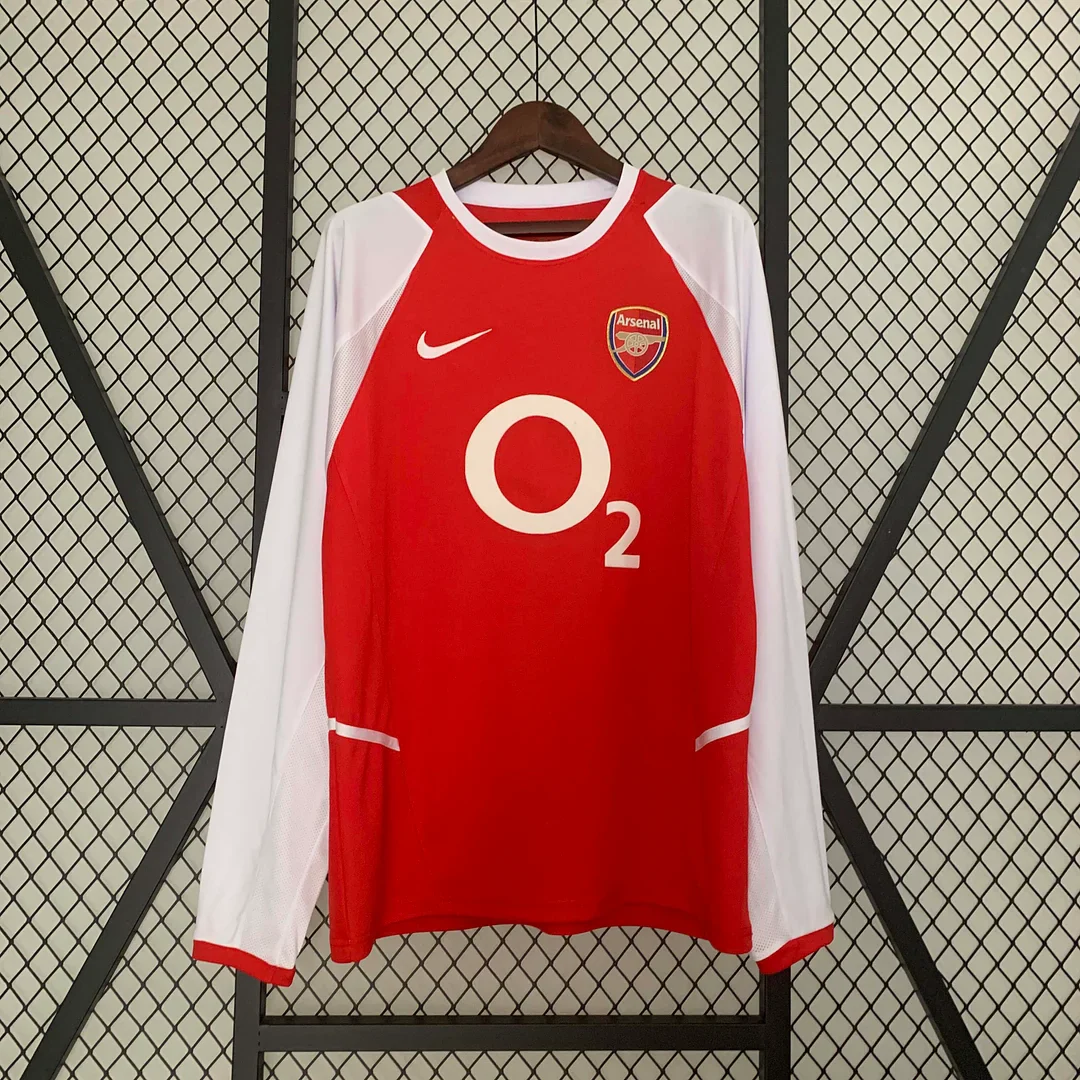
The Arsenal retro 2003/04 home long-sleeve listing illustrates the distinction. The inspected page describes a red body, white long sleeves and a round neckline, with adult sizes S to XXL. It is a shirt-only listing. Those details help someone choosing a design to wear; they do not prove period manufacture, match use or a resale value.
If you want a wearable Arsenal design, compare the actual options in the Arsenal football shirt collection on their stated features and fit. If you want a documented historical object, require evidence for that specific object. Do not use a collectible's auction result as a valuation of the store item pictured here.
Summary
A useful answer to how much your football shirt is worth starts with comparable evidence: identify the garment, document its condition, separate asking prices from completed sales, and record differences before drawing a conclusion. Where evidence is sparse or provenance is unresolved, keep the estimate uncertain or seek an individual assessment. No checklist can guarantee what a future buyer will pay.
Sources and research scope
Reviewed on 28 October 2026 using the linked eBay documentation, Showboat FAQ and current product listing. The worksheet is an editorial comparison method, not a professional appraisal, authentication result or hands-on test. FootballTHJORE sells the linked shirt. No completed-sale price or future return is claimed for that product.

 USD
 ANG(ƒ)
 LKR(₨)
 EGP(EGP)
 BZD(BZ$)
 CRC(¢)
 MAD(DH.)
 OMR(RO.)
 KES(KSh)
 GHS(₵)
 UGX(USh)
 RSD(RSD)
 RON(lei)
 PGK(K)
 CDF(CDF)
 UYU($U)
 KZT(〒)
 PKR(Rs)
 MNT(₮)
 ARS(ARS$)
 COP(COP)
 MVR(Rf)
 IQD(د.ع)
 BDT(Tk)
 ZMW(ZK)
 NAD(N$)
 JMD(J$)
 AOA(Kz)
 MMK(K.)
 PEN(S/.)
 MOP(MOP$)
 BND(B$)
 LAK(₭)
 VND(₫)
 NGN(₦)
 KHR(៛)
 TWD(NT$)
 CNY(¥)
 SAR(S.R.)
 BHD(BD.)
 QAR(QR.)
 KWD(K.D.)
 UAH(₴)
 IDR(Rp)
 MYR(RM)
 AED(AED)
 JPY(円)
 INR(Rs)
 TRY(₺)
 CLP(CLP)
 KRW(₩)
 ZAR(R)
 SEK(Kr)
 ILS(₪)
 HKD(HK$)
 THB(฿)
 PLN(zł)
 NZD(NZ$)
 NOK(Kr)
 MXN(MXN$)
 HUF(Ft)
 CZK(Kč)
 SGD(S$)
 PHP(₱)
 DKK(kr.)
 CHF(CHF)
 BRL(R$)
 RUB(₽)
 CAD(CA$)
 AUD(A$)
 GBP(£)
 EUR(€)
 Barcelona
 Real Madrid
 Manchester United
 Inter Miami
 Manchester City
 Fc Bayern
 Ac Milan
 Chelsea
 Juventus
 Arsenal
 PSG
 Liverpool
 Inter Milan
 Santos FC
 Roma
 Portugal
 Al Nassr
 Atletico Madrid
 Everton
 Everton
 Germany
 Ajax
 Mexico
 Napoli
 Columbia
 Sporting lisbon
 France
 Tottenham
 Morocco
 Real Betis
 Brazil
 USA
 ltalia
 Argentina
 England
 Borussia Dortmund
 Spain
 Japan
 Netherlands
 Adidas
 Nike
 Puma
 NB
 Kappa