Collared Soccer Jersey Guide: Necklines and Retro Listings
2026-10-01
A collared soccer jersey adds a strong shape around the neckline, but "collared" does not describe one universal construction. Some shirts use a wide fold-over collar, some use a compact collar or placket, and others combine a collar with a V-shaped opening. For buyers, the visible neckline is only one part of the decision: team, season reference, sleeve length, size and exact page wording still matter.
This guide uses current FootballTHJORE retro-style listings to explain how to compare collared designs. It describes what a shopper can verify from titles and photographs without claiming official status, fabric technology or manufacturing age.
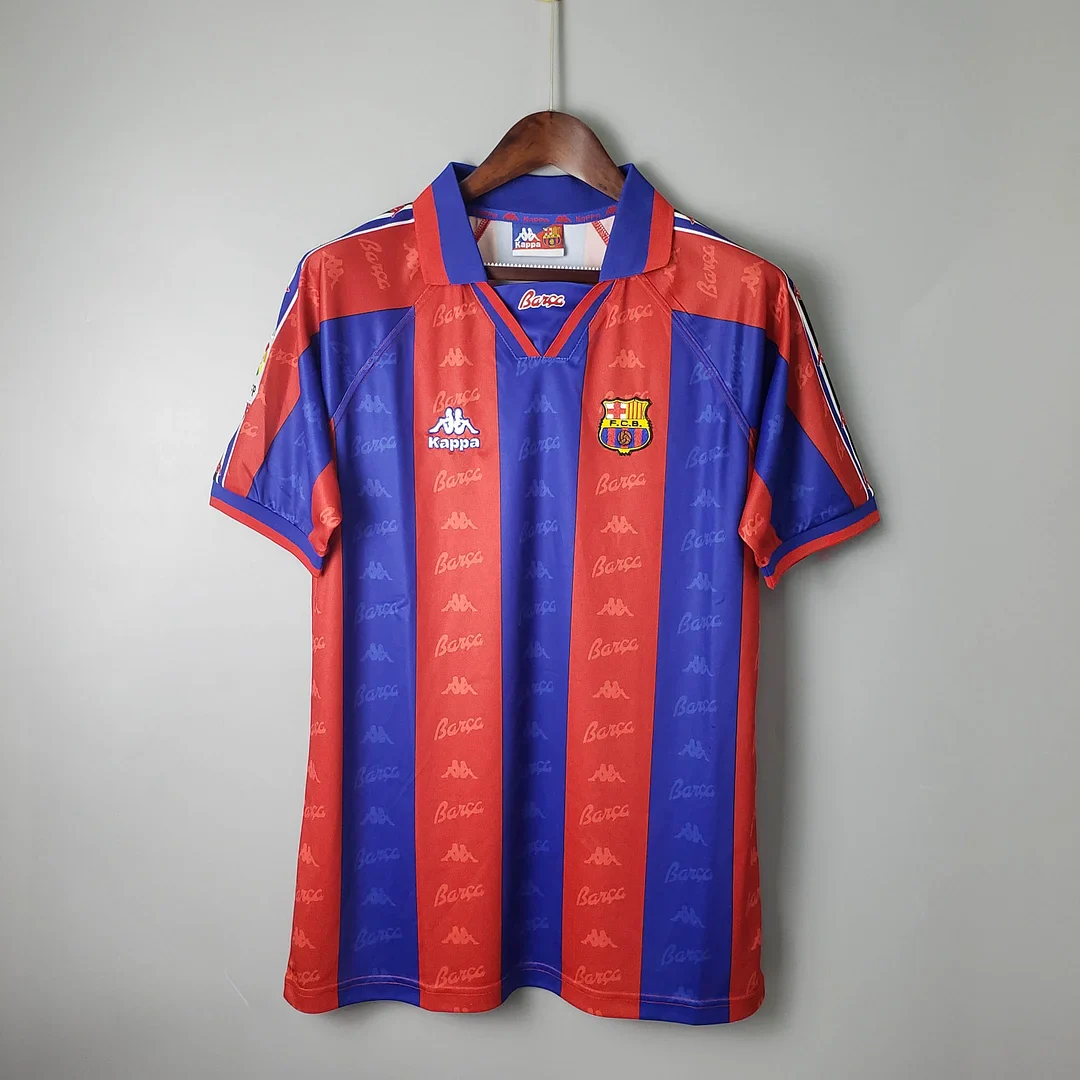
The image belongs to the 1995-1997 Retro Barcelona Home Jersey listing. Inspect the live images to confirm the neckline and current product options.
Why collar shape changes the look
The neckline sits close to the face, crest and central shirt graphics, so even a small difference can change the whole silhouette. A broad collar creates a stronger horizontal line. A V-shaped opening creates more vertical space. A compact collar keeps attention on the torso design.
Those observations are visual, not performance claims. A photograph cannot establish comfort, stretch or material composition. Use the page's actual information and your own measurements when fit matters.
Open the full-size front image. Identify whether the collar folds, stands or sits flat.
Look for an opening or placket. Check whether it is decorative or visibly functional; do not assume what photographs do not show.
Check the back view. The rear collar shape may affect how the shirt looks when worn or displayed.
Note nearby prints and marks. Confirm that the collar does not hide details you want to display.
Keep the exact title with your notes. Collar shape alone cannot identify a season.
Collared versus collarless: which is the better buy?
Priority
Collared option
Collarless option
Silhouette
Creates a defined neckline and period-specific shape
Keeps the neckline visually simple
Retro interest
May be central to the design reference you remember
May suit eras where a crew or V-neck defines the look
Layering
Collar remains visible beneath some outer layers
Often leaves fewer neckline elements to arrange
Display
Requires deliberate collar positioning
Usually needs less adjustment around the neck
The answer depends on the exact design. If the collar is the reason you recognise the shirt, it deserves priority. If you mainly want the team colours or torso graphics, compare the full garment rather than making the neckline decisive.
Fit and care checks for collars
A collar can look structured in a photograph but behave differently when worn. Compare garment measurements using our football shirt size guide, and rely on the exact product page for its current sizing information.
For care, follow the garment's own label and page instructions. Avoid applying high heat or aggressive pressing to a collar or nearby prints without verified guidance. Our football shirt washing checklist explains the general decision process while keeping the care label in control.
Retro wording and evidence
The linked titles use "retro" and historical year references. Treat those words as seller descriptions of the design. They do not, by themselves, establish that a garment was manufactured during the stated period. If origin is important, ask for evidence and use the football shirt evidence checklist.
Summary
A collared soccer jersey is best chosen by comparing the actual neckline, team design, season reference, sleeve length and current listing information. Inspect several photographs, keep the complete title with your notes, measure against a shirt you own and treat retro year wording as a design reference unless stronger evidence is provided. The collar may define the look, but the whole product page should define the purchase.

 USD
USD
 ANG(ƒ)
 LKR(₨)
 EGP(EGP)
 BZD(BZ$)
 CRC(¢)
 MAD(DH.)
 OMR(RO.)
 KES(KSh)
 GHS(₵)
 UGX(USh)
 RSD(Din.)
 RON(lei)
 PGK(K)
 CDF(CDF)
 UYU($U)
 KZT(〒)
 PKR(Rs)
 MNT(₮)
 ARS(ARS$)
 COP(COP)
 MVR(Rf)
 IQD(د.ع)
 BDT(Tk)
 ZMW(ZK)
 NAD(N$)
 JMD(J$)
 AOA(Kz)
 MMK(K.)
 PEN(S/.)
 MOP(MOP$)
 BND(B$)
 LAK(₭)
 VND(₫)
 NGN(₦)
 KHR(៛)
 TWD(NT$)
 CNY(¥)
 SAR(S.R.)
 BHD(BD.)
 QAR(QR.)
 KWD(K.D.)
 UAH(₴)
 IDR(Rp)
 MYR(RM)
 AED(AED)
 JPY(円)
 INR(Rs)
 TRY(₺)
 CLP(CLP)
 KRW(₩)
 ZAR(R)
 SEK(Kr)
 ILS(₪)
 HKD(HK$)
 THB(฿)
 PLN(zł)
 NZD(NZ$)
 NOK(Kr)
 MXN(MXN$)
 HUF(Ft)
 CZK(Kč)
 SGD(S$)
 PHP(₱)
 DKK(kr.)
 CHF(CHF)
 BRL(R$)
 RUB(₽)
 CAD(CA$)
 AUD(AUD)
 GBP(£)
 EUR(€)
 Barcelona
 Real Madrid
 Manchester United
 Inter Miami
 Manchester City
 Fc Bayern
 Ac Milan
 Chelsea
 Juventus
 Arsenal
 PSG
PSG Liverpool
 Inter Milan
 Santos FC
 Roma
Roma Portugal
 Al Nassr
 Atletico Madrid
 Everton
 Everton
 Germany
 Ajax
Ajax Mexico
 Napoli
 Columbia
 Sporting lisbon
 France
 Tottenham
 Morocco
 Real Betis
 Brazil
 USA
USA ltalia
 Argentina
 England
 Borussia Dortmund
 Spain
Spain Japan
Japan Netherlands
 Adidas
 Nike
Nike Puma
Puma NB
NB Kappa
Kappa