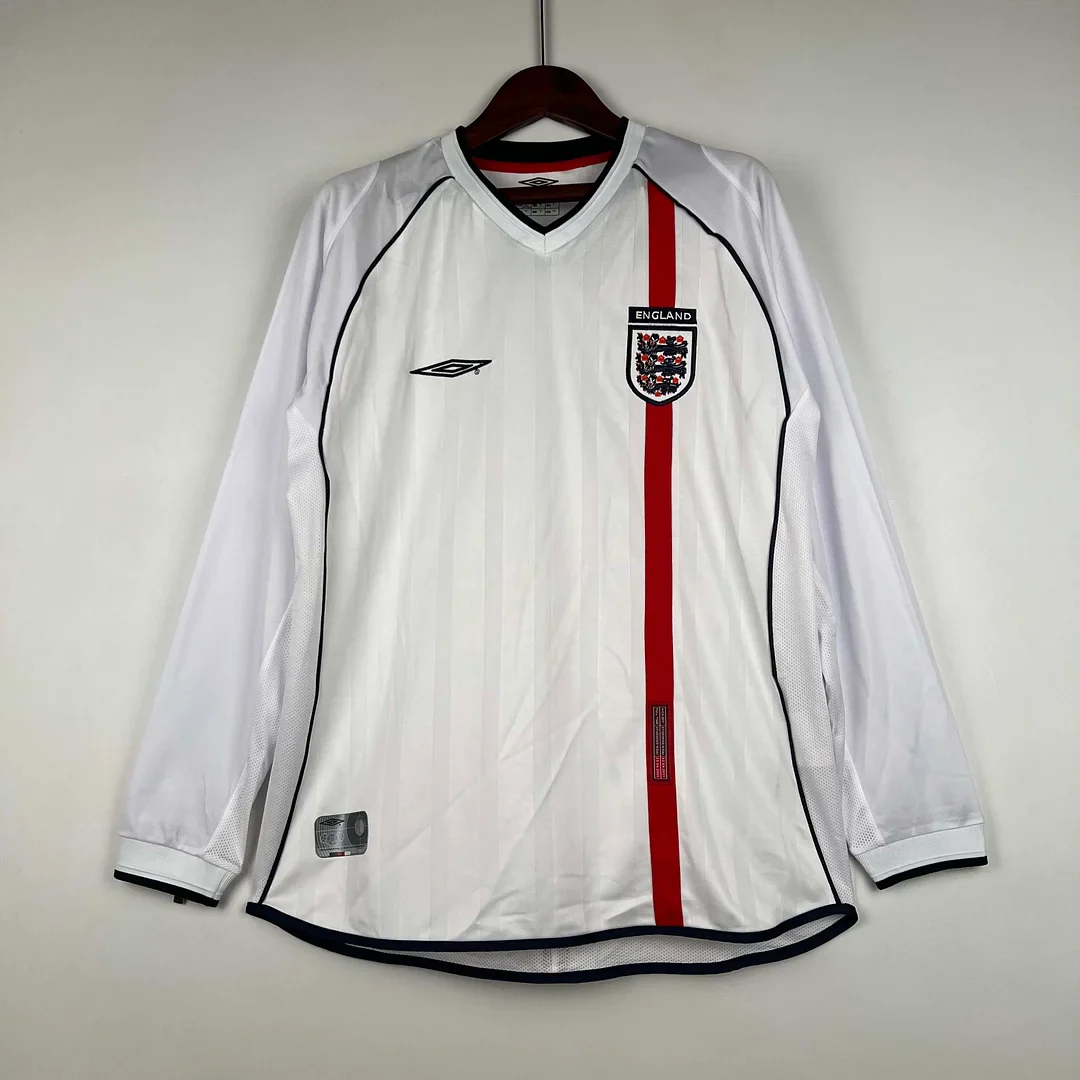
England football shirts carry three lions as the team's familiar identity badge. The lions connect that sporting identity with a much older emblem of England. They are not a count of three World Cup wins, and they should not be confused with a separate tournament star or other decoration on a shirt.
The key distinction is between the history of the symbol and the history of football. England's lion imagery predates the Football Association. Knowing that makes the badge easier to understand without inventing a modern trophy explanation for an older national emblem.
The heraldic connection
A UK government explanation of the Royal Coat of Arms traces England's three-lion arms to Richard I's second Great Seal, around 1195. This supports the emblem's long association with England. It does not mean that a medieval royal seal was a football badge, or that football shirts existed at that time.
Treat those as two different timelines: an established heraldic symbol and its use in a modern sporting identity. This guide does not assign an exact adoption date to the FA badge because that date was not established by the primary sources reviewed for this article.
That distinction is useful when reading short online answers. A date attached to the royal arms does not automatically date the first England shirt, and an explanation of a shirt design does not automatically establish the origin of the national emblem.
The badge on a shirt is a team identity
The FA's brand-protection information describes supporters wearing the Three Lions badge and explains its protection of the association's marks. It is an appropriate source for the badge's place in England football identity.
For a buyer, the badge helps identify the design being represented. However, seeing three lions in a retail image is not enough to establish an item's licensing, match use or provenance. Those are separate claims requiring separate evidence.
The same separation applies to historical-looking shirts. A design can refer to an older England era while being sold today. The team emblem does not tell you whether the garment itself is old, recently manufactured, match-worn or a particular player's shirt.
Lions, stars and other marks are not the same
Detail
What to investigate
What not to infer
Three-lion crest
England/FA sporting identity and heraldic connection
Three World Cup titles
A separate star
The relevant team's or competition's explanation
That every star follows one global rule
Manufacturer mark
The specific design and supplier information
The shirt's entire provenance
Commemorative wording
The occasion stated for that design
That every shirt with the crest marks that occasion
A retail product title
The design and season the seller lists
A player's match-worn ownership
Look at the whole detail instead of counting shapes in isolation. A crest and a star can appear near each other while answering different questions. If your question is specifically about stars, that belongs to a separate investigation rather than changing the meaning of the lions.
Comparing England shirt designs
When comparing an older home design with a newer one, first identify the year and role in the listing. Goalkeeper and outfield products are not interchangeable. Then compare clear photographs of the badge area, collar, sleeves and overall graphic arrangement.
Avoid treating minor apparent differences in a compressed image as proof of an error. Equally, do not ignore an unexplained discrepancy because the shirt is described as retro. A useful question for the seller is whether the photograph shows the exact design and option currently supplied.
If you want a particular era, use the year in your request. "An England shirt with three lions" is too broad to identify a specific product: the badge is a recurring identity, while the surrounding shirt design can differ.
A current store example
The 2002 Retro England Home Jersey Long Sleeve was live on FootballTHJORE when checked on 12 October 2026. Its title identifies the listed era, home design and sleeve format. We use it to illustrate an England retail design, not to authenticate an original 2002 garment or identify a player's match shirt.
The England collection provides a route to compare available designs. Check the individual listing for actual sizes and any available options. The historical explanation of the emblem is not a substitute for those purchase details.
For a gift, separate the recipient's preferred team identity from their preferred era. Someone may like England's badge but want a particular home-shirt look or sleeve length. Confirming that preference is more useful than assuming every England design is equivalent.
Summary
The three lions are England's recognisable football identity, connected with an older heraldic emblem. They are not three trophy marks. Read the crest, any separate stars, and the product's year and role as distinct pieces of information when choosing a shirt.
Research scope
FootballTHJORE used the linked government and FA sources for this explanation, with the product checked on 12 October 2026. This is a researched guide, not an archival authentication service. FootballTHJORE benefits from purchases through its store links and makes no licensing claim on the basis of the pictured badge.

 USD
 ANG(ƒ)
 LKR(₨)
 EGP(EGP)
 BZD(BZ$)
 CRC(¢)
 MAD(DH.)
 OMR(RO.)
 KES(KSh)
 GHS(₵)
 UGX(USh)
 RSD(RSD)
 RON(lei)
 PGK(K)
 CDF(CDF)
 UYU($U)
 KZT(〒)
 PKR(Rs)
 MNT(₮)
 ARS(ARS$)
 COP(COP)
 MVR(Rf)
 IQD(د.ع)
 BDT(Tk)
 ZMW(ZK)
 NAD(N$)
 JMD(J$)
 AOA(Kz)
 MMK(K.)
 PEN(S/.)
 MOP(MOP$)
 BND(B$)
 LAK(₭)
 VND(₫)
 NGN(₦)
 KHR(៛)
 TWD(NT$)
 CNY(¥)
 SAR(S.R.)
 BHD(BD.)
 QAR(QR.)
 KWD(K.D.)
 UAH(₴)
 IDR(Rp)
 MYR(RM)
 AED(AED)
 JPY(円)
 INR(Rs)
 TRY(₺)
 CLP(CLP)
 KRW(₩)
 ZAR(R)
 SEK(Kr)
 ILS(₪)
 HKD(HK$)
 THB(฿)
 PLN(zł)
 NZD(NZ$)
 NOK(Kr)
 MXN(MXN$)
 HUF(Ft)
 CZK(Kč)
 SGD(S$)
 PHP(₱)
 DKK(kr.)
 CHF(CHF)
 BRL(R$)
 RUB(₽)
 CAD(CA$)
 AUD(A$)
 GBP(£)
 EUR(€)
 Barcelona
 Real Madrid
 Manchester United
 Inter Miami
 Manchester City
 Fc Bayern
 Ac Milan
 Chelsea
 Juventus
 Arsenal
 PSG
 Liverpool
 Inter Milan
 Santos FC
 Roma
 Portugal
 Al Nassr
 Atletico Madrid
 Everton
 Everton
 Germany
 Ajax
 Mexico
 Napoli
 Columbia
 Sporting lisbon
 France
 Tottenham
 Morocco
 Real Betis
 Brazil
 USA
 ltalia
 Argentina
 England
 Borussia Dortmund
 Spain
 Japan
 Netherlands
 Adidas
 Nike
 Puma
 NB
 Kappa