Why are soccer jerseys so expensive? There is no single answer. A retail price can reflect manufacturing, design, distribution, marketing, licensing, retailer costs, taxes and the value attached to a club, country or player. Different products also sit at different price levels, so two shirts that look similar in a search result may not have the same construction, sales channel or commercial arrangements.
Price alone does not prove that a jersey is official, authentic, better made or suitable for a particular buyer. The useful approach is to understand the main cost categories, then compare the exact listing, its stated features and the seller's current policies.
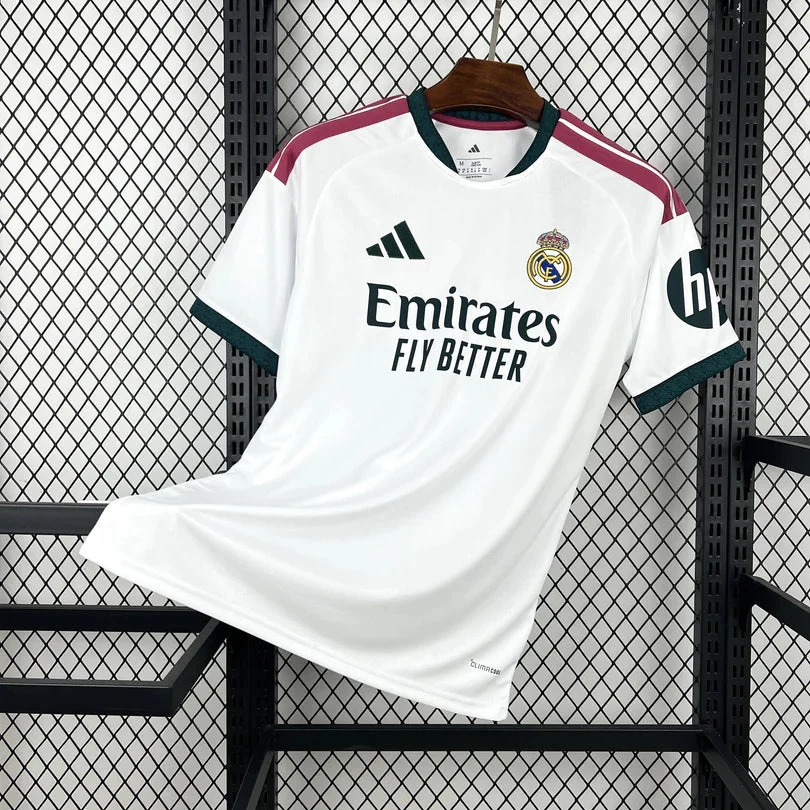
A collection image can show the available designs. It does not reveal the production cost, licensing arrangement, margin or material of an individual shirt.
A jersey price includes more than fabric
The visible garment is only one part of the route from a design concept to a product offered for sale. Depending on the brand and seller, the final price may include:
- fabric, trims, printing and assembly;
- product design and development;
- packaging, freight and warehousing;
- import duties, sales tax or VAT;
- marketing and athlete or club campaigns;
- licensing or royalty arrangements;
- wholesale and retail operating costs;
- expected returns, unsold stock and markdown risk;
- the margin required by businesses in the supply chain.
The Economics Observatory's analysis of football-shirt prices explains how strong supporter loyalty can reduce the normal competitive pressure between substitutes. BBC Sport's reporting on Premier League shirt prices likewise separates production-related costs from marketing, licensing and distribution.
Those sources examine particular parts of the official replica market. Their figures should not be copied onto an unrelated product. They are useful for understanding the categories that can shape price, not for calculating the private cost or margin of every seller.
Manufacturing is one component, not the whole retail price
Fabric and sewing matter, but a finished retail price is not simply the cost of cloth multiplied by a fixed number. A shirt may use multiple panels, trims and application methods. Names, numbers, crests and sponsor graphics can require separate processes.
Scale also matters. A large production run can spread design and setup costs across more units, while a smaller or specialised run may have less volume over which to distribute those costs. Quality control, packaging and transport continue after assembly.
This does not mean a high price automatically proves high manufacturing quality. Without a verified specification, the buyer should not infer the fibre, print method or durability from price alone.
Brand, club and player demand
A football shirt is both clothing and a symbol of affiliation. Supporters may value the crest, colours, season, tournament or player reference more than the physical fabric by itself. That emotional and cultural value affects demand.
Strong demand gives well-known clubs and brands pricing power. A new kit launch can also create a period in which some buyers want the latest design immediately. Later in the season, demand and availability may change.
For an independent-store shopper, the practical question is not whether a famous crest has value in general. It is whether the exact page matches the team, season, home/away/third role and options wanted. A lower price is not automatically a bargain if the listing is for a different season or version.
Licensing and commercial rights
In licensed retail channels, rights agreements can influence the final price. Clubs, national associations, manufacturers and retailers may have different commercial roles. Marketing campaigns and distribution agreements can add further costs.
However, a buyer must not reverse that logic. A high price does not prove that a product is licensed, and a low price does not by itself prove that it is not. “Official,” “authentic” and “licensed” are factual claims that require direct evidence from the product and seller. FootballTHJORE listings should only be described with those words when the current page supplies that evidence.
Why different versions can have different prices
Some sellers divide shirts into categories such as fan, player, replica or authentic versions. Within an authorised brand range, the categories may differ in cut, construction, badge application or other details. Across the wider internet, the same label can be used inconsistently.
Compare the stated features rather than assuming the label has one universal meaning. If a listing does not explain the difference, leave it unknown. Do not borrow a specification from another retailer's similarly named product.
Price factors compared
The last row is especially important for retro-looking shirts. A design linked to an older season is not necessarily an original garment manufactured in that year. The listing must establish its nature.
Why “cheap” and “expensive” are incomplete comparisons
Two prices are only comparable when the underlying choice is comparable. Before deciding that one jersey is expensive, check:
- Is it the same team and season?
- Is it the same home, away, third or goalkeeper role?
- Is the product a shirt or a multi-piece kit listing?
- Are the size and version options comparable?
- Does either page include printing or another stated option?
- Are tax, currency and delivery charges being compared on the same basis?
A search-results card may hide several of these differences. Open the product page and read the current details.
How to compare value without inventing quality claims
Start with the purpose of the purchase. A supporter choosing a current design may prioritise the newest season. A collector filling a specific historical gap may prioritise the year and visual details. Someone building an outfit may care most about colour and fit.
Then compare evidence that the page actually provides:
- exact product title;
- photographs of the design;
- available size or version selectors;
- stated personalisation options;
- displayed price and currency;
- seller policy links.
Do not score material, comfort, stock, delivery speed or customer satisfaction when those facts are absent. Unknown is more accurate than a confident guess.
Using FootballTHJORE's collections to narrow the choice
The new-season football kits and soccer jerseys collection groups current-season listings so that buyers can begin with season relevance. From there, open the team or product page and verify the design.
For example, the Barcelona 2026 Home Shirt and Manchester City 2026 Home Shirt are both home-shirt listings, but they represent different clubs and visual choices. Their current pages—not a general price article—are the source for the price and selectable options available at the time of shopping.
When is a more expensive jersey worth it?
“Worth it” depends on the evidence and the buyer's priorities. A higher price may be reasonable when the exact design, stated construction, print option or seller support is important to you. It may not be worthwhile when the price increase comes from a feature you do not need.
Use a simple decision test:
- Can you identify what is different?
- Is that difference stated on the product page?
- Does it matter for how you will use the shirt?
- Have you compared the complete cost in the same currency?
If the answer to the first two questions is no, the price gap alone is not enough information.
Conclusion
Soccer jerseys can be expensive because the retail price may include far more than fabric and sewing. Design, marketing, commercial rights, logistics, tax, retailer operations and strong supporter demand can all contribute.
The smartest comparison does not assume that price proves authenticity or quality. Match the team, season and product type first, then compare only the features the current pages verify. That makes it easier to decide whether a price difference represents something useful to you—or simply something you cannot yet confirm.
 USD
USD
 ANG(ƒ)
 LKR(₨)
 EGP(EGP)
 BZD(BZ$)
 CRC(¢)
 MAD(DH.)
 OMR(RO.)
 KES(KSh)
 GHS(₵)
 UGX(USh)
 RSD(Din.)
 RON(lei)
 PGK(K)
 CDF(CDF)
 UYU($U)
 KZT(〒)
 PKR(Rs)
 MNT(₮)
 ARS(ARS$)
 COP(COP)
 MVR(Rf)
 IQD(د.ع)
 BDT(Tk)
 ZMW(ZK)
 NAD(N$)
 JMD(J$)
 AOA(Kz)
 MMK(K.)
 PEN(S/.)
 MOP(MOP$)
 BND(B$)
 LAK(₭)
 VND(₫)
 NGN(₦)
 KHR(៛)
 TWD(NT$)
 CNY(¥)
 SAR(S.R.)
 BHD(BD.)
 QAR(QR.)
 KWD(K.D.)
 UAH(₴)
 IDR(Rp)
 MYR(RM)
 AED(AED)
 JPY(円)
 INR(Rs)
 TRY(₺)
 CLP(CLP)
 KRW(₩)
 ZAR(R)
 SEK(Kr)
 ILS(₪)
 HKD(HK$)
 THB(฿)
 PLN(zł)
 NZD(NZ$)
 NOK(Kr)
 MXN(MXN$)
 HUF(Ft)
 CZK(Kč)
 SGD(S$)
 PHP(₱)
 DKK(kr.)
 CHF(CHF)
 BRL(R$)
 RUB(₽)
 CAD(CA$)
 AUD(AUD)
 GBP(£)
 EUR(€)
 Barcelona
 Real Madrid
 Manchester United
 Inter Miami
 Manchester City
 Fc Bayern
 Ac Milan
 Chelsea
 Juventus
 Arsenal
 PSG
PSG Liverpool
 Inter Milan
 Santos FC
 Roma
Roma Portugal
 Al Nassr
 Atletico Madrid
 Everton
 Everton
 Germany
 Ajax
Ajax Mexico
 Napoli
 Columbia
 Sporting lisbon
 France
 Tottenham
 Morocco
 Real Betis
 Brazil
 USA
USA ltalia
 Argentina
 England
 Borussia Dortmund
 Spain
Spain Japan
Japan Netherlands
 Adidas
 Nike
Nike Puma
Puma NB
NB Kappa
Kappa