What Font Is Used on Football Shirts? Match the Competition and Era
2026-10-13
There is no single font used on all football shirts. The lettering on a shirt depends on the competition, the season and the particular nameset. A club badge or shirt colour cannot identify it on its own. If you want to match a photograph, start with the match and year before looking for a downloadable font with a similar shape.
This distinction matters when buying a printed shirt. A nameset can look convincing in isolation yet belong to a different season or competition. The best question for a seller is therefore not simply "Which font do you use?" It is "Can you show the name and number style supplied with this specific shirt?"
Start with the lettering on the back
Separate three things: the player name, the large shirt number and the small branding inside or alongside a number. Matching the letters does not necessarily match the numerals. A general desktop font may resemble the name while omitting the shape or detailing of the number.
Also distinguish a nameset from other writing on a shirt. The sponsor's wordmark, the manufacturer's logo and wording within a crest are separate graphics. Identifying one does not establish the typeface used for the player's surname.
Use a clear back photograph rather than a front-only product image. Note whether the letters are outlined, how the number is shaped, and whether a small mark is present. A compressed television screenshot may hide these details; do not treat a blurred edge as evidence of an outline.
A documented example: the Premier League redesign
The Premier League's March 2023 announcement documents a names-and-numbers redesign introduced for 2023/24. It describes changes to the font and a larger number height intended to improve visibility. That establishes a season-specific change, rather than a timeless font shared by every English football shirt.
The May 2025 partnership announcement identifies Avery Dennison as the supplier of Premier League names, numbers and sleeve badges, with the agreement extending through 2029/30. This identifies the licensed programme. It does not establish that any independent shop supplies those licensed components.
If you are researching a Premier League nameset, these announcements are a useful starting point. They are not a substitute for checking the exact retail print you are about to buy, and they do not tell you which lettering appears on the same club's shirt in every other competition.
Compare the evidence you have
Evidence
What it can establish
What still needs checking
Dated competition announcement
A documented lettering change
The print supplied by a particular seller
Clear photograph from a named match
Appearance in that match
Other fixtures or retail versions
Back photograph of the product being sold
The displayed print
Whether your selected option includes it
Similar-looking computer font
A visual resemblance
Exact nameset identity and any licensing claim
Front-only shirt photograph
Front design
Name font, number font and back placement
The comparison is about evidence, not a ranking of print quality. A photograph alone cannot verify adhesive, durability, official status or the production process. Those claims require different information.
How to make a useful comparison
First record the team, season, home or away design and competition shown in your reference. If the photograph is undated, keep the year uncertain. Second, compare the same characters wherever possible: a sample reading SMITH tells you little about a curved letter absent from that name. Third, inspect a numeral as well as the letters.
Look at the overall arrangement after checking individual characters. A name can appear straight or follow a curve; the space between the name and number can also change the appearance. Do not conclude that a nameset is correct simply because one letter looks familiar.
Finally, ask the seller for a sample that represents the option you can actually select. A promotional image from a professional match and a shop's printing sample serve different purposes. The former is a reference; the latter helps establish what you would receive.
Questions to settle before personalisation
Ask which style is available for the exact product, whether the name and number are included or selected separately, and whether a preview or example can be provided. Check spelling, capitalisation and the requested number carefully. Do not assume an accent, punctuation mark or unusually long name is supported without confirmation.
If historical accuracy is your goal, specify the competition and season rather than asking for a "retro font". If you simply want your own name, be clear that you are choosing a personal design rather than recreating a player's match shirt. Neither choice needs to be presented as something it is not.
Do not download a font and assume you have obtained a complete commercial nameset or permission to reproduce protected graphics. This guide identifies the questions to ask; it does not supply artwork or certify rights.
Applying this to a current listing
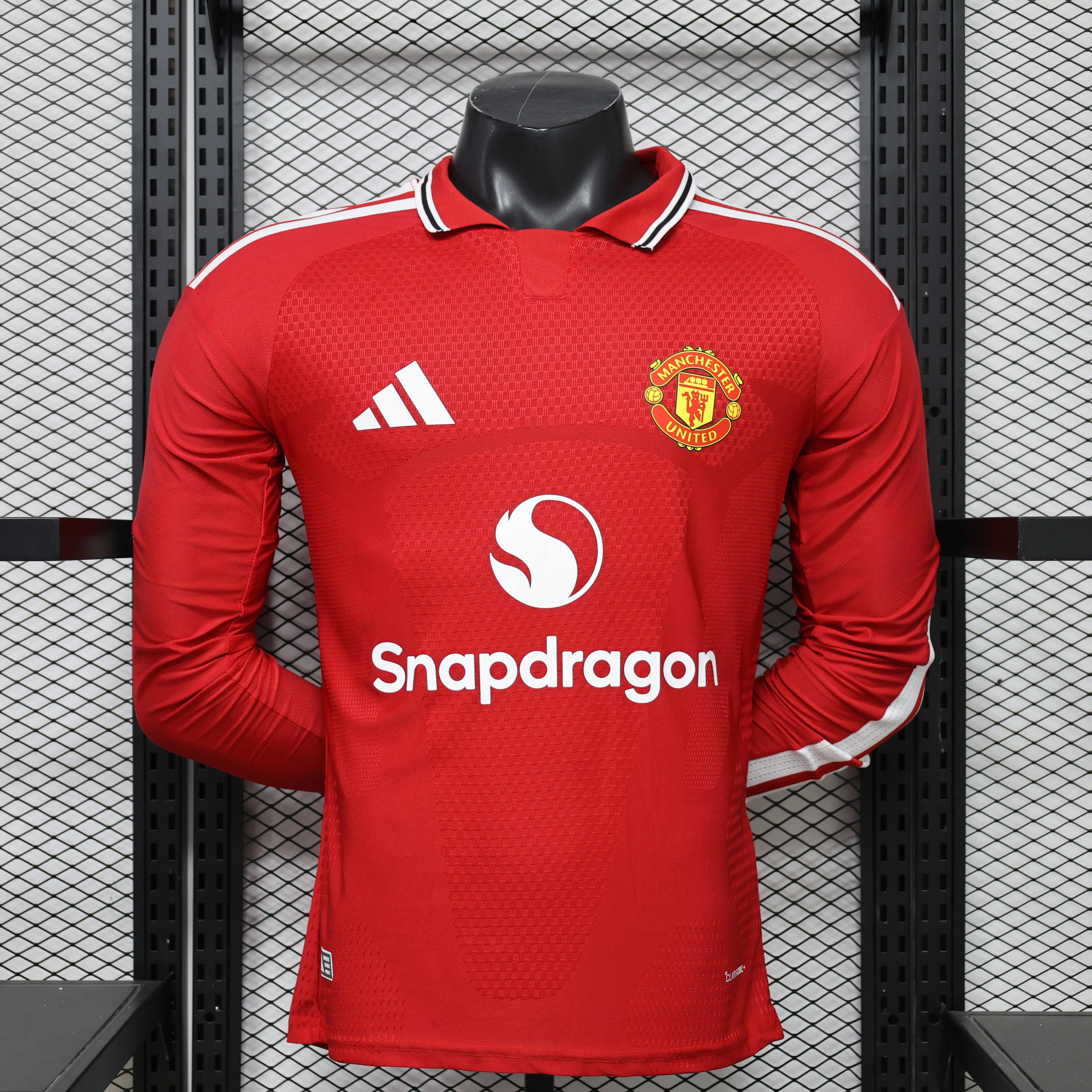
The Manchester United 2026/27 home long sleeve football shirt was live when checked on 12 October 2026. Its product title establishes the listed team, season and sleeve format. The illustration is a retail example, not evidence of a specific back font or an official nameset.
Explore the Manchester United shirt collection for the design first, then verify any available printing option on the individual page. A nameset decision should follow identification of the shirt, not replace it.
Summary
To identify football shirt lettering, match the team, competition and era; inspect both letters and numbers; then compare the actual print offered by the seller. There is no universal football-shirt font, and a familiar-looking sample is not sufficient evidence of an exact match.
Research scope
Prepared by FootballTHJORE using the linked league announcements and the store listing checked on 12 October 2026. FootballTHJORE sells football shirts and benefits from purchases through its product links. This is a source-based identification guide, not a hands-on print test or a claim of official licensing.
 USD
 ANG(ƒ)
 LKR(₨)
 EGP(EGP)
 BZD(BZ$)
 CRC(¢)
 MAD(DH.)
 OMR(RO.)
 KES(KSh)
 GHS(₵)
 UGX(USh)
 RSD(RSD)
 RON(lei)
 PGK(K)
 CDF(CDF)
 UYU($U)
 KZT(〒)
 PKR(Rs)
 MNT(₮)
 ARS(ARS$)
 COP(COP)
 MVR(Rf)
 IQD(د.ع)
 BDT(Tk)
 ZMW(ZK)
 NAD(N$)
 JMD(J$)
 AOA(Kz)
 MMK(K.)
 PEN(S/.)
 MOP(MOP$)
 BND(B$)
 LAK(₭)
 VND(₫)
 NGN(₦)
 KHR(៛)
 TWD(NT$)
 CNY(¥)
 SAR(S.R.)
 BHD(BD.)
 QAR(QR.)
 KWD(K.D.)
 UAH(₴)
 IDR(Rp)
 MYR(RM)
 AED(AED)
 JPY(円)
 INR(Rs)
 TRY(₺)
 CLP(CLP)
 KRW(₩)
 ZAR(R)
 SEK(Kr)
 ILS(₪)
 HKD(HK$)
 THB(฿)
 PLN(zł)
 NZD(NZ$)
 NOK(Kr)
 MXN(MXN$)
 HUF(Ft)
 CZK(Kč)
 SGD(S$)
 PHP(₱)
 DKK(kr.)
 CHF(CHF)
 BRL(R$)
 RUB(₽)
 CAD(CA$)
 AUD(A$)
 GBP(£)
 EUR(€)
 Barcelona
 Real Madrid
 Manchester United
 Inter Miami
 Manchester City
 Fc Bayern
 Ac Milan
 Chelsea
 Juventus
 Arsenal
 PSG
 Liverpool
 Inter Milan
 Santos FC
 Roma
 Portugal
 Al Nassr
 Atletico Madrid
 Everton
 Everton
 Germany
 Ajax
 Mexico
 Napoli
 Columbia
 Sporting lisbon
 France
 Tottenham
 Morocco
 Real Betis
 Brazil
 USA
 ltalia
 Argentina
 England
 Borussia Dortmund
 Spain
 Japan
 Netherlands
 Adidas
 Nike
 Puma
 NB
 Kappa