Soccer players may wear several different things under a jersey: a close-fitting base layer, a support garment, protective padding permitted by the rules or a fitted vest that holds an electronic tracking device. These items serve different purposes, and the small black vest often visible in training is not simply a fashion layer.
For supporters, the practical choice is usually simpler. A lightweight T-shirt or long-sleeve base layer can change warmth, coverage and fit, but it does not turn an ordinary fan outfit into professional performance equipment. Match technology and everyday layering should be explained separately.
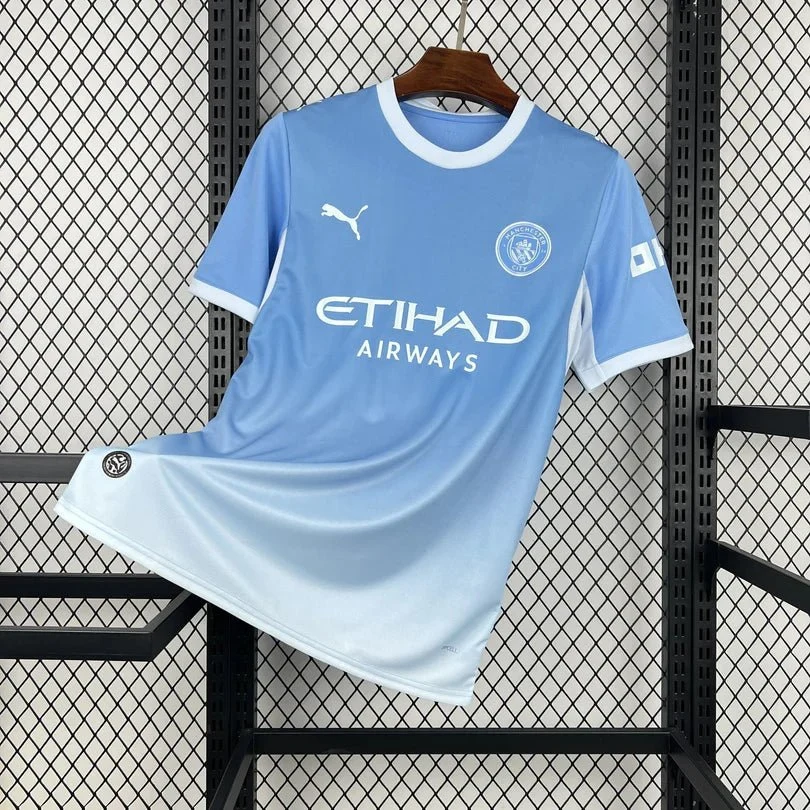
This product image identifies the outer shirt design. It does not establish what a player wears underneath or whether any base layer is included.
The four common categories under a soccer jersey
The categories can overlap visually. A tracking vest may look like a cropped sports top, while a compression base layer may sit close to the body. The purpose and equipment inside the garment are more informative than the silhouette.
Why players wear base layers
A base layer is worn directly against the body beneath the playing shirt. It can provide coverage in cold conditions and reduce the loose feeling of one garment moving over another. Short-sleeve, long-sleeve and sleeveless versions exist.
Professional players must also follow competition equipment rules. IFAB Law 4 states that undershirt sleeves must either use the same single main colour as the shirt sleeve or exactly replicate its pattern and colours. This explains why team underlayers often coordinate closely with the visible kit.
That rule does not mean a fan needs to copy a match uniform for everyday wear. Outside competition, colour and layering are styling decisions. The soccer jersey outfit guide covers casual proportions and combinations.
What is the small vest players wear?
The fitted vest commonly seen between the shoulder blades can hold an Electronic Performance and Tracking System device. FIFA's EPTS overview explains that wearable tracking systems can combine position tracking with devices such as accelerometers, gyroscopes or heart-rate monitors to measure movement and physical-load information.
The device is usually positioned high on the back so it stays secure while the player runs. The vest is part of a team monitoring system, not an ordinary bra and not a component included with a retail jersey unless a product explicitly says so.
What data can a tracking vest collect?
Depending on the system, teams may examine information such as distance, speed and movement load. A Catapult case study with Newcastle United describes a small GPS unit sitting between the shoulder blades and staff using the data to review running demands.
Not every visible vest uses the same hardware or collects the same fields. Competition organisers also control what wearable technology is permitted. It would be inaccurate to identify a system's brand or exact data from a television image alone.
Are players wearing sports bras?
The phrase appears frequently because the tracking vest has a cropped, tight shape. For many male professional players, the visible garment is an equipment carrier rather than a conventional bra. Its cut holds the sensor securely near the upper back.
Some players may separately wear sports bras or other support garments according to their bodies and needs. That personal choice should not be confused with the purpose of a GPS vest. Two garments can look similar while serving different functions.
What female soccer players may wear underneath
Women players may choose a sports bra, base layer or other support garment under the team shirt. The appropriate choice depends on fit, support needs, comfort and competition rules.
This is not a situation for one universal recommendation. A garment used in elite competition may be professionally fitted or selected with medical and performance staff. Everyday buyers should use the manufacturer's sizing and intended-use information for the support garment itself.
Can players wear protective padding?
IFAB allows certain non-dangerous protective equipment, including soft, lightweight padded items, subject to safety requirements. Competition officials can inspect equipment and require removal of anything dangerous or unauthorised.
Padding worn under a jersey is therefore different from hard protective gear that could endanger another player. The rules and the refere—not the appearance of a product photo—determine what is permitted in a match.
Match equipment versus fan layering
This distinction protects buyers from assuming that a photographed or broadcast professional setup comes with a retail shirt.
What can a supporter wear under a soccer jersey?
For casual use, common choices include:
- a plain crew-neck T-shirt for a relaxed layered look;
- a thin long-sleeve top in cooler weather;
- a close-fitting base layer when extra warmth is needed;
- no underlayer when the shirt already fits and feels comfortable.
Check the neckline and sleeves so that the lower layer appears intentional. A thick garment can change how the jersey hangs, while a very loose base layer may bunch underneath.
How layering changes the size you need
If you plan to wear a T-shirt or long-sleeve layer underneath, measure while wearing a similar layer. Compare the chest width and body length with a shirt you already use in the same way.
The football shirt size guide explains how to make a consistent flat-garment comparison. Do not assume that the presence of stretch means the jersey should be sized down.
When viewing the Manchester City 2026 Home Shirt or other new-season jerseys, use the live product page for current size options. The article does not claim that a base layer, tracking vest or support garment is included.
Care considerations when wearing layers
A dark or heavily dyed underlayer can transfer colour when new or wet. Wash it according to its own label before pairing it with a light jersey. Make sure rough fasteners, zips or hook-and-loop surfaces do not rub the inside of the shirt.
After wear, separate damp layers rather than leaving them folded together. Follow the outer jersey's care label and take extra care with printed names, numbers and sponsor graphics.
Conclusion
Soccer players can wear base layers, support garments, permitted protective items or tracking vests under their jerseys. The tight vest seen on professional players often holds an electronic performance device that records movement data for the team.
For a supporter, under-jersey layering is mainly about comfort, warmth, coverage and fit. Treat professional tracking equipment as a separate system, verify match rules when playing competitively and never assume that an underlayer is included with a retail shirt unless the product page clearly says so.

 USD
USD
 ANG(ƒ)
 LKR(₨)
 EGP(EGP)
 BZD(BZ$)
 CRC(¢)
 MAD(DH.)
 OMR(RO.)
 KES(KSh)
 GHS(₵)
 UGX(USh)
 RSD(Din.)
 RON(lei)
 PGK(K)
 CDF(CDF)
 UYU($U)
 KZT(〒)
 PKR(Rs)
 MNT(₮)
 ARS(ARS$)
 COP(COP)
 MVR(Rf)
 IQD(د.ع)
 BDT(Tk)
 ZMW(ZK)
 NAD(N$)
 JMD(J$)
 AOA(Kz)
 MMK(K.)
 PEN(S/.)
 MOP(MOP$)
 BND(B$)
 LAK(₭)
 VND(₫)
 NGN(₦)
 KHR(៛)
 TWD(NT$)
 CNY(¥)
 SAR(S.R.)
 BHD(BD.)
 QAR(QR.)
 KWD(K.D.)
 UAH(₴)
 IDR(Rp)
 MYR(RM)
 AED(AED)
 JPY(円)
 INR(Rs)
 TRY(₺)
 CLP(CLP)
 KRW(₩)
 ZAR(R)
 SEK(Kr)
 ILS(₪)
 HKD(HK$)
 THB(฿)
 PLN(zł)
 NZD(NZ$)
 NOK(Kr)
 MXN(MXN$)
 HUF(Ft)
 CZK(Kč)
 SGD(S$)
 PHP(₱)
 DKK(kr.)
 CHF(CHF)
 BRL(R$)
 RUB(₽)
 CAD(CA$)
 AUD(AUD)
 GBP(£)
 EUR(€)
 Barcelona
 Real Madrid
 Manchester United
 Inter Miami
 Manchester City
 Fc Bayern
 Ac Milan
 Chelsea
 Juventus
 Arsenal
 PSG
PSG Liverpool
 Inter Milan
 Santos FC
 Roma
Roma Portugal
 Al Nassr
 Atletico Madrid
 Everton
 Everton
 Germany
 Ajax
Ajax Mexico
 Napoli
 Columbia
 Sporting lisbon
 France
 Tottenham
 Morocco
 Real Betis
 Brazil
 USA
USA ltalia
 Argentina
 England
 Borussia Dortmund
 Spain
Spain Japan
Japan Netherlands
 Adidas
 Nike
Nike Puma
Puma NB
NB Kappa
Kappa