A vintage AC Milan football shirt is often a way of choosing which Milan story you want to wear. It might be the club's first European triumph, the team built around its Dutch trio, the players you watched in 2007, or an away design that reminds you of following football when you were younger. Those are different reasons to buy, and they need different comparisons.
This guide brings together eight listings in the AC Milan collection. Five refer to older seasons: two historical home jerseys, two away kits and a retro home long sleeve. Three later designs provide alternatives for readers who care more about sleeves, an anniversary theme or the look of an away shirt than the age of the season it represents.
The historical background below comes from AC Milan's own archive and kit announcements. Product descriptions refer separately to the linked THJORE listings, checked on 23 September 2026. An official account of a season explains why a design interests supporters; it does not establish who manufactured a particular shop item or whether that item is licensed, match issued or an original garment from the period.
Start with the season and the kind of shirt you want, then use the detailed comparisons to decide between them. The most useful purchase is the one that fits your reason for buying, your wardrobe and your measurements.
Decide what “vintage” means for your purchase
Before comparing years, decide whether you want an original older garment or a shirt representing an older design. A period original has a history as an object: when it was made, how it has been used and what condition it is in. A later reissue offers a way to buy a historical style without establishing that same age or ownership history. Those are separate collecting interests, even when the shirts refer to the same season.
The 1962/63 and 1988/89 product descriptions in this selection explicitly describe their shirts as reissues. The 2006/2007 home long sleeve uses “Retro” in its title. The two older away listings use season dates and “Premium Kit”. These words help identify the shop's categories, but they should not be expanded into claims about original production, official licensing or an item's involvement in a particular match.
For a wearer, the first decision may simply be whether the design, sleeve length and fit suit everyday use. For an original-shirt collector, period evidence and condition could be essential parts of the purchase. For a gift buyer, a meaningful year may matter more than either. Write that priority down before browsing: “a wearable reminder of 2007” leads to a different shortlist from “a documented shirt manufactured in 2007”.
This distinction also makes price comparisons more useful. Two garments with a season in common are not automatically equivalent purchases. Compare what is actually offered, including its stated condition, documented identity and included items. A photograph of a familiar design cannot answer all of those questions. If you require a period original, a listing described as a reissue does not meet that requirement, however much you like its appearance.
Compare the eight AC Milan listings
The table separates the product name from the decision it can help you make. Sleeve details for the two historical home jerseys come from their written descriptions; long sleeves on three other products are stated in their titles. No sleeve length is inferred for the remaining away listings.
The anniversary listing has no home or away designation in its title. It therefore belongs in its own category. The 2023/24, 2024/25 and 2025/26 products are included as later alternatives, not described as vintage garments. If a specific older season is essential, concentrate on the first five rows before widening the search.
1962/63: the beginning of Milan's European Cup story
Milan's 1962/63 season ended with a landmark European victory. On 22 May 1963 at Wembley, the team beat Benfica 2–1, with José Altafini scoring twice after Eusébio's opener. Milan became the first Italian club to win the European Cup. The club's 1962/63 season archive places that achievement after the previous season's league title.
That context gives the 1962/63 historical home jersey a clear role in a collection: it refers to the season of a first European success. It can suit a supporter who wants to begin a Milan timeline near that breakthrough, or someone whose interest extends beyond the teams they personally watched. You do not need a childhood memory of a season to enjoy learning why it matters.
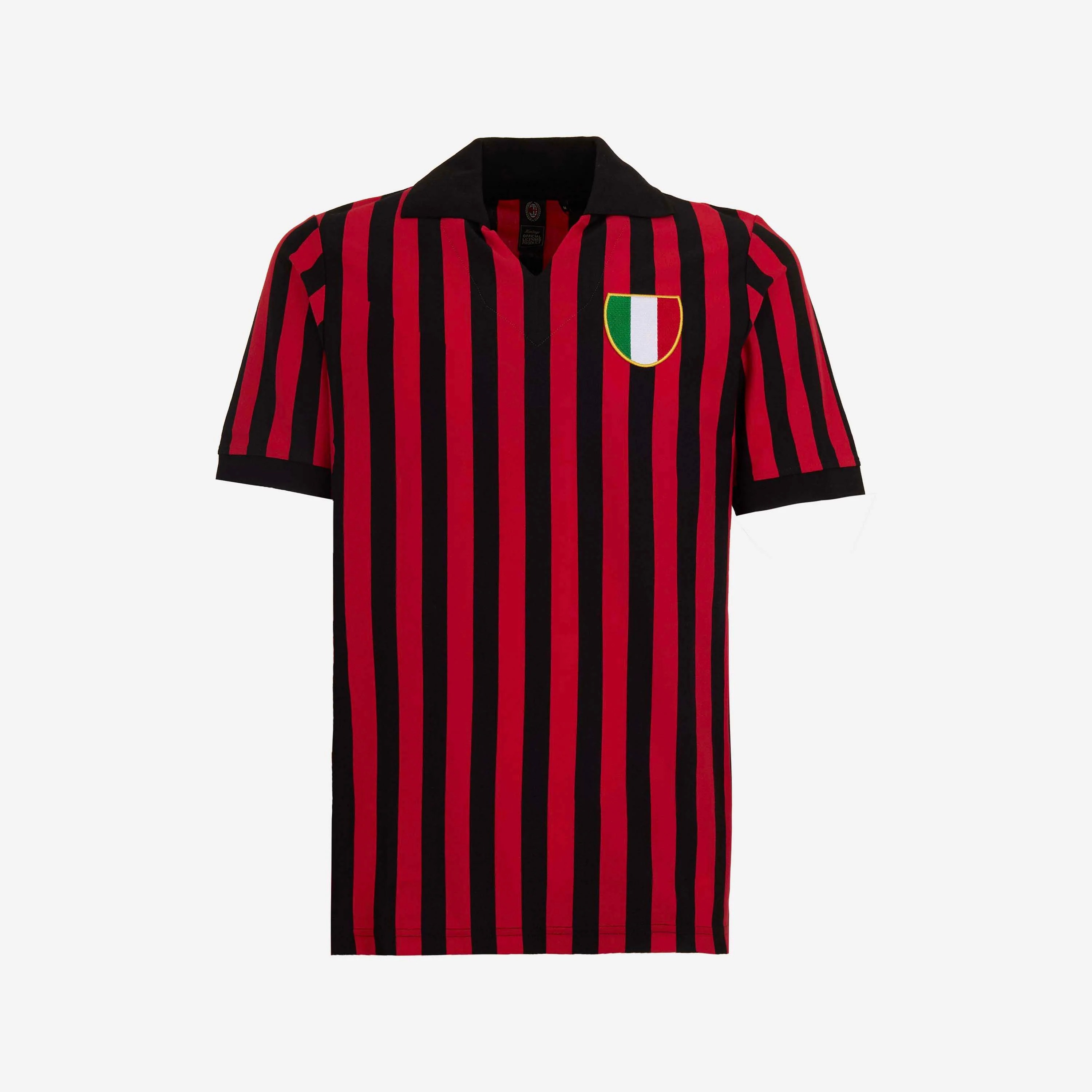
There is an important distinction if your interest is specifically the Wembley final. AC Milan's own account of its away-kit tradition says the club won that 1963 final in an all-white strip. A product labelled 1962/63 home should therefore not be described as the shirt worn in that final merely because it carries the winning season. The club's white-away history supplies the distinction.
Choose this home listing for its season reference and the home design it offers. If you are trying to recreate a particular match photograph, first identify the actual kit worn in that match. That extra step prevents an otherwise thoughtful purchase from missing the detail you cared about most. It is especially useful when building a display around a final, where the difference between “from the winning season” and “the final's kit” becomes visible in the story you tell.
1988/89: Sacchi's team and the Dutch connection
The 1988/89 season offers a different historical focus. AC Milan's archive describes Frank Rijkaard joining Ruud Gullit and Marco van Basten, completing the Dutch trio in Arrigo Sacchi's second season. Milan's European campaign included a 5–0 home victory over Real Madrid before a 4–0 final win against Steaua București in Barcelona. It was the club's third European Cup, twenty years after its second. These details are recorded in the 1988/89 season archive.
For a buyer, that makes the 1988/89 historical home jersey a strong season-led choice when the attraction is Sacchi's Milan or those three players. The connection is more precise than buying whichever old red-and-black shirt appears first. It also gives a gift a clear explanation: the selected year refers to a particular team rather than simply being an older-looking design.
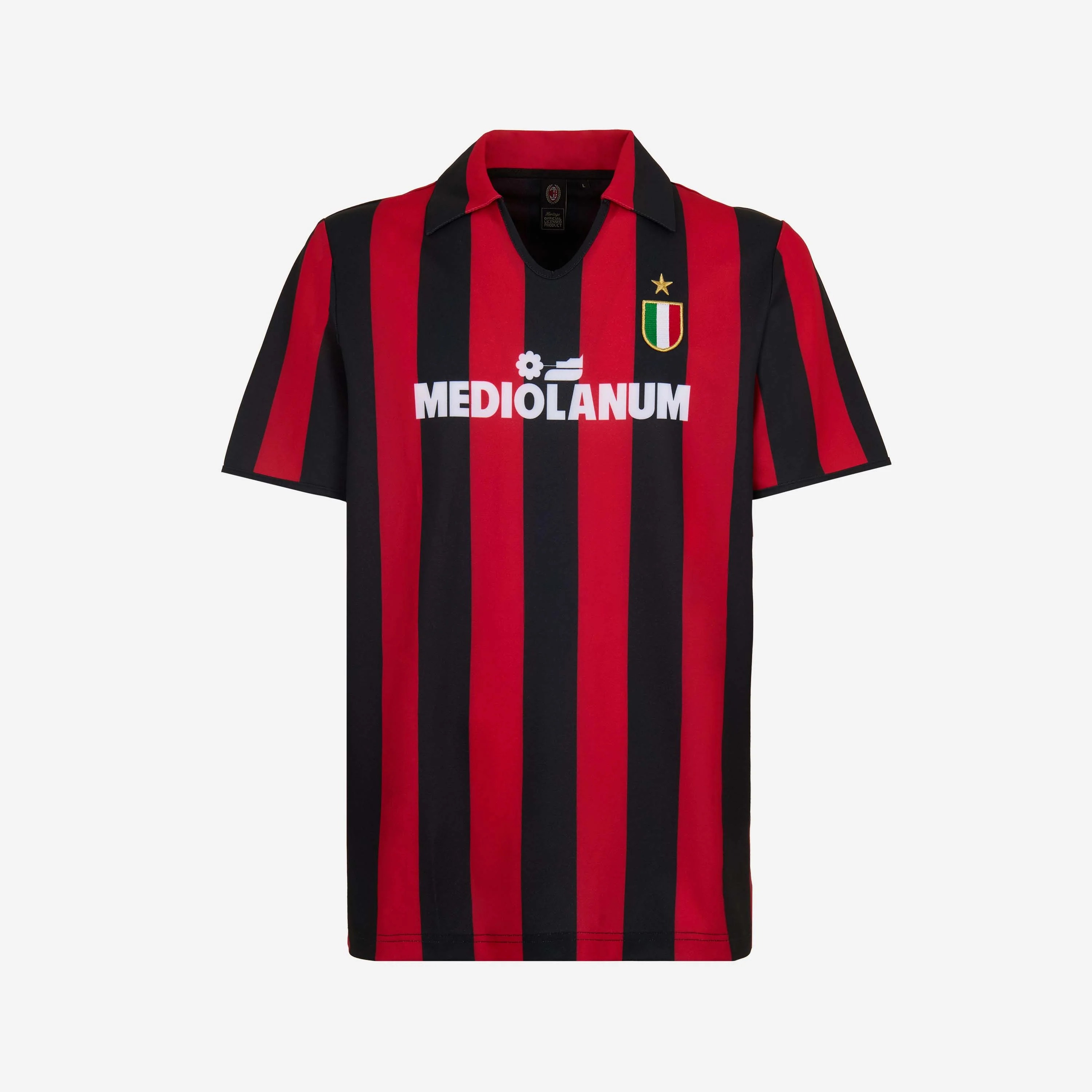
The emotional choice between 1962/63 and 1988/89 is not a competition over which achievement was greater. One is an entry point into Milan's early European history; the other points to a later team with its own recognisable personnel and playing identity. A collection containing both can express that change over time. A first purchase only needs to represent the chapter that interests you most.
If the Dutch connection is your reason for buying, keep the team season separate from a personalised player version. A named shirt raises additional questions about the number, lettering and competition you want represented. You can appreciate the 1988/89 team through an unpersonalised design without claiming that a particular print configuration reproduces a player's match shirt. That gives you room to choose the visual form you prefer while remaining accurate about what it represents.
The two historical home reissues differ in more than their dates
THJORE's written descriptions provide useful design details for these two products. The 1962/63 listing describes red-and-black striping, a black V-neck collar, short sleeves with black ribbed cuffs, side openings at the hem and a regular fit. The 1988/89 description gives a red collar with black edging, a V-neck, short sleeves and a regular fit, together with a Mediolanum design on the front. These are the shop's descriptions, not results of a hands-on inspection.
That comparison lets you consider where you want the visual emphasis. A black collar and dark cuffs create one way of framing a striped body; a red collar outlined in black creates another. If you often wear an open jacket, the neckline may remain visible when much of the shirt is covered. In that situation, the collar is a meaningful part of your decision, not a minor detail hidden in a product specification.
The front graphic is another preference to make consciously. Some buyers want a shirt whose appeal is tied closely to an era's commercial graphics. Others focus on the club colours, neckline or chest emblem. Compare the front views at similar sizes so one photograph does not appear more attractive simply because it is cropped more closely or displayed more brightly.
“Regular fit” is useful descriptive language, but it is not a shared measurement. It does not establish that these two products have identical chest width, body length or sleeve openings. If you are comparing them as wearable shirts, separate the design decision from the sizing decision. First choose which historical reference and details you prefer; then establish the dimensions for that exact item. Neither the earlier season nor the later season tells you which current listing will fit more generously.
2006/07: choose the memory, then choose home or away
The 2006/07 season offers two products in this selection, making it the clearest opportunity to keep the year fixed while changing the shirt type. AC Milan's official record of the Champions League final gives the setting: Athens, 23 May 2007, a 2–1 victory over Liverpool, with both Milan goals scored by Filippo Inzaghi. Carlo Ancelotti's starting team included Paolo Maldini, Andrea Pirlo, Clarence Seedorf and Kaká. See the club's 2006/07 Champions League record.
If that is the Milan you want to remember, compare the 06/07 Away Premium Kit with the 2006/2007 Retro Home Jersey Long Sleeve. Their date formats differ, but they refer to the same season. Their product categories differ too: one is away, while the other explicitly combines home, retro and long sleeves.
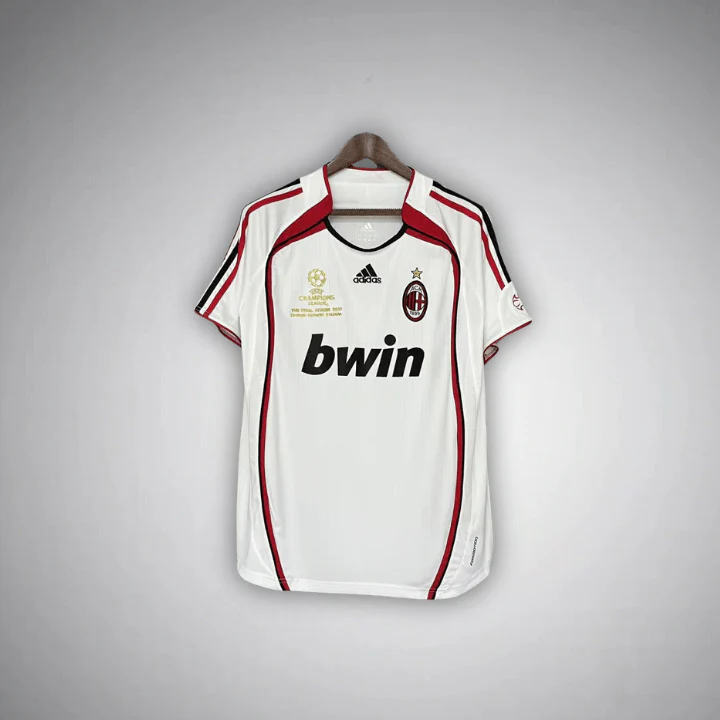
For a collection organised by seasons, either could occupy the 2006/07 place. For a collection organised by home shirts, the home long sleeve follows your existing theme. For a wardrobe already containing several home designs, the away listing may offer the variation you wanted. These are useful differences because they connect the purchase to what you already own, rather than treating every shirt as an isolated favourite.
The long-sleeve title also supplies a practical reason to choose the home product. If covering the arms is part of the look you want, it is the expressly identified option here. That does not establish its warmth, weight or fabric performance; sleeve coverage and insulation are different things. Consider whether you intend to wear it on its own or under another layer, then compare measurements accordingly.
A season-led choice should remain precise when you describe it. “A home design from the 2006/07 reference year” and “a shirt recreating a specific final configuration” are different briefs. The first can be satisfied by the named home listing. The second requires details about the match, markings and the exact offered item. Decide how specific your interest is before paying for additions that may not help your actual goal.
2012/13: a later chapter with a different appeal
Not every meaningful Milan shirt has to commemorate a European trophy. In 2012/13, Massimiliano Allegri's team finished third in the league. The club's season archive highlights Stephan El Shaarawy's early contribution, Mario Balotelli's winter arrival and a final-day win at Siena that secured that league position. It also records the end of Massimo Ambrosini's Milan playing career. This is the context supplied by the 2012/13 season archive.
The 12/13 Away Premium Kit therefore represents a different chapter from the 06/07 away listing. It may be a more personal choice for someone who began following Milan around that time, remembers those players or simply prefers its design. A shirt does not need to come from the most decorated season in your shortlist to become the one you wear most.
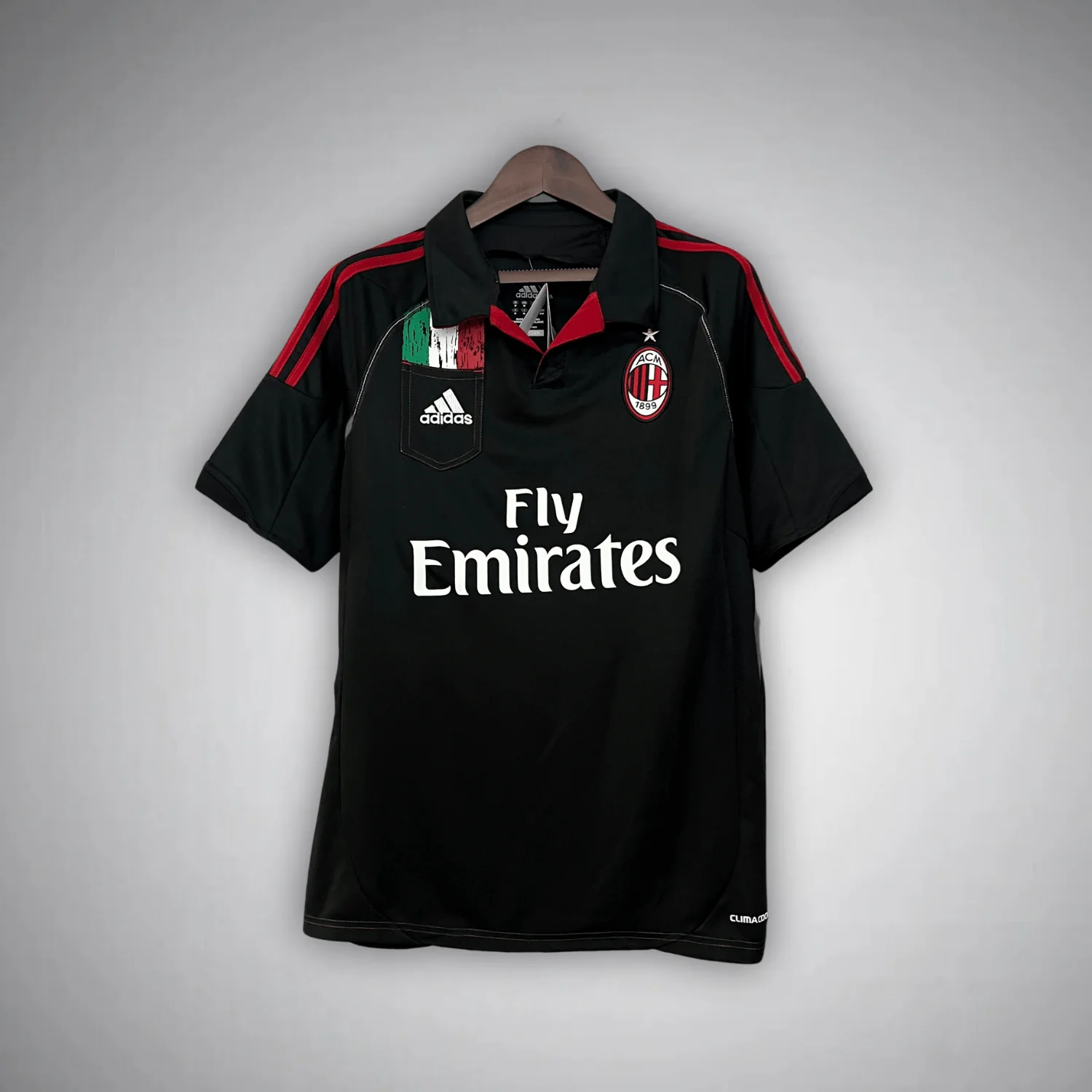
The two away products make a useful comparison because you can hold the category steady. Ask which season you actually want represented, then compare the photos without letting the older date settle the decision for you. Age of reference is not a quality grade, and the shared “Premium Kit” wording does not demonstrate equivalent construction or contents.
For a developing collection, 2012/13 can also prevent every purchase from revolving around the same famous team. A sequence of shirts may record how your support changed: the first matches you watched regularly, a player who drew your attention, or a season you followed despite its frustrations. Those reasons are personal rather than product claims. They can be more durable than choosing a year only because it appears on somebody else's list of essential shirts.
Compare the older home and away choices by purpose
There are two separate comparisons within these five older-season products. The historical home comparison changes the year from 1962/63 to 1988/89 while keeping a home designation and a merchant-described short sleeve. The 2006/07 comparison keeps the year fixed while changing from away to a home long sleeve. Use the first when choosing an era; use the second when you already know the era and need to choose a format.
For the away pair, the main established difference is the season reference: 2006/07 or 2012/13. If the football memory is decisive, that may be enough to select one. If neither year is personal, take the design comparison more seriously. Look at the complete front, back and neck, rather than choosing from a small thumbnail. Consider how much of the shirt will usually be visible in the way you plan to wear it.
For example, someone who wears shirts under an unfastened overshirt may value the central chest and collar. Someone planning a wall display may care equally about the back. A buyer who wants a long-sleeved silhouette has a concrete reason to prioritise the 2006/2007 home listing. These choices are about the use of the garment, not assumptions that home is more collectible or away is rarer.
If you are starting with one shirt, select one fixed requirement and one preference. A fixed requirement might be “2006/07” or “long sleeves”; a preference might be “works with the trousers I wear most”. This gives you a practical way to make a decision without pretending there is a universal best vintage AC Milan jersey. The right answer changes with the role the shirt is meant to fill.
2023/24: a later home design for comparison
The 2023/2024 Home Jersey Long Sleeve is a later-season alternative to the 2006/2007 home long sleeve. Its place here is to help buyers distinguish a preference for home colours and sleeve length from a requirement for an older season. If your original search was driven by the silhouette, a more recent design may still suit the wardrobe you have in mind.
AC Milan's official 2023/24 home-kit announcement explains the design of that season's club release: a tonal stripe treatment created a repeating M motif, with a black V-neck and black trims. This gives the season a different visual idea from simply repeating an older stripe arrangement. The official launch announcement is useful design background; its manufacturing specifications should not be assumed to describe the separate THJORE listing.
This is a useful choice point for someone who likes Milan's visual identity but has no attachment to one historical team. Decide whether you want a recognisably dated reference or an interpretation that belongs to a later season. Both can fit a collection, but they tell different stories. Calling every red-and-black home shirt “classic” can obscure the detail that actually attracted you.
If you are comparing the two home long sleeves, place the season, neckline and overall pattern beside the practical measurements. That keeps appearance and fit in the same decision. There is little value in choosing your favourite historical reference if the available dimensions do not suit the way you want to wear it.
The 125th Anniversary listing belongs in its own category
The 2024/2025 125th Anniversary Jersey Long Sleeve is named for a commemoration. Its title does not call it a home shirt. That matters because an anniversary release and a regular home kit from the same season can be different designs, even when both draw attention to the club's history.
AC Milan announced its special anniversary kit in December 2024. The official design combined fan-selected elements, including broad stripes and an emblem inspired by the club's first badge. It brought references from different periods together instead of reproducing one complete older season. The club's 125th Anniversary announcement explains that design history. It does not certify the identity, edition or construction of this shop's item.
The regular 2024/25 home kit had already been announced separately in May 2024. Its own launch also referred to the anniversary. Consequently, the presence of a commemorative reference alone is not enough to identify which 2024/25 design you are viewing. The regular home-kit announcement helps distinguish the two official releases.
For a buyer, an anniversary theme can suit a collection organised around the club as a whole. It may feel more appropriate than choosing one older team, especially for a supporter with several favourite eras. Someone building a strict season-by-season home collection, however, should establish the exact category they want represented. Keep the anniversary product's own title and photographs together rather than relabelling it to fit a collection plan.
The long-sleeve format is clearly stated in the THJORE name. Limited production, numbered editions and special materials are not established by that name, and should not be borrowed from another anniversary product. Choose the listing for the item it describes and the images it shows, not for attributes attached to a different release elsewhere.
2025/26 away: a later design with a historical reference
The 2025/26 AC Milan Away Jersey provides a later alternative to the two older away listings. It is not presented here as a vintage garment or as the current season's shirt. The printed season is the useful label: it lets you compare that reference year directly with 2006/07 and 2012/13.
In its July 2025 announcement, AC Milan described the official away design as a white base with red-and-black accents and the return of the Diavoletto symbol associated with the 1980s. The official 2025/26 away launch shows how a later design can revisit an older club reference. A historical motif does not make the garment itself old.
That distinction helps if you searched for retro style without having a season in mind. You may enjoy an older emblem or a particular visual reference while preferring the overall appearance of a later design. In that case, compare all three away listings openly. If your aim is to represent the team you watched in 2007 or 2013, the corresponding older-season listing remains the closer starting point.
Keep this choice separate from assumptions about comfort or technical performance. The dates in the titles cannot tell you which offered item feels softer, stretches more or suits a particular activity. Those questions require information about the exact garment. The useful comparison here is between season references and design preferences.
Build a collection around a clear connection
A small collection becomes more satisfying when its shirts relate to one another. The connection can be historical, visual or personal. It does not have to follow the most famous seasons, and it does not require buying every category in the table. Choosing a theme can actually make it easier to stop when a new listing does not add anything you wanted.
A historical timeline could begin with the 1962/63 home reissue, move to 1988/89 and then include a 2006/07 reference. The value of that grouping is the change in eras it records, rather than a claim that all three items share the same production history. If displaying them, label the season represented and the item's stated type separately so the story stays accurate.
A category-led collection might concentrate on away shirts. In that case, the 06/07 and 12/13 listings form a more coherent starting pair than selecting two unrelated categories only because they are well known. Adding 2025/26 would extend the timeline into a later period. Whether that is desirable depends on whether you want to document change or stay within a particular part of your supporting life.
A wardrobe-led collection can be just as deliberate. You might want one historical short-sleeve home design and one home long sleeve, giving each a different use. Or you may already own several striped home shirts and want an away option to vary what you wear. Before adding another item, identify the gap it fills. That makes the collection reflect your interests and habits rather than the order in which products appeared on a page.
Player names and match details need a more precise brief
A player can be the reason a season means something to you. The Dutch trio gives 1988/89 a clear connection, while the documented 2007 final team offers another group of familiar names. A shirt celebrating a player, however, involves more decisions than selecting a season. The year, match, shirt category, name treatment and number all need to refer to the version you actually want.
First decide whether you want a personal tribute or a historically specific recreation. A tribute can express your own preference. A recreation requires a dated reference for the exact configuration. Do not take one remembered photograph and assume its lettering applies to every match, competition or shirt from that season. A front view is also insufficient evidence for the back of the garment.
Use the official season archive to establish the team context, then look for dated match material if that degree of accuracy matters. Keep the chosen reference with your order notes. This is more reliable than relying on a general search result that mixes several years of the same player's career. It also lets you identify exactly which feature you need the seller to confirm.
The 06/07 and 12/13 away-kit pages contain merchant wording about names and numbers, but the exact selectable service, limitations and charges need to be checked on the individual listing. Do not assume all eight products support the same additions. Before requesting any printing, settle the spelling, number, placement and intended reference. If you prefer a shirt that can represent the whole team, an unpersonalised option may fit that purpose better, where offered.
Measure the fit you want, not the size you remember
Once you have a shortlist, use a shirt you already like wearing as a physical reference. Lay it flat without pulling the fabric and record how you measured it. Chest width, body length and sleeve measurements answer different questions, so keeping only a letter size loses useful information. Compare like with like: a flat garment width is not the same measurement as a body circumference.
For chest width, record the distance across the garment at the agreed underarm points. If a seller supplies a circumference instead, establish how it was measured before comparing the numbers. Doubling a flat width may help you understand the relationship, but it does not replace the seller's measurement method or account for how a garment is shaped. Use the same unit throughout your comparison.
Body length affects whether the shirt sits where you want when worn untucked. Measure from a clearly identified point, such as the shoulder beside the collar, down to the hem, and ask whether the product's chart uses that same starting point. A few different measuring conventions can make apparently similar numbers unhelpful. The aim is to compare dimensions that describe the same part of both garments.
Long sleeves need their own attention. A shirt can fit across the chest while the sleeves finish in the wrong place for your preference. Establish whether the sleeve is measured from the shoulder seam or from another point, and consider the opening at the wrist if you intend to wear a watch or another layer beneath it. The 2006/2007, 2023/2024 and anniversary listings should each be assessed individually.
Decide how much room you want using the reference garment, rather than automatically moving up a size because a shirt is labelled retro. If you want to wear a thin layer underneath, compare with something you already wear that way. If you prefer a closer silhouette, measure an example of that fit. Neither a historical date nor the phrase “regular fit” supplies the amount of space you personally find comfortable.
A season label or size letter alone cannot tell you the garment's dimensions. For numerical measurements, use the chart on the individual product page, where available, or ask the shop for the details. Our football shirt size guide explains the measuring process. Compare the exact item with a shirt you like wearing instead of assuming the same letter will fit identically across different products.
Read the photos as a set, not as one attractive thumbnail
The four images in this guide are associated with their respective product pages. They are starting points for comparison; the full galleries are where you can examine other views. Look for a complete front and back, then use closer views for the collar, cuffs, chest details and any printing that matters to your choice. A close-up without an overall view can hide how a detail sits on the full shirt.
Keep scale and lighting in mind when comparing two galleries. A shirt photographed nearer the camera will make its details appear larger. A different background can change how strongly its colours stand out. Those presentation differences should not become claims about the actual garment's shade, texture or finish. Where a specific colour match matters, ask for clarification rather than treating your screen as a physical sample.
For a historical design, compare the offered item with the reference you selected, not with an unrelated shirt from a nearby season. Note the neckline, the arrangement of the front, the presence and position of graphics, and the back layout. You do not need to become an expert in every Milan kit to identify which of those features matters to your purchase.
There is also a distinction between a catalogue photograph and evidence of an individual older garment's condition. If your aim is to buy a period original, you need information about the specific item being offered, including relevant labels and any wear or alterations. Attractive design images alone do not establish that history. The reissue descriptions on the two historical home pages make their stated category clear; evaluate them on that basis.
Wearing, displaying and gifting lead to different choices
For regular wear, start with the clothes that will sit next to the shirt. If you favour a simple outfit, let the shirt supply the strongest pattern and choose quieter surrounding pieces. A home design can be the main visual feature beneath an open jacket; a long sleeve can create a different outline when worn by itself. These are styling possibilities, not requirements, and your existing wardrobe is a better guide than buying a whole outfit around one purchase.
For a display, decide whether the front or back tells the story you want. A home design may communicate club identity through the front, while a personalised back may shift attention to one player. Plan enough room to show the feature you selected rather than folding away the detail that made the shirt meaningful. If conserving a valuable original is the objective, obtain advice appropriate to its actual materials and condition before choosing a permanent display method.
A gift requires another kind of precision. “Supports Milan” narrows the club, but it does not identify the recipient's favourite era, preferred sleeves or interest in originals versus reissues. A 1962/63 reference and a 2012/13 reference can have very different personal meanings. If you can learn which team they first followed or which shirt they already own, you reduce the chance of buying a duplicate or a design outside their interests.
When surprise matters, focus on information you can obtain accurately: a known favourite season, the measurements of a shirt they like, or a clearly expressed preference for home or away. Avoid inventing a player connection because a name is famous. A brief note explaining why you chose the particular season can make the gift more thoughtful without making unsupported claims about the garment's age or provenance.
Compare the complete offer before you order
After the design and fit decisions, compare the actual contents of the selected product. “Premium Kit” does not, by itself, tell you whether the order includes a shirt alone or additional pieces. The 06/07 and 12/13 away pages should therefore be read for what the chosen option contains. Do not use the same word in another listing as a substitute for that information.
Make price comparisons after choosing the options you require and using the same currency. A base amount and a total with additions are different figures. This guide avoids quoting fixed prices because the live offers can change; use the current product page and the amount shown for your selection. If the scope of an addition is unclear, establish it before judging the overall value.
For a time-sensitive purchase, read the shop's current delivery information for your destination. For a gift or an uncertain fit, read the applicable return conditions for the chosen product and any requested additions. A general promotional line is not enough to resolve every case. These details belong to the order you are considering and should be confirmed there rather than inferred from the age of the shirt design.
You can make the final comparison concise. Keep the two shortlisted links together with the season, shirt category, measurements and complete selected offer. If one product satisfies your fixed requirement and the other does not, there is no need to force a price-only contest. The useful purchase is the one that delivers the shirt you intended to buy, with its important details understood.
Summary: choose a chapter, then choose the right shirt
The strongest starting point is the Milan chapter you want represented. The 1962/63 home reissue points to the club's first European Cup season, while 1988/89 connects with Sacchi's team and the Dutch trio. Their merchant-described collars and front details also provide a concrete style comparison. For 2006/07, you can keep the year fixed and choose between the away listing and a retro home long sleeve. The 12/13 away kit offers a later chapter with a different personal and football context.
If sleeves or a broader club theme matter more than an older season, compare the 2023/24 home long sleeve and the 125th Anniversary long sleeve. The 2025/26 away jersey is another later alternative, with its year kept distinct. None needs to be relabelled as a period original to be a meaningful choice.
Use the AC Milan collection to open your preferred products, compare their galleries and establish the measurements and offer for the exact item. Keep historical meaning, product identity and personal fit together. That is how a vintage AC Milan football shirt becomes a considered purchase rather than simply another season in your basket.

 USD
USD
 ANG(ƒ)
 LKR(₨)
 EGP(EGP)
 BZD(BZ$)
 CRC(¢)
 MAD(DH.)
 OMR(RO.)
 KES(KSh)
 GHS(₵)
 UGX(USh)
 RSD(Din.)
 RON(lei)
 PGK(K)
 CDF(CDF)
 UYU($U)
 KZT(〒)
 PKR(Rs)
 MNT(₮)
 ARS(ARS$)
 COP(COP)
 MVR(Rf)
 IQD(د.ع)
 BDT(Tk)
 ZMW(ZK)
 NAD(N$)
 JMD(J$)
 AOA(Kz)
 MMK(K.)
 PEN(S/.)
 MOP(MOP$)
 BND(B$)
 LAK(₭)
 VND(₫)
 NGN(₦)
 KHR(៛)
 TWD(NT$)
 CNY(¥)
 SAR(S.R.)
 BHD(BD.)
 QAR(QR.)
 KWD(K.D.)
 UAH(₴)
 IDR(Rp)
 MYR(RM)
 AED(AED)
 JPY(円)
 INR(Rs)
 TRY(₺)
 CLP(CLP)
 KRW(₩)
 ZAR(R)
 SEK(Kr)
 ILS(₪)
 HKD(HK$)
 THB(฿)
 PLN(zł)
 NZD(NZ$)
 NOK(Kr)
 MXN(MXN$)
 HUF(Ft)
 CZK(Kč)
 SGD(S$)
 PHP(₱)
 DKK(kr.)
 CHF(CHF)
 BRL(R$)
 RUB(₽)
 CAD(CA$)
 AUD(AUD)
 GBP(£)
 EUR(€)
 Barcelona
 Real Madrid
 Manchester United
 Inter Miami
 Manchester City
 Fc Bayern
 Ac Milan
 Chelsea
 Juventus
 Arsenal
 PSG
PSG Liverpool
 Inter Milan
 Santos FC
 Roma
Roma Portugal
 Al Nassr
 Atletico Madrid
 Everton
 Everton
 Germany
 Ajax
Ajax Mexico
 Napoli
 Columbia
 Sporting lisbon
 France
 Tottenham
 Morocco
 Real Betis
 Brazil
 USA
USA ltalia
 Argentina
 England
 Borussia Dortmund
 Spain
Spain Japan
Japan Netherlands
 Adidas
 Nike
Nike Puma
Puma NB
NB Kappa
Kappa