Soccer jersey numbers once worked like a compact map of the team. Number 1 usually identified the goalkeeper, defenders followed, and attacking players wore the higher numbers in the traditional starting eleven. That history is why coaches and supporters still describe a striker as a “number 9” or an attacking playmaker as a “number 10.”
Modern squad numbers are more flexible. A player's actual shirt number can reflect tradition, availability, personal preference or club rules rather than one fixed position. Understanding soccer jersey numbers therefore requires two separate questions: what did the number traditionally mean, and what does it mean for this player and team now?
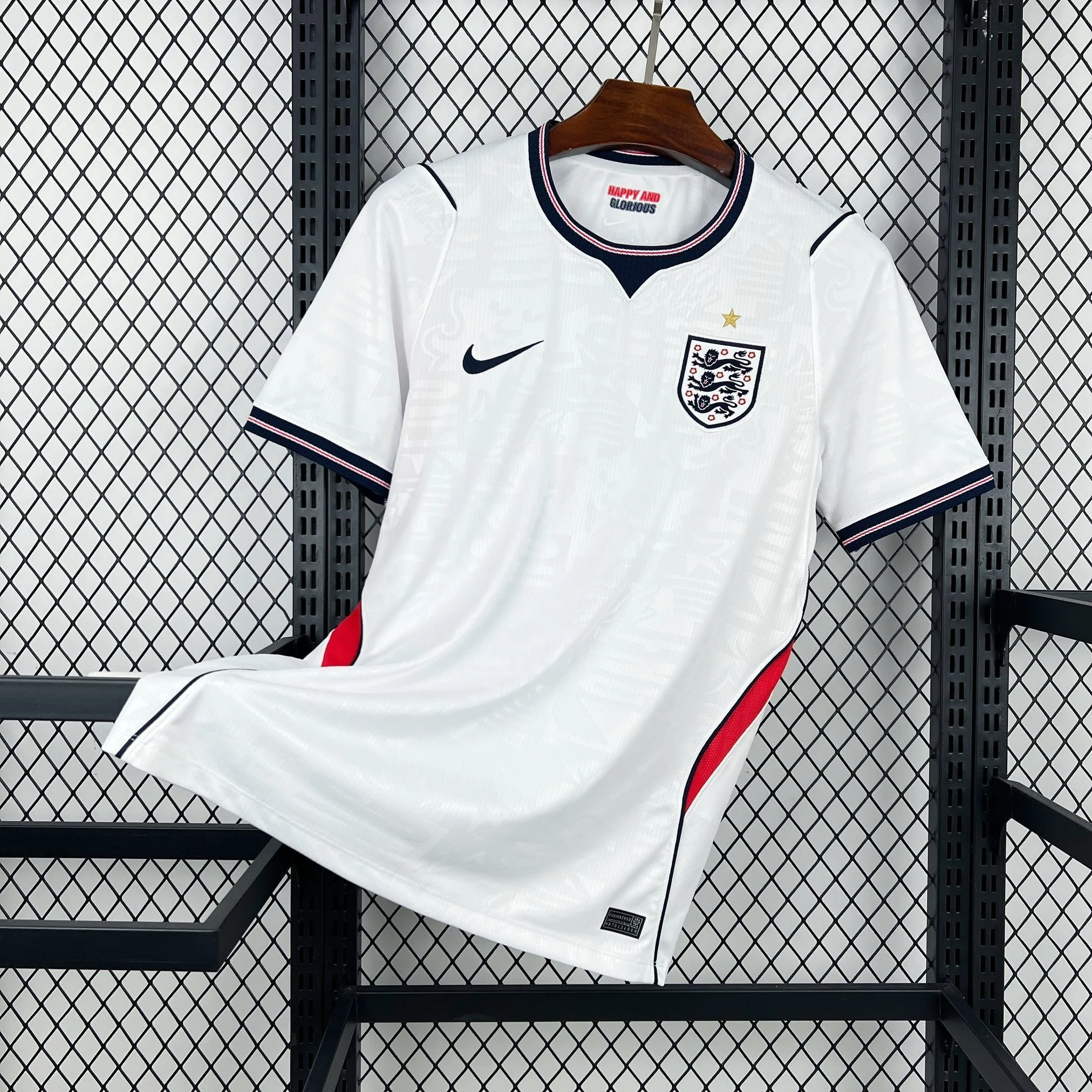
A current shirt listing can identify the team and design. Unless a name and number are clearly stated on the page, the image should not be treated as evidence of a particular player's squad number.
The traditional 1–11 numbering system
Early positional numbering was tied to the formation used by the team. The AYSO coaching guide records the traditional relationship between shirt numbers and positions, while modern tactical guides show how those associations changed as formations evolved.
The familiar shorthand is:
This table is a starting point rather than a universal rule. Number 4 and number 6 are especially dependent on regional traditions. A role described as a “6” in one football culture may not map neatly onto the same shirt number in another.
Why number 1 is associated with the goalkeeper
In the traditional system, the goalkeeper was the first position in the team list and wore number 1. That association has remained more stable than most outfield numbers. Goalkeepers can wear other squad numbers, especially as substitutes, but number 1 still communicates the role immediately.
For shoppers, that does not mean every shirt printed with 1 belongs to one specific goalkeeper. A customised number can be personal. The product page must identify the player or customisation if that is part of the listing.
What number 6 means in soccer
“Number 6” commonly describes a defensive or holding midfielder positioned in front of the central defenders. The player may receive the ball from the back line, protect central space and help the team move from defence into midfield.
The historical shirt number is not identical across every country. In some numbering traditions, 6 has also been associated with a defender. When a commentator calls someone “a six,” the phrase usually describes the tactical role, not necessarily the digit printed on the player's back.
What number 8 means in soccer
Number 8 is often linked with a central midfielder who contributes in several phases of play. The role may involve carrying the ball forward, supporting attacks, pressing, recovering possession and arriving near the penalty area.
“Box-to-box midfielder” is a common description, but modern number 8 roles vary. One player may be more creative, another more physical, and another may operate in a narrow channel beside the holding midfielder. The number is useful shorthand, not a complete scouting report.
What number 9 means in soccer
Number 9 traditionally belongs to the central striker. The role is associated with occupying central defenders, receiving passes near goal and finishing chances.
The phrase “false nine” shows how tactical language can separate the number from the old role. A false nine begins in a central-forward position but drops away from the defensive line to connect play or create space. The player may wear 9, 10 or another squad number; the phrase describes movement and function.
What number 10 means in soccer
Number 10 has a strong association with creativity. Traditionally, it described an inside forward. In later formations, it became linked with the playmaker operating behind the striker.
Supporters also connect number 10 with famous attacking players, which gives it cultural meaning beyond a position diagram. Even so, wearing 10 does not guarantee that a player performs one exact role. Some teams use the number for a winger, second striker or another high-profile attacker.
Why 7 and 11 are linked with wingers
In the traditional eleven, number 7 operated on the right and number 11 on the left. Modern systems still preserve that idea, but wide forwards often switch sides, move inside or play close to the striker.
A modern number 7 may be a winger, central forward or attacking star whose number has become part of a personal identity. Number 11 can likewise belong to a wide player, forward or attacking midfielder. The old map helps explain the association without determining the current role.
Traditional position numbers versus modern squad numbers
A midfielder can perform the “number 6 role” while wearing 14. A striker can play as the team's number 9 while wearing 19. Tactical language and the squad list overlap, but they are not the same system.
Why shirt numbers change
Players may change numbers when a preferred number becomes available, after moving clubs, when joining a new competition or when a squad is reorganised. National-team and club numbers may also differ.
A number can have personal meaning: a birth date, a number worn earlier in a career, a tribute or a link to a favourite player. These explanations require player or club evidence. It is safer to say that personal choice can matter than to invent the reason for a specific player's number.
Do high numbers have a fixed meaning?
Usually not. Numbers beyond the traditional eleven may once have indicated substitutes or squad depth, but modern use is much broader. A high number may be chosen for personal reasons or simply be available.
Some competitions impose number rules, and club traditions can make certain digits especially significant. Those details can change. Check the relevant competition or club source before making a claim about why a number is allowed, unavailable or retired.
How numbers affect a jersey purchase
When choosing a shirt, separate the base garment from any name-and-number option. First confirm the team, season and home, away or third design. Then check whether the listing includes printing, offers optional customisation or shows an unprinted product.
The England 2026 World Cup Home Kit listing is one example of a page that should be read on its own terms. Its title identifies the team, year and home role. Do not assume that it includes a particular player's number unless the current page explicitly says so.
The same rule applies when browsing the new-season football kit collection. A team shirt may be suitable for a supporter who wants the design without a player reference. If a name or number matters, verify the available option before ordering.
Common questions about soccer jersey numbers
Does a player's number always show their position?
No. Traditional numbers still shape tactical language, but modern squad numbers may reflect availability, preference or club tradition.
Can two players have the same number?
Within the same registered squad or match team, players normally need distinct numbers under the applicable rules. A player can have different numbers for club and country.
Is number 10 always the best player?
No formal rule makes number 10 the best player. Its history and famous wearers give it prestige, but quality depends on the player, not the digit.
What is the difference between a number 9 and a false nine?
A traditional number 9 leads the forward line and focuses on central attacking space. A false nine drops deeper to connect play and move defenders. These terms describe roles even when the actual shirt number is different.
Conclusion
The traditional soccer jersey numbers meaning comes from a positional map: 1 for the goalkeeper, defenders in the lower numbers, 7 and 11 in wide areas, 9 at centre-forward and 10 as a creative attacker. That map still helps people discuss tactics.
Modern squad numbers are more personal and flexible. Use the traditional system to understand football language, then use the current team sheet or product page to verify the number actually associated with a player or shirt. A number can suggest a role, but it does not prove one by itself.

 USD
USD
 ANG(ƒ)
 LKR(₨)
 EGP(EGP)
 BZD(BZ$)
 CRC(¢)
 MAD(DH.)
 OMR(RO.)
 KES(KSh)
 GHS(₵)
 UGX(USh)
 RSD(Din.)
 RON(lei)
 PGK(K)
 CDF(CDF)
 UYU($U)
 KZT(〒)
 PKR(Rs)
 MNT(₮)
 ARS(ARS$)
 COP(COP)
 MVR(Rf)
 IQD(د.ع)
 BDT(Tk)
 ZMW(ZK)
 NAD(N$)
 JMD(J$)
 AOA(Kz)
 MMK(K.)
 PEN(S/.)
 MOP(MOP$)
 BND(B$)
 LAK(₭)
 VND(₫)
 NGN(₦)
 KHR(៛)
 TWD(NT$)
 CNY(¥)
 SAR(S.R.)
 BHD(BD.)
 QAR(QR.)
 KWD(K.D.)
 UAH(₴)
 IDR(Rp)
 MYR(RM)
 AED(AED)
 JPY(円)
 INR(Rs)
 TRY(₺)
 CLP(CLP)
 KRW(₩)
 ZAR(R)
 SEK(Kr)
 ILS(₪)
 HKD(HK$)
 THB(฿)
 PLN(zł)
 NZD(NZ$)
 NOK(Kr)
 MXN(MXN$)
 HUF(Ft)
 CZK(Kč)
 SGD(S$)
 PHP(₱)
 DKK(kr.)
 CHF(CHF)
 BRL(R$)
 RUB(₽)
 CAD(CA$)
 AUD(AUD)
 GBP(£)
 EUR(€)
 Barcelona
 Real Madrid
 Manchester United
 Inter Miami
 Manchester City
 Fc Bayern
 Ac Milan
 Chelsea
 Juventus
 Arsenal
 PSG
PSG Liverpool
 Inter Milan
 Santos FC
 Roma
Roma Portugal
 Al Nassr
 Atletico Madrid
 Everton
 Everton
 Germany
 Ajax
Ajax Mexico
 Napoli
 Columbia
 Sporting lisbon
 France
 Tottenham
 Morocco
 Real Betis
 Brazil
 USA
USA ltalia
 Argentina
 England
 Borussia Dortmund
 Spain
Spain Japan
Japan Netherlands
 Adidas
 Nike
Nike Puma
Puma NB
NB Kappa
Kappa