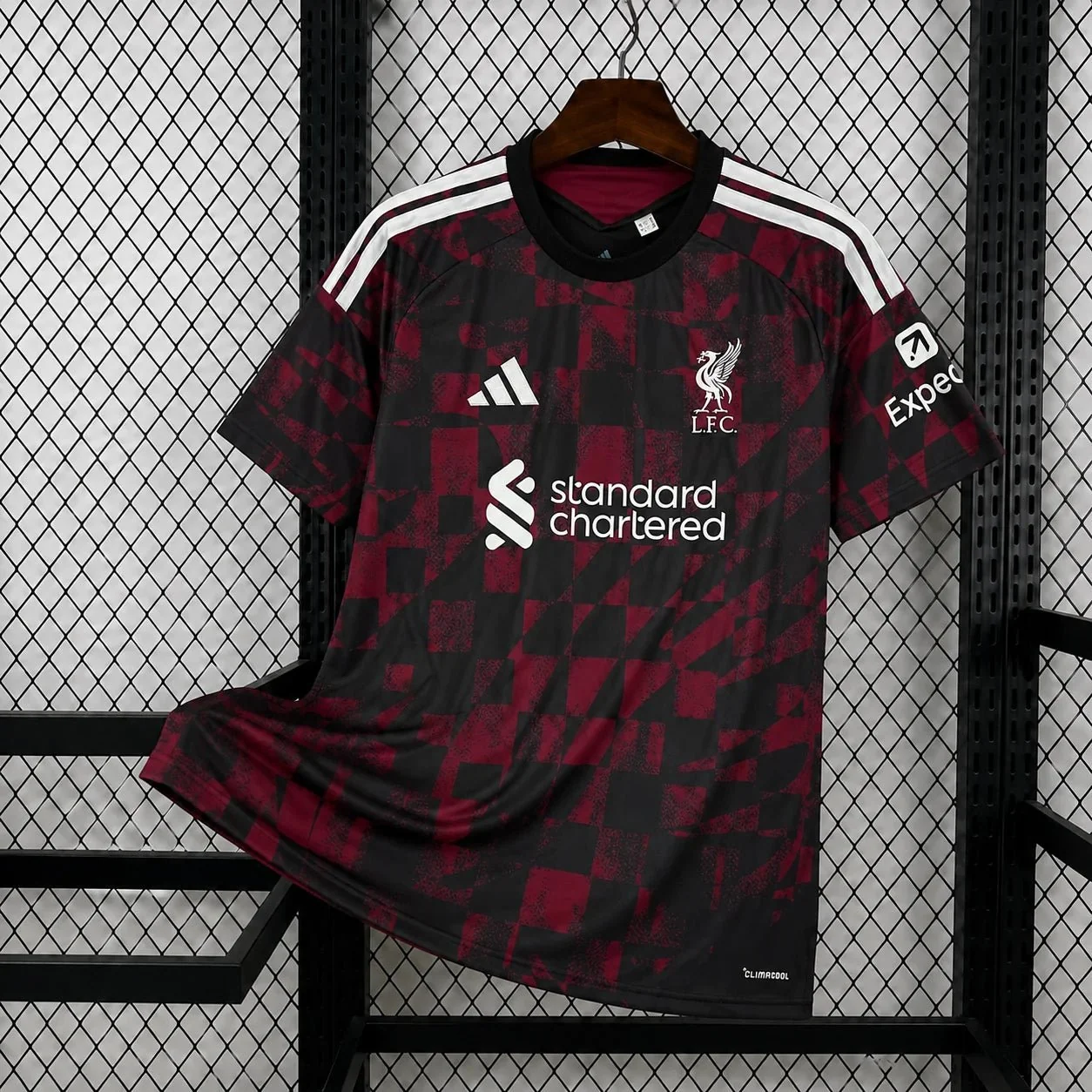
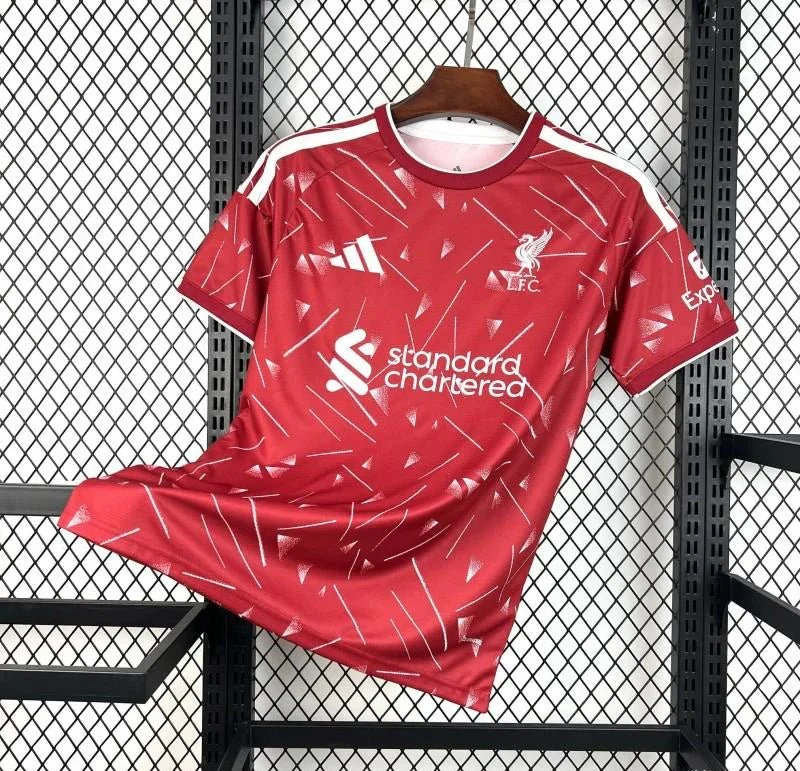
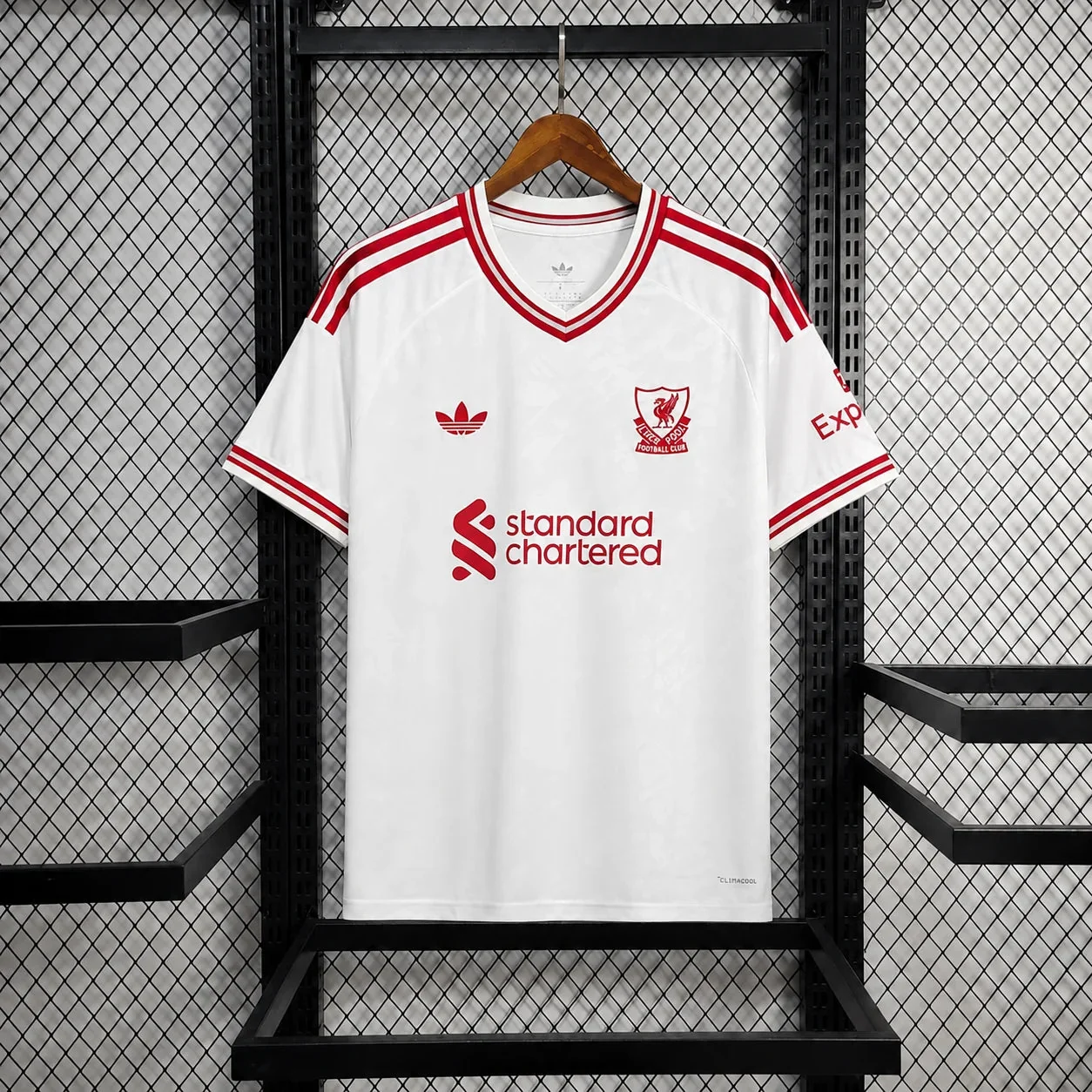
Liverpool Third Kit 2026: Compare the Current Third Shirt With 26/27 Options
2026-09-21
Liverpool supporters searching for a Liverpool third kit usually want a clear answer to a practical shopping question: which listing matches the season and style they have in mind, and what should they check before ordering? The live THJORE catalogue includes a page labelled Liverpool 2026 Third Away Shirt, separate 2026 home and away shirt pages, 26/27-labelled home and away kit pages, and an earlier 2024/2025 third-kit long-sleeve listing. That gives shoppers several useful reference points, but the labels should be read carefully rather than treated as interchangeable.
This guide compares those live listings, explains what each page actually confirms, and gives a simple way to choose the right page. It is written for UK readers who search for a Liverpool football shirt or football kit and for US readers who may use Liverpool soccer jersey or soccer kit wording. The buying decision should always finish on the exact product page because the page is the source of truth for its title, available options, size information and current price.
The comparison is based on pages checked on 22 September 2026. Prices are observations from that check and can change. Where a detail is not displayed clearly on a verified page, it is marked as unknown instead of being guessed.
What the Semrush data says about this search
The primary phrase for this guide is liverpool third kit. In the UK Semrush Keyword Overview, it showed 8.1K monthly searches, 24% keyword difficulty and an Easy classification. CPC was $0.43 and competition was 1.00. The visible intent controls included Information and Transactional, while the strategy mix shown by Semrush was 58% Information, 40% Transactional, 1% Navigational and 1% Business. That combination describes someone who may first want to understand a third kit and then move to a product page.
The same phrase showed 2.4K monthly searches in the US, 27% keyword difficulty and an Easy classification. CPC was $0.72, competition was 1.00 and the main visible intent was Business. The US strategy mix showed 53% Information, 26% Transactional and 21% Business. That makes a comparison page useful for both countries, provided it links directly to the relevant live listings.
Important related UK phrases include `liverpool third kit 25/26` at 5.4K searches and KD 28, `liverpool fc third kit` at 1.3K and KD 20, `liverpool third kit release date` at 880 and KD 32, and `liverpool third kit 24/25` at 720 and KD 22. In the US, Semrush showed `liverpool third kit 25 26` at 880 and KD 22, `liverpool third kit 25/26` at 590 and KD 22, `adidas liverpool third kit` at 260 and KD 23, and `liverpool fc 2025/26 third kit` at 210 and KD 23.
The phrase has a wider meaning than one season label. People may be comparing a current third shirt, checking an earlier season, looking for a long-sleeve version, or deciding between a third, home and away listing. This guide therefore keeps the main subject on third-kit selection and uses the home-vs-away article only as a related resource. It does not attempt to replace the Liverpool collection page for the broader query `liverpool football shirt` or `liverpool kit`.
The live Liverpool pages at a glance
The Liverpool collection is the right starting point for browsing the catalogue. Its public title is “Liverpool Soccer Jerseys 2026 | Liverpool Football Shirts | THJORE,” its H1 is “Liverpool,” and its description says that shoppers can compare available home, away and retro listings, sizes and options on each product page.
For an earlier long-sleeve reference, the Liverpool 2024/2025 Third Kit Long Sleeve page is available. It is useful for a season-labelled comparison, but the live page should be checked for the current options before ordering.
The table is deliberately conservative. A product title tells you how the listing is labelled; it does not prove that two pages are the same design, that a season label is interchangeable, or that every size and option remains available. Always open the page you intend to buy from and read its current controls.
The current Liverpool 2026 third listing
Liverpool 2026 Third Away Shirt
The Liverpool 2026 Third Away Shirt is the closest catalogue match for the broad phrase liverpool third kit. Its page title and H1 both identify it as “Liverpool 2026 Third Away Shirt,” and the public description refers to a Liverpool 2026 third football shirt and soccer jersey. The description also states that sizes S–4XL are shown on the listing. At the time of the check, the displayed price was $49.90.
That is enough to make the page a strong starting point for a third-kit search, but it is not a reason to invent details about fabric, authenticity, release timing or technical construction. The page’s visible title is the useful fact. If the site exposes colour, badge, sleeve or personalisation controls when you open it, use those controls as the current source rather than relying on a general article.
A shopper in the UK might call this a Liverpool third football shirt, while a US shopper might call it a Liverpool third soccer jersey. Both phrases can describe the same shopping task. The product link should remain the same, and the wording around it should stay natural. There is no benefit in placing both regional expressions in every sentence.
The key check is season and design wording. If you came to the page after searching for a 25/26 third kit, compare the page label with the wording in your search. If the exact season matters, do not assume that “2026” and “25/26” are identical. Open the listing, check the visible product information, and choose the page whose label matches the item you intend to buy.
The 2026 home shirt as a control point
Liverpool 2026 Home Shirt
The Liverpool 2026 Home Shirt gives you a clean comparison point. The page title and H1 are both “Liverpool 2026 Home Shirt,” and the observed price was $49.90. The captured title does not include the word third, so it should not be presented as the third listing in an article or internal link.
Why compare it at all? Buyers often land on a third-kit result and then decide that they prefer a main home design. A short home-versus-third section helps them make that decision without forcing them back through a generic collection page. It also protects the article from becoming a thin product plug: the reader gets a useful framework for choosing a label, then a direct link to the exact page.
Use the home page for a label check, price check and option check. Do not claim a colour, material or performance feature unless the live page states it. If the product page shows a different size range from the third page, record that difference exactly. If a detail is not visible, leave it out of the article.
The distinction also matters for internal linking. An anchor such as “Liverpool 2026 home shirt” should lead to this home URL, while “Liverpool 2026 third away shirt” should lead to the third URL. A descriptive anchor reduces confusion for readers and helps search engines understand that the pages serve different listing intents.
The 2026 away shirt and the meaning of “away”
Liverpool 2026 Away Shirt
The Liverpool 2026 Away Shirt is another separate listing. Its page title and H1 say “Liverpool 2026 Away Shirt,” its description refers to the away football shirt and soccer jersey, and the captured description states sizes S–4XL. The observed price was $49.90.
Away and third are different labels in the catalogue. A searcher may use the words loosely, but the article should keep them separate. If you are explaining the choice to a reader, say that the live site offers a third-labelled page and an away-labelled page, then let the product titles do the rest. Do not collapse those pages into a single “away/third” product unless the page itself does so.
This is especially useful for US readers who use “soccer jersey” as the default phrase. The article can naturally say “Liverpool 2026 away soccer jersey” when referring to the away page and “Liverpool 2026 third soccer jersey” when referring to the third page. In UK copy, “football shirt” and “football kit” are more natural. The URL and page title remain the reliable identifiers.
If you are choosing between the away and third pages, compare three things: the exact listing label, the current selection controls, and the size information shown on the page. Then check the final total and checkout details on the site. This article does not promise a delivery time, return outcome or stock position because those items were not treated as permanent facts in the research.
Separately labelled 26/27 home and away pages
The catalogue also has Liverpool 26/27 Home Kit and Liverpool 26/27 Away Kit pages. Their titles contain 26/27, and their observed prices were $49.90 at research time. The home page title includes “Custom Name & Number,” while the away page title includes “Football Shirt.” Those are the labels that were visible on the live pages.
These pages are useful for a reader who has specifically searched for a 26/27 kit. They are also a reminder that season wording must be handled carefully. The existence of a 26/27 home or away page does not prove that the 2026 third page should be renamed, and it does not prove that the home, away and third pages are a single bundle. Keep the page labels intact and link to each page separately.
A comparison article can explain the difference between a season label and a shirt role. “26/27” describes the wording in the product title; “home,” “away” and “third” describe the role used by the listing. A reader can use both pieces of information to narrow the choice. This is more helpful than filling the page with a guessed launch calendar or an unsupported description of the design.
If you are writing for the UK, “Liverpool 26/27 football kit” and “Liverpool 26/27 football shirt” are natural variants. For the US, “Liverpool 26/27 soccer jersey” is the natural equivalent. Use them in a heading only when that heading is genuinely about the matching page. A short section that mentions every variant repeatedly will read unnaturally and add no buying value.
The earlier 2024/2025 third long-sleeve listing
The Liverpool 2024/2025 Third Kit Long Sleeve page is a useful historical comparison because its title explicitly includes both the earlier season and “Long Sleeve.” It returned HTTP 200 and showed an observed price of $45.00 during the research check.
The page should be treated as an earlier, long-sleeve listing. It should not be used to imply that the current 2026 third page is long sleeve, that the older price still applies, or that the older options are available in the same way. A reader who wants a long-sleeve shirt can open the page and verify its current product controls before making a decision.
Why include an older listing? The Semrush data includes `liverpool third kit 24/25` at 720 UK searches and KD 22, so an earlier-season comparison is a real search path. It also helps a buyer who is not necessarily looking for the newest label. The key is to make the season boundary visible in the heading and anchor text, then avoid mixing its facts into the current third-shirt description.
A simple comparison can ask: do you want the current 2026 third listing, a separately labelled 26/27 option, or an earlier 2024/2025 long-sleeve page? That question maps directly to the available URLs and does not require a claim about official release history.
How to choose between third, home and away
Choose the third listing when the third label is your priority
Open the Liverpool 2026 Third Away Shirt when the phrase you searched is “Liverpool third kit” and the page label matches what you want. Confirm the visible title, price, size range and any current options. The article’s role is to help you find that page; the product page’s role is to confirm the item before ordering.
Choose the home listing when you want the 2026 home label
Open the Liverpool 2026 Home Shirt when “home” is the deciding word. Keep its anchor text and description separate from the third page. If you compare the two in a table, write the exact labels instead of calling both of them a generic Liverpool kit.
Choose the away listing when “away” is the deciding word
Open the Liverpool 2026 Away Shirt when you want the page labelled away. The public description confirms the away shirt and soccer jersey wording and states S–4XL in the captured metadata. Confirm the live page again if size is important to your order.
Choose the 26/27 pages when the season label matters most
The 26/27 home and 26/27 away pages should be your references when your search includes 26/27. Do not use them as proof that a differently labelled page is the same product. Use the exact title shown on each page.
Choose the earlier page when you specifically want long sleeve or 24/25
The 2024/2025 third long-sleeve page is the appropriate comparison point for an earlier long-sleeve search. Its title is clear, but its live options must be checked again because catalogue conditions can change.
Size and fit checks before ordering
The product descriptions captured for the 2026 away and third pages state S–4XL. That is useful evidence, but it is not a universal promise for every Liverpool page. The home page’s captured meta description did not provide the same size statement, and the 26/27 and earlier pages should be checked individually.
Start with the exact page you intend to buy from. Look for the size selector, any size chart, and the measurement instructions shown by the site. Compare the measurements with a shirt you already own if that is the method the page recommends. Do not treat the S–4XL statement on one product page as evidence that every linked listing has the same range.
If a size chart is not visible, leave the uncertainty visible in your decision. You can still compare the listing title and current options, but you should not invent chest measurements, fit labels or fabric behaviour. The purpose of an SEO buying guide is to reduce uncertainty, not hide it behind confident wording.
The same principle applies to children’s, women’s or long-sleeve versions. The catalogue may contain additional pages, but this guide only makes a specific claim about the verified pages listed in the table. If you need a different audience or sleeve option, use the collection page and confirm that the product title matches your requirement.
Names, numbers and personalisation
Some Liverpool 26/27 catalogue wording refers to custom name and number, and the site already has a separate Liverpool 26/27 shirt personalisation checklist. That article is a useful next read for a buyer who has already selected a listing and wants to think through names, numbers and badges.
Keep personalisation as a separate decision from the third-kit decision. First identify the correct season and shirt role. Then read the selected product page for the options it actually exposes. A guide should not promise a customisation service, player name, badge or print result unless the live product page makes that option clear.
If the page presents a name-and-number control, proofread the entered text before checkout and review the final order summary. If no such control is visible, do not assume that a note or message will create the service. The safe language is “check the live product options” rather than “every shirt can be customised.”
This separation also helps with search intent. People looking for `liverpool third kit` need a product comparison. People looking for personalisation need a checklist. Linking the two pages gives both groups a clear next step without asking one article to rank for every Liverpool shirt query.
How UK and US terminology fits together
UK searchers commonly use “Liverpool football shirt,” “Liverpool football kit” and “Liverpool third kit.” US searchers commonly use “Liverpool soccer jersey” or “Liverpool soccer kit.” Semrush shows demand in both markets, but the page should not repeat both terms mechanically.
Use the UK wording in the main title and several natural headings because the primary UK opportunity is larger. Use “soccer jersey” in a short US-focused paragraph, product link context or comparison note. The product pages themselves already use both football and soccer language in their public descriptions where applicable.
The wording should describe the same catalogue fact. For example, “The Liverpool 2026 Third Away Shirt page is the direct match for a third-kit search; US readers may recognise the same item as a Liverpool third soccer jersey.” That sentence clarifies terminology without producing a block of repeated synonyms.
Avoid switching “kit,” “shirt,” “jersey” and “uniform” in every line. Search engines can understand close variants, and readers prefer a consistent description. The exact product title should win whenever there is a possible conflict.
A practical pre-checklist for the product page
Before you click through to checkout, use this sequence:
Read the exact product title. Confirm whether it says 2026, 26/27, 24/25, home, away, third or long sleeve.
Check the image against the label. The image is a useful visual confirmation, but it does not replace the written title.
Review the current price. The prices in the table were observations on 22 September 2026, not a guarantee for a later visit.
Open the available options. Look for size and any other selector that the page presents.
Read the size information. The S–4XL statement captured for the 2026 away and third pages should not be copied to other listings automatically.
Check personalisation controls. Use only the options visibly offered on the exact product page.
Review the final order summary. Confirm the chosen product, size and any entered text before submitting an order.
This process is intentionally straightforward. It helps with a seasonal search without adding claims that the site has not confirmed. The product page remains the final authority for current commercial details.
Related Liverpool resources
If you are still deciding between the main shirt roles, read Liverpool 26/27 Home vs Away: Which Shirt Should You Choose?. That article has a different purpose from this guide: it focuses on a home-versus-away decision, while this page focuses on the third-kit search and the catalogue labels around it.
For broader browsing, visit the Liverpool collection. It is the best place to see the available Liverpool soccer jerseys and football shirts together. From there, open the exact product page rather than assuming that a collection card contains every option or that two season labels refer to the same listing.
You can also explore the new-season collection when your search is not limited to Liverpool. Keep in mind that a broad collection page is a discovery route; the final choice still needs an exact product-page check.
Reading season and shirt-role terms without assumptions
A search result can combine words that look similar but serve different purposes. “Liverpool third kit” describes the shirt role a shopper wants. “Liverpool 25/26” or “Liverpool 26/27” describes the season wording the shopper expects. “Home,” “away” and “third” describe separate roles in the catalogue. “Long sleeve” describes a sleeve label on one earlier page. These words work together, but they should not be treated as one interchangeable product name.
The safest comparison starts by separating those layers. First write down the season phrase in your search. Next write down the shirt role. Finally note any option that matters, such as long sleeve or a size range. Then open the URL whose title contains the closest matching combination. If there is no exact match, say so clearly and show the nearest verified page rather than silently rewriting the season.
For example, the verified catalogue contains “Liverpool 2026 Third Away Shirt,” “Liverpool 26/27 Home Kit,” and “Liverpool 2024/2025 Third Kit Long Sleeve.” The first and last both include “third,” but their season and sleeve labels are different. The first and second both use a current-looking season label, but one is third/away and the other is home. A useful article preserves those distinctions so a reader can make an informed choice.
This approach also helps the site’s internal architecture. The collection page can cover the broad Liverpool football shirt category. A third-kit article can explain how to compare third listings. A home-vs-away article can handle that separate choice. A personalisation checklist can answer the name-and-number question. Each page adds a different piece of information and links to the next decision rather than repeating the same paragraph.
Why a label check matters for 25/26 searches
Semrush shows a substantial UK opportunity for `liverpool third kit 25/26`, but the verified catalogue pages used here are labelled 2026, 26/27 or 2024/2025. That does not mean a shopper has no relevant option. It means the article should be transparent about what was and was not verified. The reader can open the collection, use the exact product filters available there and confirm the page title before buying.
If a future listing is added with a 25/26 title, the comparison can be updated with that exact URL and its own price and option facts. Until then, it would be misleading to put “25/26” in a product link anchor when the destination page says 2026 or 2024/2025. The article can still use the Semrush phrase in a section explaining the search, because that is a real demand signal, but it should not convert an unverified season into a product claim.
Why the release-date question needs a careful answer
The questions section in Semrush shows that readers ask when the Liverpool third kit is released. That is a useful FAQ opportunity only if the answer can be sourced. The public pages checked for this brief expose product titles, descriptions and catalogue options; they did not expose a verified release date. A responsible answer therefore explains how to check the live collection and avoids a calendar date.
This is also a conversion-friendly answer. A reader who wants a newly available listing can click through to the collection, compare the visible current pages and choose the product that matches the title they searched. Giving a guessed date could send that reader away or create a false expectation. Marking the date as unknown keeps the guide accurate while still offering a next action.
Three realistic Liverpool third-kit shopping scenarios
Scenario one: you want the current third-labelled page
You searched “Liverpool third kit” because you want a third design and do not need a historical season comparison. Start on the Liverpool 2026 Third Away Shirt. Verify the title, the displayed price, the size control and any other current options. The captured description states S–4XL, but you should check that the page still shows the same range when you order.
If you want to see alternatives, open the 2026 home and away links in the comparison table. Keep the third link as your main destination and use the other two for context. That path satisfies the commercial part of the search without forcing the reader through an unrelated blog.
Scenario two: you searched a 26/27 phrase
You searched “Liverpool 26/27 kit” or “Liverpool 26/27 football shirt.” Open the separately labelled 26/27 Home Kit and 26/27 Away Kit pages. Compare the written title first, then the current options. The pages were observed at $49.90 during research, but the live price can change.
If you also want a third role, return to the Liverpool collection and look for a listing whose title explicitly includes third. Do not turn the 26/27 home or away URL into a third-kit link simply because it appears in the same collection.
Scenario three: you want an older long-sleeve third kit
You searched “Liverpool third kit 24/25” or specifically want long sleeves. Open the Liverpool 2024/2025 Third Kit Long Sleeve page and verify its current options. The title is the evidence for the earlier season and sleeve label; the observed $45.00 price is time-bound.
If you decide that the current 2026 listing is a better fit, compare the exact title and option controls rather than assuming that the two pages have the same construction. The article can help you understand that choice, while the live product page confirms what can actually be ordered.
Building a useful comparison instead of a catalogue list
A weak buying article repeats product names and sends every paragraph to the same collection. A useful comparison answers the questions that come immediately before a click. For the Liverpool third-kit topic, those questions are: which page is third-labelled, which season wording appears in each title, which page mentions the size range, how do the home and away pages differ in role, and where can a shopper check a long-sleeve earlier option?
Each question maps to a verified fact in the table or a direct product link. That makes the content scannable on mobile and gives every section a purpose. It also keeps the primary keyword natural. The phrase appears in the title, introduction, a comparison heading and the summary; related variants appear only when the section actually addresses them.
Use descriptive anchors such as “Liverpool 2026 Third Away Shirt,” “Liverpool 26/27 Away Kit” and “Liverpool 2024/2025 Third Kit Long Sleeve.” Avoid using the same generic anchor for all destinations. A reader should know what will open before clicking, and the site should not make a home page look like a third-kit page through ambiguous linking.
When a fact changes, update the row that depends on it. If a price changes, change the observation date or remove the number. If a product title changes, update the anchor and the comparison row. If a new 25/26 listing appears, add it only after checking its HTTP status, title, H1, options and canonical. This makes the article maintainable instead of turning it into a frozen catalogue snapshot.
Frequently asked questions
What is the best page for a Liverpool third kit search?
The direct match in the verified catalogue is the Liverpool 2026 Third Away Shirt. Its page title and H1 identify it as a 2026 third shirt, and its captured description states S–4XL. Open the page to confirm the current options and price before ordering.
Is the Liverpool 2026 third shirt the same as a 26/27 kit?
The catalogue uses separate labels: one page says Liverpool 2026 Third Away Shirt, while other pages say Liverpool 26/27 Home Kit and Liverpool 26/27 Away Kit. The available evidence does not prove that those labels are interchangeable. Treat them as separate listings and use the exact title on the page you intend to buy from.
What is the Liverpool third kit 25/26?
Semrush shows strong UK and US demand for the 25/26 wording, including 5.4K UK searches for `liverpool third kit 25/26` and 590 US searches for the slash variant. The verified pages used in this guide include a 2026 third listing and a 2024/2025 long-sleeve listing. If you need an exact 25/26 item, search the live catalogue and confirm that the product title matches that season before ordering.
When is the Liverpool third kit released?
Semrush shows the UK question `when is liverpool third kit released` at 110 searches and KD 34, but a release date was not readable in the verified product or collection pages used for this guide. The answer is therefore Unknown / Not Available here. Do not use a guessed date; check a current official source or a clearly dated site announcement if timing is essential.
What colour is the Liverpool third kit?
The question appears in Semrush with 30 UK searches, but the research record does not establish a colour from a reliable text field on the product page. Use the current product images and written listing information when you evaluate the design. This guide does not assign a colour name that the live page did not explicitly confirm.
Can I compare the third shirt with the home and away shirts?
Yes. The verified catalogue has separate 2026 home, away and third pages, all observed at $49.90 on the research date. Use the exact links in the comparison table, keep the labels separate, and check each page’s current options. A comparison helps you choose the right role; it does not merge the products into one listing.
Does the third listing include a long-sleeve option?
The separate earlier page is explicitly titled Liverpool 2024/2025 Third Kit Long Sleeve. The current 2026 third page was verified as a third away shirt, but the captured evidence does not establish a long-sleeve option for it. Check the live product controls instead of assuming that the earlier long-sleeve label applies to the current page.
Are prices fixed?
No. The prices in this article were observed on 22 September 2026: $49.90 for the 2026 and 26/27 pages listed, and $45.00 for the earlier 2024/2025 long-sleeve page. Prices, options and availability can change, so the product page and final checkout summary should be checked again.
Where should I start if I want to browse all Liverpool shirts?
Start with the Liverpool collection, then open the exact product page that matches your season and shirt role. This keeps the broad collection intent separate from the third-kit comparison intent and reduces the chance of selecting a similarly named listing by mistake.
Summary: a safer way to choose a Liverpool third kit
The main opportunity behind liverpool third kit is clear: UK and US searchers want a product-led comparison, and Semrush shows an Easy KD in both markets. The catalogue gives them a direct 2026 third-shirt page, separate 2026 home and away pages, 26/27-labelled pages and an earlier long-sleeve page.
Start with the exact label. If you want the current third listing, open the Liverpool 2026 Third Away Shirt. If you want a 26/27 page, use the matching 26/27 home or away URL. If you want a previous long-sleeve season, open the 2024/2025 listing. Compare the title, image, current options, size information and price on the page you will actually order from.
The Liverpool collection remains the best broad browsing route, while the existing home-vs-away and personalisation articles answer different questions. Keeping those roles separate makes the site easier to navigate and prevents one article from competing with every Liverpool keyword.
The final rule is simple: use this guide to narrow the choice, then use the live product page to verify the purchase details. That is the most reliable way to compare Liverpool football shirts in the UK or Liverpool soccer jerseys in the US without guessing about season labels, release dates, materials, stock or service terms.
 USD
USD
 ANG(ƒ)
 LKR(₨)
 EGP(EGP)
 BZD(BZ$)
 CRC(¢)
 MAD(DH.)
 OMR(RO.)
 KES(KSh)
 GHS(₵)
 UGX(USh)
 RSD(Din.)
 RON(lei)
 PGK(K)
 CDF(CDF)
 UYU($U)
 KZT(〒)
 PKR(Rs)
 MNT(₮)
 ARS(ARS$)
 COP(COP)
 MVR(Rf)
 IQD(د.ع)
 BDT(Tk)
 ZMW(ZK)
 NAD(N$)
 JMD(J$)
 AOA(Kz)
 MMK(K.)
 PEN(S/.)
 MOP(MOP$)
 BND(B$)
 LAK(₭)
 VND(₫)
 NGN(₦)
 KHR(៛)
 TWD(NT$)
 CNY(¥)
 SAR(S.R.)
 BHD(BD.)
 QAR(QR.)
 KWD(K.D.)
 UAH(₴)
 IDR(Rp)
 MYR(RM)
 AED(AED)
 JPY(円)
 INR(Rs)
 TRY(₺)
 CLP(CLP)
 KRW(₩)
 ZAR(R)
 SEK(Kr)
 ILS(₪)
 HKD(HK$)
 THB(฿)
 PLN(zł)
 NZD(NZ$)
 NOK(Kr)
 MXN(MXN$)
 HUF(Ft)
 CZK(Kč)
 SGD(S$)
 PHP(₱)
 DKK(kr.)
 CHF(CHF)
 BRL(R$)
 RUB(₽)
 CAD(CA$)
 AUD(AUD)
 GBP(£)
 EUR(€)
 Barcelona
 Real Madrid
 Manchester United
 Inter Miami
 Manchester City
 Fc Bayern
 Ac Milan
 Chelsea
 Juventus
 Arsenal
 PSG
PSG Liverpool
 Inter Milan
 Santos FC
 Roma
Roma Portugal
 Al Nassr
 Atletico Madrid
 Everton
 Everton
 Germany
 Ajax
Ajax Mexico
 Napoli
 Columbia
 Sporting lisbon
 France
 Tottenham
 Morocco
 Real Betis
 Brazil
 USA
USA ltalia
 Argentina
 England
 Borussia Dortmund
 Spain
Spain Japan
Japan Netherlands
 Adidas
 Nike
Nike Puma
Puma NB
NB Kappa
Kappa