If a soccer jersey feels too large, putting it through a hot wash or dryer may seem like the quickest fix. For many modern shirts, it is also the least predictable option. Polyester is designed to hold its shape, while heat can affect printed names, numbers, sponsor graphics and trims before it produces a useful change in size.
So, how do you shrink a soccer jersey without ruining it? The honest answer is that controlled shrinking is difficult for a synthetic sports shirt. Check the care label first, keep the shirt away from unapproved heat and compare safer solutions such as exchanging the size, wearing a layer underneath or asking an alteration specialist whether the shape can be adjusted.
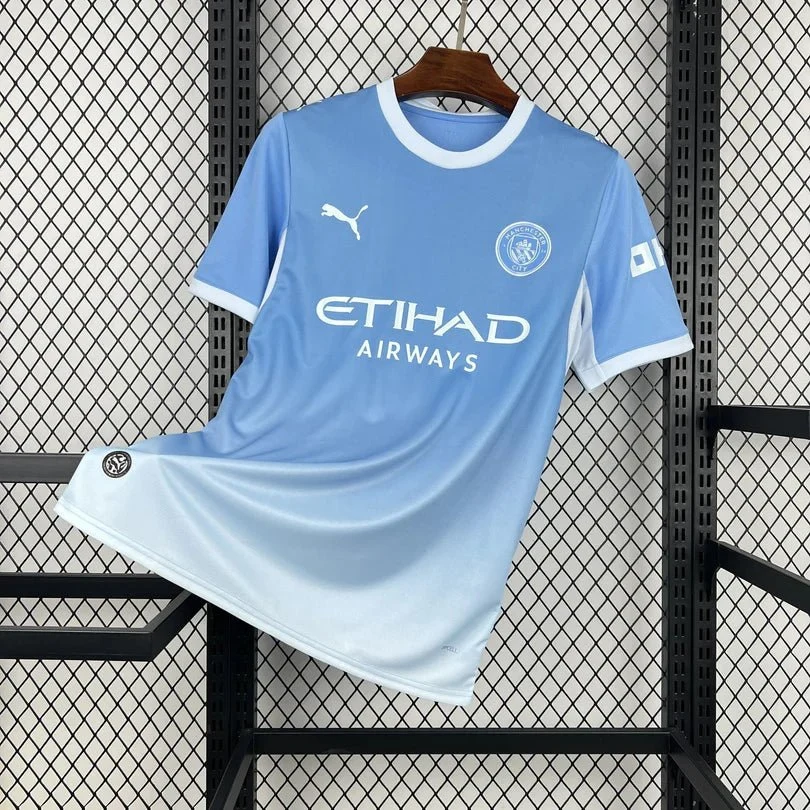
A product image helps identify the listing, but it cannot show exact measurements, fibre content or how the shirt fits your body.
Why modern soccer jerseys are difficult to shrink
Many modern jerseys use polyester or polyester-based fabric. Unlike untreated cotton, polyester is valued partly because it retains its shape. A football-shirt manufacturing explainer from Macron describes polyester and polyester-elastane blends as common sportswear materials. That does not prove the composition of every shirt, but it explains why a dryer is not a reliable sizing tool for the category.
A guide that promises an exact one-size reduction cannot account for the fabric blend, knit, printed details or construction of your particular shirt. Even when heat changes a synthetic garment, the result may be uneven. The body, collar, stitching and applied graphics do not necessarily react in the same way.
What heat can damage
Before trying to make a jersey smaller, inspect the whole garment rather than only the body fabric. Heat can create risk for:
- names and numbers applied to the back;
- sponsor or brand graphics;
- heat-applied crests and badges;
- collar and cuff shapes;
- elastic or stretch panels;
- glued or bonded details.
Damage may show as lifting edges, cracking, warping, shine or colour change. A hot dryer can also set a stain. If the care label says not to tumble dry or not to iron a decorated area, follow that instruction.
Compare the safer fit options first
This comparison is why shrinking should be the last option, not the first. If a return or exchange is possible, use the current store policy rather than assuming a promise from an article. If alteration is the only practical route, show the shirt to a professional before cutting or sewing through a printed panel.
Step 1: confirm how oversized the shirt is
Lay the jersey flat without stretching it. Measure the chest width, body length and any other dimension provided by the seller. Compare those figures with a shirt that fits the way you want.
The difference matters. A slightly relaxed fit may be improved by layering or styling, while a large difference may require another size. Use the football shirt size guide to measure consistently. Do not decide from the size letter alone, because cuts can differ between products.
Step 2: read the care and material labels
The fibre label tells you what the manufacturer says the shirt contains. The care label tells you the allowed wash, drying and ironing methods. Treat those instructions as the boundary for any experiment.
If the label is missing or unclear, uncertainty is a reason to avoid high heat. A product title such as “fan version,” “player version” or “premium” does not supply a care temperature. A photograph cannot confirm one either.
Step 3: check the printed areas
Turn the jersey over and inspect names, numbers, sponsors and badges. Look for raised edges, existing cracks or lifted corners. A detail that is already stressed is especially vulnerable to heat and friction.
If the shirt only needs cleaning, follow the printed jersey care checklist. Do not combine a first wash with a shrinking attempt. That makes it harder to tell whether a change came from ordinary cleaning or excessive heat.
Can a tailor make a soccer jersey smaller?
Sometimes, but the answer depends on the construction. Side seams may allow a width adjustment. Length can be more difficult when the hem has a shaped panel, side split or design detail. Sleeve and shoulder changes are usually more complex than taking in a straight side seam.
Ask the tailor to assess the garment before agreeing to work. Point out every print and bonded area. Request a clear explanation of where the seam will move and whether the design will remain centred. The goal is a better fit without distorting stripes, panels or graphics.
Can layering solve the problem?
For casual wear, a T-shirt or thin long-sleeve base layer can reduce the feeling of excess room. This can work well in cooler weather and does not permanently change the jersey. It also lets you keep a relaxed silhouette if that suits the outfit.
Layering will not fix a very long body or sleeves that interfere with movement. Measure first so that styling does not become a substitute for a size that is clearly wrong.
What if you still choose to try shrinking?
Use the care label as the limit. Do not exceed a stated temperature, apply direct heat to a print or assume that repeated dryer cycles are harmless. Stop if you see lifting, warping, shine or colour change.
No article can promise a safe amount of shrinkage for an unknown fabric and print system. If the label does not permit the heat required by a method, that method is not appropriate for the shirt. The small chance of a modest size change is rarely worth permanent graphic damage.
Avoid the same fit problem on the next order
When comparing new-season soccer jerseys, open the individual product page and read the current options. For example, the Manchester City 2026 Home Shirt is a specific listing; its title and image identify the product, while the live page is the place to check its current size controls.
Before ordering:
- Measure a shirt that already fits.
- Compare garment measurements where available.
- Decide whether you want a close, regular or relaxed fit.
- Allow for the layer you normally wear underneath.
- Recheck the exact product, because a size chosen for one listing does not automatically transfer to another.
Conclusion
Trying to shrink a soccer jersey is unpredictable because modern synthetic fabric is designed to retain its shape and the applied details may be more heat-sensitive than the main body. A hot wash or dryer can damage a name, number, crest or sponsor graphic without producing a useful change in fit.
Measure the shirt, read its labels and compare exchange, layering and professional alteration before applying heat. The safest outcome is the one that improves the fit while leaving the fabric and printed details intact.
 USD
USD
 ANG(ƒ)
 LKR(₨)
 EGP(EGP)
 BZD(BZ$)
 CRC(¢)
 MAD(DH.)
 OMR(RO.)
 KES(KSh)
 GHS(₵)
 UGX(USh)
 RSD(Din.)
 RON(lei)
 PGK(K)
 CDF(CDF)
 UYU($U)
 KZT(〒)
 PKR(Rs)
 MNT(₮)
 ARS(ARS$)
 COP(COP)
 MVR(Rf)
 IQD(د.ع)
 BDT(Tk)
 ZMW(ZK)
 NAD(N$)
 JMD(J$)
 AOA(Kz)
 MMK(K.)
 PEN(S/.)
 MOP(MOP$)
 BND(B$)
 LAK(₭)
 VND(₫)
 NGN(₦)
 KHR(៛)
 TWD(NT$)
 CNY(¥)
 SAR(S.R.)
 BHD(BD.)
 QAR(QR.)
 KWD(K.D.)
 UAH(₴)
 IDR(Rp)
 MYR(RM)
 AED(AED)
 JPY(円)
 INR(Rs)
 TRY(₺)
 CLP(CLP)
 KRW(₩)
 ZAR(R)
 SEK(Kr)
 ILS(₪)
 HKD(HK$)
 THB(฿)
 PLN(zł)
 NZD(NZ$)
 NOK(Kr)
 MXN(MXN$)
 HUF(Ft)
 CZK(Kč)
 SGD(S$)
 PHP(₱)
 DKK(kr.)
 CHF(CHF)
 BRL(R$)
 RUB(₽)
 CAD(CA$)
 AUD(AUD)
 GBP(£)
 EUR(€)
 Barcelona
 Real Madrid
 Manchester United
 Inter Miami
 Manchester City
 Fc Bayern
 Ac Milan
 Chelsea
 Juventus
 Arsenal
 PSG
PSG Liverpool
 Inter Milan
 Santos FC
 Roma
Roma Portugal
 Al Nassr
 Atletico Madrid
 Everton
 Everton
 Germany
 Ajax
Ajax Mexico
 Napoli
 Columbia
 Sporting lisbon
 France
 Tottenham
 Morocco
 Real Betis
 Brazil
 USA
USA ltalia
 Argentina
 England
 Borussia Dortmund
 Spain
Spain Japan
Japan Netherlands
 Adidas
 Nike
Nike Puma
Puma NB
NB Kappa
Kappa