There is no one verified weight that applies to every football shirt. Size, sleeves, decoration and construction can differ, and a fabric specification is not the weight of the finished garment. If you need an accurate number for a particular shirt, weigh that exact dry item or obtain a measurement for its precise version and size. Do not substitute a professional-kit headline for a supporter shirt measurement.
A real manufacturer figure, with an important limit
In its October 2021 ULTRAWEAVE announcement, PUMA described a jersey base chassis weighing 72 grams. That is a specific component and product-development claim. It is not a published average for all shirts, and the wording does not establish the packed retail weight of a THJORE item.
The figure is useful because it shows why measurement scope matters. A claim about a base chassis answers a narrower question than a reading for a fully decorated garment. Keep the original manufacturer wording attached to the number rather than quietly widening it.
Measurement
Unit
What it answers
Finished dry shirt
g or kg
How much the particular garment weighs.
Fabric areal density
g/m2, often called GSM
How much a square metre of the specified textile weighs.
Manufacturer base chassis
Usually g
The weight of the component covered by that manufacturer claim.
Packed parcel
g or kg
The mass including the packaging and anything else inside.
How to measure your own shirt
Use a scale that can display grams and accommodate the whole item without it touching another surface. Start with a dry shirt. Place an empty container on the scale if needed and zero it before adding the garment. Include only the shirt for a garment reading, not its bag, tags or other kit pieces.
Wait for a stable display, record it, then remove and replace the shirt to check that the reading is repeatable. If the number changes noticeably, check that the scale is on a stable surface and the garment is not resting partly outside the weighing area. Report the scale's displayed precision; do not turn a whole-gram reading into invented decimal accuracy.
Record the team design, version, size, sleeve length and whether personalisation is present. This is a suggested measurement method, not a THJORE test result. A useful comparison needs the same conditions for both shirts.
Converting grams to kilograms
Divide the gram reading by 1,000. For illustration only, 200 g equals 0.200 kg; that number is a conversion example, not an asserted typical football shirt weight. Keep units visible when sharing your measurement.
If you are posting the shirt, weigh the packed parcel separately. Do not assume that adding an estimated bag weight produces the carrier's required measurement, or that a particular weight qualifies for a service. Check the actual carrier's current requirements for the package you have.
What weight cannot tell you about a purchase
A smaller number alone does not prove better comfort, durability or suitability for a match. A larger number alone does not prove higher quality. If your real concern is fit, look at measurements; if it is a fabric or care question, look at the relevant specification and label.
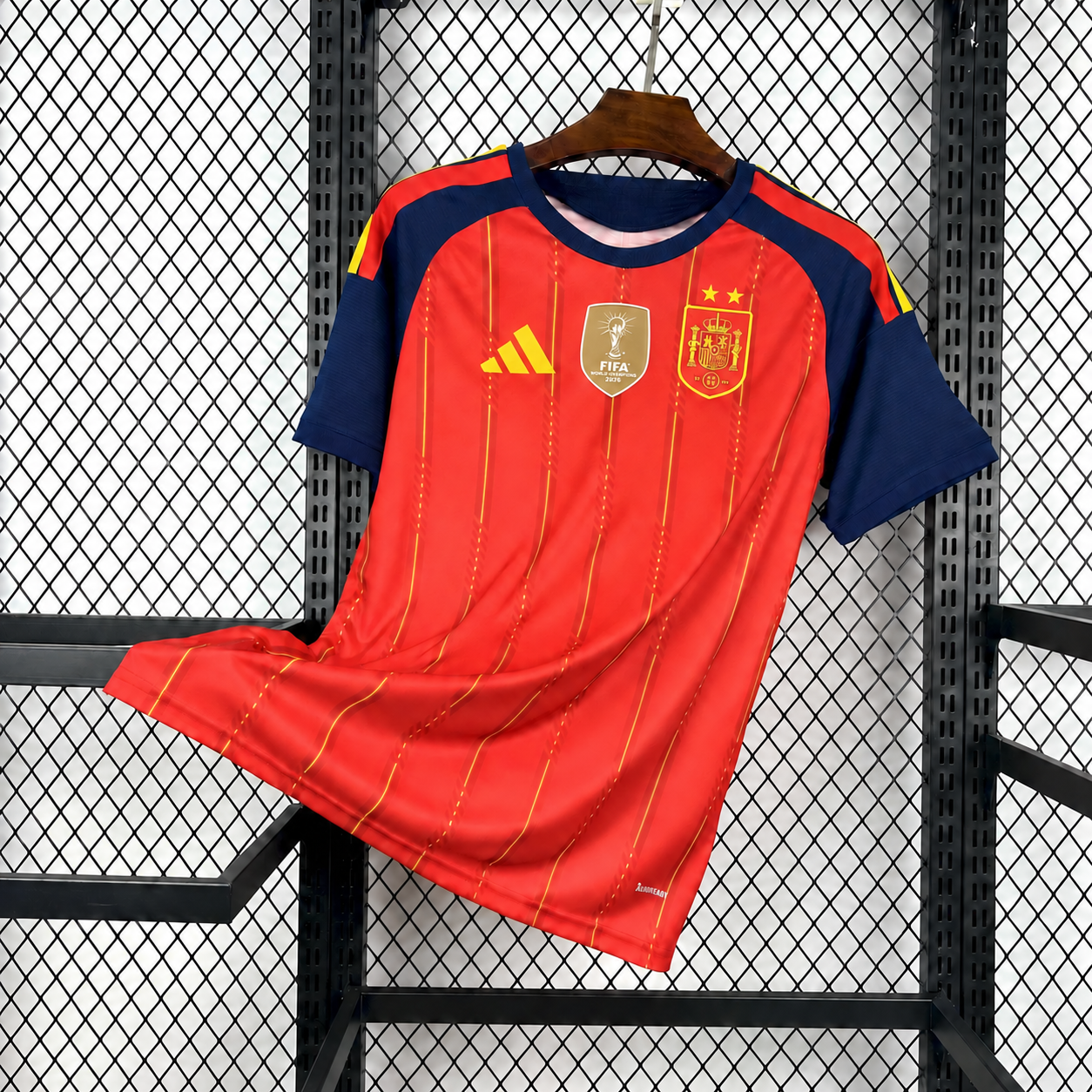
The Spain 2026 home shirt listing identifies the design and available options, but we have not verified an item-specific dry weight. The product image below illustrates the shirt, not a scale result. Browse Spain shirt designs for design comparisons; ask for an exact weight if that is essential to your decision.
Summary
Use a measurement for the actual item when weight matters. Keep GSM, component claims, garment weight and parcel weight separate. No universal average or THJORE weight range is asserted here.
Spain 2026 home shirt; no garment weight measurement is shown
Research scope and disclosure
Prepared from public manufacturer or rules sources and FootballTHJORE product listings checked on 11 October 2026. This is a research-based guide, not a hands-on product test or a factory audit. FootballTHJORE sells the linked products; these are commercial links. No affiliation with the source organisations is implied.

 USD
 ANG(ƒ)
 LKR(₨)
 EGP(EGP)
 BZD(BZ$)
 CRC(¢)
 MAD(DH.)
 OMR(RO.)
 KES(KSh)
 GHS(₵)
 UGX(USh)
 RSD(RSD)
 RON(lei)
 PGK(K)
 CDF(CDF)
 UYU($U)
 KZT(〒)
 PKR(Rs)
 MNT(₮)
 ARS(ARS$)
 COP(COP)
 MVR(Rf)
 IQD(د.ع)
 BDT(Tk)
 ZMW(ZK)
 NAD(N$)
 JMD(J$)
 AOA(Kz)
 MMK(K.)
 PEN(S/.)
 MOP(MOP$)
 BND(B$)
 LAK(₭)
 VND(₫)
 NGN(₦)
 KHR(៛)
 TWD(NT$)
 CNY(¥)
 SAR(S.R.)
 BHD(BD.)
 QAR(QR.)
 KWD(K.D.)
 UAH(₴)
 IDR(Rp)
 MYR(RM)
 AED(AED)
 JPY(円)
 INR(Rs)
 TRY(₺)
 CLP(CLP)
 KRW(₩)
 ZAR(R)
 SEK(Kr)
 ILS(₪)
 HKD(HK$)
 THB(฿)
 PLN(zł)
 NZD(NZ$)
 NOK(Kr)
 MXN(MXN$)
 HUF(Ft)
 CZK(Kč)
 SGD(S$)
 PHP(₱)
 DKK(kr.)
 CHF(CHF)
 BRL(R$)
 RUB(₽)
 CAD(CA$)
 AUD(A$)
 GBP(£)
 EUR(€)
 Barcelona
 Real Madrid
 Manchester United
 Inter Miami
 Manchester City
 Fc Bayern
 Ac Milan
 Chelsea
 Juventus
 Arsenal
 PSG
 Liverpool
 Inter Milan
 Santos FC
 Roma
 Portugal
 Al Nassr
 Atletico Madrid
 Everton
 Everton
 Germany
 Ajax
 Mexico
 Napoli
 Columbia
 Sporting lisbon
 France
 Tottenham
 Morocco
 Real Betis
 Brazil
 USA
 ltalia
 Argentina
 England
 Borussia Dortmund
 Spain
 Japan
 Netherlands
 Adidas
 Nike
 Puma
 NB
 Kappa