France World Cup Soccer Jersey Guide 2026: How to Compare Home, Away and Size Options
2026-09-21
Searching for a france world cup soccer jersey usually means more than finding a blue shirt in a product grid. A shopper may need the right 2026 label, a home or away category, an adult or Kids Size page, or a product that matches a gift brief. This guide explains how to read the current THJORE France listings, which labels matter, which details must be checked on the exact product page, and how to move from a collection page to a product page without losing the buying brief.
Semrush research gives the topic a clear commercial reason to exist. In the United States, france world cup soccer jersey records 1.3K monthly searches, 18% keyword difficulty classified as Easy, Business intent, a $0.73 CPC and 1.00 competition. The related france soccer jersey world cup records 110 searches at 11% KD, and france soccer jersey world cup 2026 records 50 searches with KD unavailable. In the United Kingdom, the natural wording changes to football shirt: france football shirt records 720 searches at 22% KD with Information and Transactional intent, while france football shirt world cup records 110 searches with KD unavailable. The figures support a researched comparison; they do not prove that one listing is best for every buyer.
The current France collection is a discovery point for products labelled 2026, World Cup, home, away, Women, Kids Size, long sleeve, shorts and earlier seasons. The exact product page remains the authority for the title, visible options, size controls, displayed price and availability. Read the collection for breadth, then open the listing that matches the buying brief. The collection keeps the broad transactional intent while this article answers the comparison questions behind the search.
What the searcher is deciding
The phrase looks singular, but it describes several decisions. One shopper may want a 2026 France home shirt for an adult. Another may want an away product because the category differs from a shirt already owned. A parent may need a Kids Size page. A gift buyer may know the team but not the preferred category. A collector may want a current World Cup-labelled item beside a 2024 or 2025 France shirt. A useful guide recognises those goals instead of assigning one product a universal winner badge.
American searchers commonly say soccer jersey or soccer jerseys, while British searchers commonly say football shirt or football shirts. Product titles can use kit, shirt, jersey, Women and Kids Size. Treat those words as exact descriptors. If a page says Away World Cup Kit, keep that category in your notes. If it says Away World Cup Women, do not silently change it to an adult unisex shirt.
Season wording deserves the same care. A date in a title is a useful filter, not a guarantee that every other attribute is identical. Before ordering, compare the full title, description, visible size or option controls and current price. If a detail is not shown, mark it Unknown instead of borrowing an assumption from another product.
Comparison method
A comparison is useful only when every candidate is checked against the same evidence. Use seven steps: define the intended wearer, identify the season label, identify Home or Away, inspect the exact product title, read available options, note the displayed price and preserve the public URL. This method works for a 2026 home product, a 2026 away product, a Kids Size page or an earlier-season listing. It also reveals when two photographs look similar but the pages represent different products.
This guide does not score fabric, comfort, authenticity, official status, delivery speed, stock depth or customer experience. Those claims require evidence that is not consistently visible in the pages used for this comparison and may change over time. A structured-data offer can show a current price without proving that every size has the same price. Honest limits make buying advice more reliable.
Use the France soccer jerseys and football shirts collection to build a short list, not to skip the product page. The collection contains 35 products in the SHOPYY editor and its top description directs shoppers to check the exact season, version, sizes and options before ordering. That is the right workflow: broad discovery first, exact verification second.
Home and away categories
A home shirt is often the straightforward choice for a supporter who wants a recognisable France category. An away shirt can be a better match for someone who already owns a home product or prefers a different visual direction. Neither category is automatically superior. The correct choice depends on what the buyer asked for, which season matters and whether the intended wearer needs a particular option.
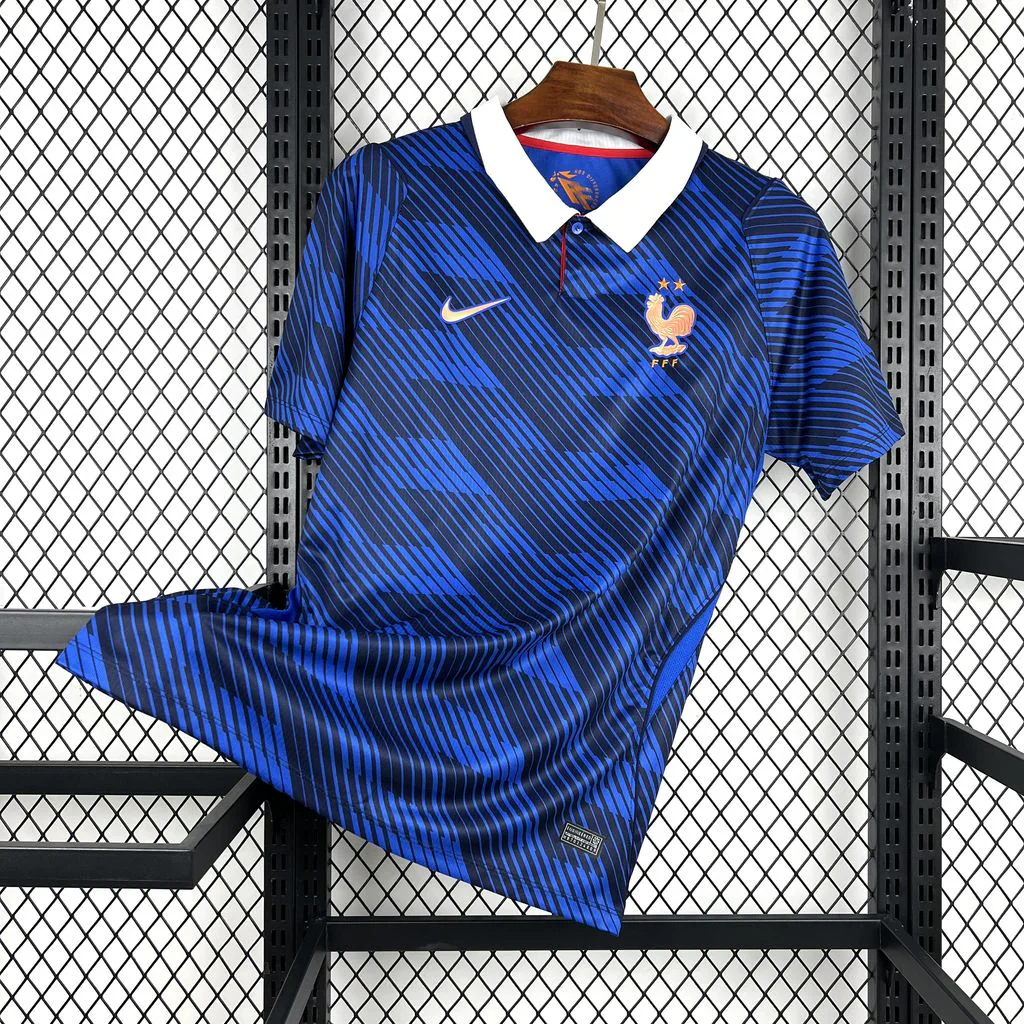
The current home fan-version page is titled 2026 France Home World Cup Kit Fan Version. It returned HTTP 200 during the fact check, and its product data exposed a $39 USD offer for a sample size. The displayed amount and availability should still be checked on the live page. The title identifies 2026, France, Home, World Cup, Kit and Fan Version; preserve those distinctions when comparing it with an away or player-version page.
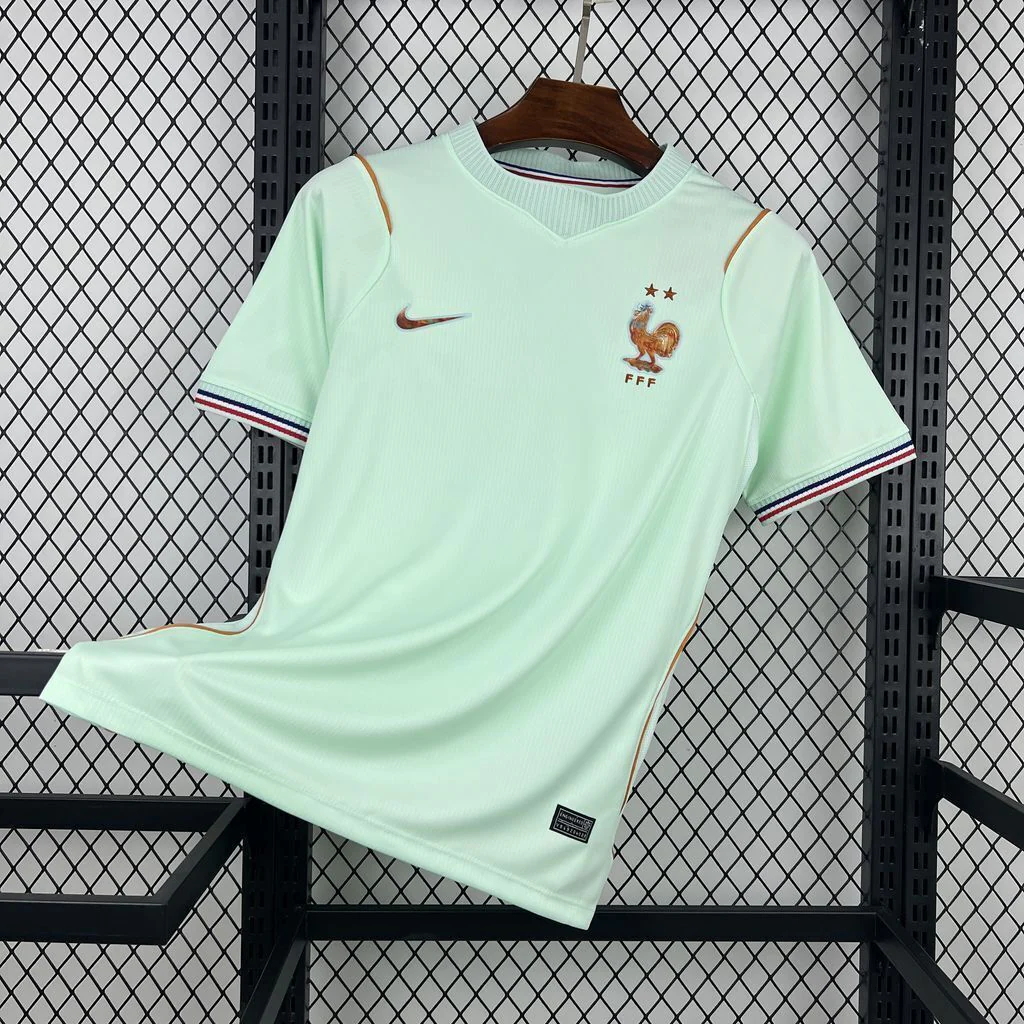
The current away fan-version page is titled 2026 France Away World Cup Kit Fan Version. It belongs in the same comparison group because the team and World Cup year align, but the category changes from Home to Away. Read the selected size and visible option controls on that page. Home and away are not interchangeable anchor text: link to each page with its complete descriptive title.
2026 France Home World Cup Kit Fan Version: verify the complete title, size and visible options.
World Cup, season and version labels
World Cup in a product title is a useful 2026 context signal. It helps distinguish a current listing from a 2024 or 2025 France product. It does not answer whether the page is Home or Away, Fan or Player Version, whether shorts are included, or whether a name and number can be added. Those questions belong to the full product page. Treat the label as a precise search filter, not a shortcut around reading the listing.
The word kit needs the same care. In everyday language it can mean a shirt or a coordinated set. The product title and description are the evidence for what a listing represents. The page titled 2026 France World Cup Away Shorts is a separate product from an away kit. Do not call it a complete shirt-and-shorts bundle unless the exact page says so.
The collection also contains France 2024 Away Kit, 2024 France Home Kit and 2025 France Home Kit pages. Those can help a collector or a shopper who prefers an earlier design, but they should not be presented as the 2026 World Cup product. Preserve the year in every anchor and comparison note.
Fan, player and long-sleeve labels
The 2026 France group includes titles that use Fan Version, Player Version and Long Sleeve. Those words identify the product page's own label. They should not be expanded into claims about technical fabric, professional match use, authenticity or official status. A buyer deciding between pages should ask whether the label matches the purpose. If a long-sleeve product is required, a short-sleeve fan page is not an equivalent substitute simply because the team and year are the same.
Record the exact phrase rather than reducing every listing to “France jersey.” A home fan page and a home player page can share team, year and category while version wording distinguishes them. If the product page exposes a different price or option list, capture that page-specific information. If it does not explain the difference, leave the explanation Unknown.
Adult, Kids Size and Women-labelled pages
Size group is part of product identity. The page titled 2026 France Home World Cup Kit Kids Size is relevant when the intended wearer needs a Kids Size listing. The collection also exposes a 2026 France Away World Cup Kit Kids Size page and a 2026 France Away World Cup Women page. Do not assume that a Women-labelled product uses the same fit, measurements or options as an adult or Kids Size page.
Begin with the recipient's actual requirement. For a child, record the size information on the exact page and compare it with the store's current guidance. For an adult gift, do not select Kids Size because the photograph looks similar. For a Women-labelled page, read the exact title and visible controls rather than rewriting the product into an unverified fit claim. If a measurement is absent, keep it Unknown.
Women and Kids collection optimisation remains skipped under the current instruction. Mentioning a verified product label in a buying guide is different from changing collection metadata. Link directly to the exact listing and explain only what its title and controls support.
Comparison table
Buying brief
Verified starting page
Verify next
Reason
2026 home shirt for an adult
2026 France Home World Cup Kit Fan Version
Size, options and live price
Home category and version match
2026 away shirt
2026 France Away World Cup Kit Fan Version
Size, options and live price
Away is a separate category
Child's 2026 home product
2026 France Home World Cup Kit Kids Size
Kids measurements and variants
Kids Size is not an adult fit
Women-labelled away product
2026 France Away World Cup Women
Size controls and description
Separate labelled page
Matching lower garment
2026 France World Cup Away Shorts
Whether shorts are separate
Not automatically a full kit
Earlier-season collector item
France 2024 Away Kit or 2025 France Home Kit
Year, category and options
Earlier products are not 2026
The table is a decision aid, not a ranking. It does not claim that one version is more comfortable, authentic, valuable or popular. It preserves the facts that separate one page from another, so the starting page changes when the buying brief changes.
Size, price and options
Start with the page title and move to the size selector. Confirm whether the selector lists adult sizes, Kids Size choices or another labelled group. If a product has multiple options, select the intended one before reading the displayed price. A collection card is useful for discovery but may not expose every variant. The exact product page is where the final check belongs.
Use a garment the intended wearer already owns as a comparison reference when measurement information allows it. Record the measurement, unit and selected size in a private note. Do not turn an unknown measurement into a promise that a product will fit. If the page does not expose a readable chart, use the store's normal support route rather than inventing dimensions.
The verified home fan-version structured data exposed a $39 USD offer for one sample size at the time of checking. This does not establish the price of every size or related France product. Away, Kids Size, Women and shorts pages can have different offers. Prices and availability can change, so recheck the live page after selecting the intended option.
Personalisation deserves the same discipline. Do not assume that every France World Cup product accepts a name or number because another page offers an option. Look for a visible control on the exact listing. If it is present, follow the field instructions; if it is absent, do not promise that it can be added later.
2026 France Away World Cup Kit Fan Version: compare category and page-specific options before ordering.
Home versus away decision framework
Choose home when the buyer explicitly wants the home category, is replacing a home shirt or wants the direct match for a home-focused brief. Choose away when the brief says away, when the buyer already owns a home item or when the alternate category is the reason for the purchase. If the request only says France World Cup soccer jersey, open both exact pages and compare their titles and options instead of guessing from a thumbnail.
Think about the use case. A supporter attending a match may have a clear preference. A gift buyer may need to ask the recipient. A collector may want both categories. A first-time buyer may value the page with clearer size information. These are reasons for different choices; the word best should describe the match between evidence and purpose, not a universal verdict.
Earlier seasons and matching shorts
Earlier-season products can be relevant when the shopper wants a particular design or is completing a collection. The site exposes a France 2024 Away Kit, a 2024 France Home Kit and a 2025 France Home Kit. Keep those pages separate from the primary 2026 World Cup comparison. A reader who searched france soccer jersey world cup 2026 expects the article to lead to 2026 pages; an earlier link can be a clearly labelled related option.
The collection includes 2026 France World Cup Away Shorts. Treat it as its own product. Confirm whether shirt and shorts are sold separately, whether the year and category align and whether selected sizes are available. Do not write that the kit includes shorts unless the exact listing says so.
US and UK terminology
The US primary keyword uses soccer jersey, while the UK supporting research uses football shirt. This article uses soccer jersey in the title, introduction and decision sections because the page is US-led. It uses football shirt where UK context is useful and does not put both variants in every heading. Natural language is more helpful than repeating market labels mechanically.
The collection can retain broad commercial variants such as France Soccer Jerseys 2026 and France Football Shirts. This guide targets the specific World Cup comparison intent and passes the reader to the collection and product pages. That separation helps avoid keyword cannibalisation: one core search purpose has one primary page.
Pre-order checklist
Write the team and intended wearer.
Confirm the year says 2026 if that is the brief.
Confirm the title contains World Cup if that context matters.
Choose Home, Away or another category deliberately.
Keep Fan Version, Player Version, Long Sleeve, Women or Kids Size wording intact.
Read the exact size controls.
Select the intended variant before reading price.
Check whether personalisation is visibly offered.
Follow the current delivery and returns policy.
Save the exact public URL and recheck it before ordering.
This checklist protects against wrong year, wrong category, wrong size group and wrong assumptions about what a kit includes. After the checks, return to the France collection, open the exact product page and continue through the normal purchase flow.
Questions shoppers ask
What is the best France World Cup soccer jersey for 2026?
There is no single best page for every shopper. The best match is the listing whose team, year, World Cup label, category, version and size group fit the brief. Use the home fan page for a home request, the away fan page for an away request and the Kids Size or Women-labelled page when that is the intended group.
Is a France home shirt the same as a France away shirt?
No. They are separate categories and should be compared as separate product pages. The collection exposes both 2026 home and away World Cup-labelled pages. Choose the category that matches the purpose, then check its own size and option controls.
Does a France World Cup kit include shorts?
Do not assume it does. The collection has a separate 2026 France World Cup Away Shorts page. Read the exact listing and treat a shorts page as a separate product unless the page says otherwise.
Can I buy a Kids Size product for an adult?
The title identifies a Kids Size page, so it should be checked against the intended wearer and the page's measurements. Do not select it for an adult based on a similar photograph.
Can every France shirt be personalised?
No universal promise is safe. Look for a visible personalisation control on the exact product page. If it is not present, do not assume it can be added later.
Internal links and responsible recommendations
This article is the middle of a topic cluster. The France collection is the broad commercial browse page. Exact product pages answer title, category, size and option questions. The football shirt size guide supports measurement questions. Contextual anchors such as “2026 France Away World Cup Kit Fan Version” are more useful than Click Here or Shop Now.
This guide names pages visible in the current collection and public site checks. It does not claim official licensing, authenticity, professional match use, technical fabric, sales volume, reviews, guaranteed stock, shipping speed or a guaranteed return result. Semrush describes search demand and intent; it does not guarantee impressions, clicks, rankings or orders. When a field is unclear, the responsible answer is Unknown.
Summary
The safest way to choose a France World Cup soccer jersey is to make the brief specific before opening the product page. Decide whether the shopper needs 2026, home or away, adult or a labelled size group, fan or player wording, long sleeve or another option. Use the France collection for discovery, then check the exact title, size controls, options and displayed price. Treat a shorts page as separate unless the listing says otherwise, and keep 2024 and 2025 products distinct from the 2026 World Cup range.
For US searchers, soccer jersey is natural; for UK searchers, football shirt is natural. The wording changes by market, but the decision process does not: compare like with like, preserve the exact title, disclose Unknown fields and follow the link that matches the purpose. The live product page remains the final authority.
Decision note 1: applying the evidence to a real brief
For a supporter replacing a worn home item, begin with the 2026 France Home World Cup Kit Fan Version. Keep the complete title in your note, select the intended size and check the current price after the variant loads. Do not assume the replacement has the same options as an older France shirt. If a page leaves a measurement unclear, use the size guide or the store support route. The purpose is replacement, so the home category matters more than a generic claim that one design is universally best.
Decision note 2: applying the evidence to a real brief
For a shopper who already owns a home shirt, an away product may add a genuinely different category. Open the 2026 France Away World Cup Kit Fan Version and compare the exact title, selected size and visible controls with the home page. Keep both URLs because a similar image can make a later revisit confusing. If the buyer wants long sleeves, use a long-sleeve-labelled page rather than assuming the fan version has the same sleeve option.
Decision note 3: applying the evidence to a real brief
For a child, start with the 2026 France Home World Cup Kit Kids Size or the corresponding away Kids Size page. Read the size group and measurements on that exact listing. Age alone is not enough evidence for fit, and an adult page should not be described as a children product. If a parent is choosing a gift, record the chosen size and public URL so the recipient can verify the page before checkout.
Decision note 4: applying the evidence to a real brief
For a Women-labelled request, use the 2026 France Away World Cup Women page as the starting point and preserve that exact label. Compare its own size controls and description rather than borrowing measurements from an adult or Kids Size listing. A Women label identifies the page; it does not authorize an unverified claim about cut, fabric or fit. If an important field is absent, mark it Unknown and verify it through normal support.
Decision note 5: applying the evidence to a real brief
For a collector building a current set, create separate lines for 2026 home, 2026 away and each additional version. Add the exact year and category to each line. Do not merge a 2026 World Cup item with a 2025 France Home Kit simply because the colours look related. A clean worksheet prevents a duplicate home purchase when the missing piece is actually an away or long-sleeve page.
Decision note 6: applying the evidence to a real brief
For a gift buyer who cannot ask the recipient, a clearly titled home page may be easier to verify than a complex edition. Still, do not guess the size. Compare visible choices on the product page, save the URL and avoid promising a delivery date or personalisation unless the current policy and page explicitly support it. The gift decision is stronger when uncertainty is written down rather than hidden.
Decision note 7: applying the evidence to a real brief
For a shopper seeking a coordinated outfit, open the shirt page and the separate 2026 France World Cup Away Shorts page. Check whether the two products use the same year and category wording. Confirm that sizes and prices are shown separately. The word kit in a search query is not evidence that shorts are included, so the final description should follow the exact pages.
Decision note 8: applying the evidence to a real brief
For a buyer interested in a player-version label, compare the page title and options with the corresponding fan-version page. Do not turn the label into a claim about professional use, authenticity or material technology. If the page does not explain a difference, say that the difference is not verified. A page-specific choice is more trustworthy than an explanation copied from another brand.
Decision note 9: applying the evidence to a real brief
For a shopper in the United States, soccer jersey is the natural phrase and the primary Semrush query has Business intent. Use US wording in the opening and product anchors, then lead to the France collection and exact 2026 pages. Do not repeat the phrase in every heading. Readability and a clear next action matter more than a fixed keyword density.
Decision note 10: applying the evidence to a real brief
For a shopper in the United Kingdom, football shirt is the natural expression, while the UK report also shows the World Cup variation. Use football shirt where it sounds natural, preserve the exact product title in the link and explain that the same collection supports both market vocabularies. Do not force soccer jersey into every sentence.
Decision note 11: applying the evidence to a real brief
For an earlier-season design request, open the France 2024 Away Kit, 2024 France Home Kit or 2025 France Home Kit and keep the year in the note. These pages can be useful alternatives, but they are not the 2026 World Cup pages. A clear year label protects the buyer and the article from accidental substitution.
Decision note 12: applying the evidence to a real brief
For a shopper unsure whether home or away is preferred, compare only the two current 2026 pages first. Record category, version, size options and price for each. Ask which purpose matters: replacement, variety, gift or collection completion. The answer may change the recommendation, which is why a comparison framework is more useful than a universal best badge.
Decision note 13: applying the evidence to a real brief
For a first-time buyer, a small verified shortlist is better than opening every France result. Start with the collection, choose one home and one away page, then check the size area and visible options. If both pages answer key questions, pick the one that matches the stated category. If one page leaves a critical field unclear, keep that uncertainty visible and verify it before checkout.
Decision note 14: applying the evidence to a real brief
For a shopper considering personalisation, look for the field on the exact product page after choosing the size. Do not infer availability from another France listing or a general store blog. Review the entered name or number before proceeding. If the control is absent, the article should not promise that a later support request will add it.
Decision note 15: applying the evidence to a real brief
For a buyer comparing two similar photos, begin with full product titles and public URLs. Then compare year, Home or Away wording, version, size group and options. Images help identify a listing, but they do not prove included garments, technical fabric or authenticity. A title-first comparison prevents a wrong-page purchase.
Decision note 16: applying the evidence to a real brief
For a shopper who sees a different price from the article example, use the live page as the authority. The verified home fan-version data exposed a $39 USD offer for one sample size, but variants and related pages can differ. Select the intended option and read the displayed price at that moment. Never treat a historical example as a guaranteed store-wide price.
Decision note 17: applying the evidence to a real brief
For a reader arriving from the France collection, the article explains comparison rather than replacing the collection. Use the top-level collection link for browsing and descriptive product links for the final choice. This page role keeps broad France soccer jersey intent with the collection while the World Cup comparison intent has a supporting guide.
Decision note 18: applying the evidence to a real brief
For a reader arriving from the size guide, return to the exact France product after measuring. The size article explains how to take a measurement, but only the France page can show its own available options. Keep the selected product title and URL beside the measurement note. This prevents an informational page from being mistaken for product-specific stock or fit evidence.
Decision note 19: applying the evidence to a real brief
For a seasonal campaign, recheck product pages before publishing a promotion or linking a new article. Titles, images, options and prices can change. Keep the article method stable and update only verified facts that materially affect the decision. If a page changes season, revise the anchor and table rather than silently carrying the old claim.
Decision note 20: applying the evidence to a real brief
For a reader asking whether a France product is official or authentic, inspect the page for an explicit statement. Collection and product titles do not, by themselves, prove licensing or authenticity. Do not add those words to an anchor or description without current page evidence. This protects the buyer from an unsupported expectation.
Decision note 21: applying the evidence to a real brief
For a buyer who wants a complete kit, check whether the chosen page represents a shirt, a kit or separate shorts. The presence of World Cup does not settle that question. Open the shirt page, open the shorts page if needed and compare titles. Only describe a bundle when the exact listing explicitly says the pieces are included together.
Decision note 22: applying the evidence to a real brief
For a reader choosing between fan and player labels, write down the purpose before opening pages. A fan-labelled page may match one buyer, while another may specifically request the player-labelled page. The guide should not invent a quality hierarchy. It should show the labels, link to pages and let the buyer choose after checking options.
Decision note 23: applying the evidence to a real brief
For a customer outside the US or UK, the same evidence workflow works. Keyword language may differ, but product facts remain team, year, category, size, options and price. Use the collection to discover the current set, then check the exact page and the store policy for the destination. Do not infer shipping speed or local availability from a keyword report.
Decision note 24: applying the evidence to a real brief
For a collector who wants long sleeves, preserve Long Sleeve in the product note and link to the exact labelled page. Do not describe a short-sleeve fan product as an equivalent alternative. If the long-sleeve page does not expose a measurement, leave it Unknown and compare only visible facts.
Decision note 25: applying the evidence to a real brief
For a shopper who changes the brief halfway through browsing, restart the comparison with the new purpose. A home replacement, an away collection gap and a child gift are different jobs. The best page can change when the job changes. Keeping a written brief prevents the first attractive photograph from controlling a later decision.
Decision note 26: applying the evidence to a real brief
For an editor reviewing the guide after publication, check the public URL, title, H1, meta description, canonical and internal links. Then recheck the collection and linked product pages. Published does not mean indexed, indexed does not mean ranked and ranking does not mean an order. Record only metrics Semrush, Search Console or analytics actually exposes.
Decision note 27: applying the evidence to a real brief
For a shopper comparing a 2026 home page with a 2024 home page, treat the year as a required field. The visual similarity of two images is not enough to merge them. Keep separate notes for design year, category, version and size group. This makes the decision auditable if the buyer returns later.
Decision note 28: applying the evidence to a real brief
For a buyer who needs a specific lower garment, start from the shorts page rather than assuming a shirt page includes it. Compare the year and category, then check the selected size and displayed price. A separate product URL is useful evidence that the pieces are not automatically bundled.
Decision note 29: applying the evidence to a real brief
For a buyer who cannot read a field on mobile, try the page controls and the normal policy links rather than copying a value from another listing. Mobile readability is a separate QA item and remains Unknown until tested. The article can direct the next action without pretending that a hidden field is identical.
Decision note 30: applying the evidence to a real brief
For a shopper who wants a simple recommendation, state the brief in one sentence before choosing. For example, 2026 France away product for an adult with a visible size option. Then select the page that matches that sentence. A concise brief is more useful than a long list of unverified superlatives.
Decision note 31: applying the evidence to a real brief
For a future content update, keep the primary keyword attached to this comparison page and do not create a near-duplicate article by changing only the team name. A new article needs its own Semrush evidence, product facts and search purpose. That rule protects the France collection and this guide from keyword cannibalisation.
Verification lens 1
The evidence hierarchy is deliberate. Search volume and intent decide whether a topic deserves a page; the collection confirms that relevant products exist; the exact product page confirms title, category and options; and the public page check confirms that the links work. No single signal can replace the others. A high-volume keyword without a matching product would fail the product prerequisite, while a good product without readable demand would not automatically justify another blog.
Verification lens 2
Internal links should use the language a shopper needs at the moment of choice. A collection anchor can be broad, while a product anchor should preserve the full season and category. Related guides can answer measurement or personalisation questions, but they should not take the place of a product page when the reader is ready to buy. This division keeps the topic cluster understandable to people and search engines.
Verification lens 3
Unknown is a useful state, not a missing conclusion. If trend data is not readable, record Unknown. If a SERP competitor list is unavailable, record Unknown. If a product page does not disclose a measurement or included item, record Unknown. The next action is then clear: verify the page, use a policy link or choose a listing with clearer evidence.
Verification lens 4
The same care applies after publication. A public HTTP 200 proves that a page responds; it does not prove indexing, ranking, traffic or orders. Canonical and robots values should be checked when monitoring tools are available. If they are not available, the report should say Unknown rather than implying that publication has already produced SEO results.
Verification lens 5
Comparisons help qualified visitors when they respect the limits of store data. They explain how to choose, connect the reader to real products and leave unsupported claims out. The best conversion path is practical: identify the brief, verify the listing, check the size and options, read the policy and then use the normal checkout controls.
Verification lens 6
A final review should ask whether every paragraph helps a France shopper make or verify a decision. Remove a sentence if it promises a fact the page does not support. Keep a sentence if it explains how to distinguish year, category, version or size. This standard is more durable than a mechanical keyword density target and keeps the article useful after the search trend changes.
 USD
USD
 ANG(ƒ)
 LKR(₨)
 EGP(EGP)
 BZD(BZ$)
 CRC(¢)
 MAD(DH.)
 OMR(RO.)
 KES(KSh)
 GHS(₵)
 UGX(USh)
 RSD(Din.)
 RON(lei)
 PGK(K)
 CDF(CDF)
 UYU($U)
 KZT(〒)
 PKR(Rs)
 MNT(₮)
 ARS(ARS$)
 COP(COP)
 MVR(Rf)
 IQD(د.ع)
 BDT(Tk)
 ZMW(ZK)
 NAD(N$)
 JMD(J$)
 AOA(Kz)
 MMK(K.)
 PEN(S/.)
 MOP(MOP$)
 BND(B$)
 LAK(₭)
 VND(₫)
 NGN(₦)
 KHR(៛)
 TWD(NT$)
 CNY(¥)
 SAR(S.R.)
 BHD(BD.)
 QAR(QR.)
 KWD(K.D.)
 UAH(₴)
 IDR(Rp)
 MYR(RM)
 AED(AED)
 JPY(円)
 INR(Rs)
 TRY(₺)
 CLP(CLP)
 KRW(₩)
 ZAR(R)
 SEK(Kr)
 ILS(₪)
 HKD(HK$)
 THB(฿)
 PLN(zł)
 NZD(NZ$)
 NOK(Kr)
 MXN(MXN$)
 HUF(Ft)
 CZK(Kč)
 SGD(S$)
 PHP(₱)
 DKK(kr.)
 CHF(CHF)
 BRL(R$)
 RUB(₽)
 CAD(CA$)
 AUD(AUD)
 GBP(£)
 EUR(€)
 Barcelona
 Real Madrid
 Manchester United
 Inter Miami
 Manchester City
 Fc Bayern
 Ac Milan
 Chelsea
 Juventus
 Arsenal
 PSG
PSG Liverpool
 Inter Milan
 Santos FC
 Roma
Roma Portugal
 Al Nassr
 Atletico Madrid
 Everton
 Everton
 Germany
 Ajax
Ajax Mexico
 Napoli
 Columbia
 Sporting lisbon
 France
 Tottenham
 Morocco
 Real Betis
 Brazil
 USA
USA ltalia
 Argentina
 England
 Borussia Dortmund
 Spain
Spain Japan
Japan Netherlands
 Adidas
 Nike
Nike Puma
Puma NB
NB Kappa
Kappa